African Wall Art: Celebrate Heritage With Bold Canvas Prints
The Heva Team
Art Curators & Interior Design Enthusiasts · January 17, 2026 · 17 min read
Explore the rich artistic heritage of Africa through bold canvas prints. From Kente patterns to warrior king portraits, learn how to bring African art traditions, symbolism, and colour meaning into your home decor.
African wall art carries the weight of a continent's creative genius, from the carved wooden doors of Zanzibar to the bold geometric murals of Ndebele homesteads. If you have been searching for art that does more than fill a blank wall, art that tells a story, honours ancestral traditions, and brings warmth and power into every room, you are in the right place. This guide walks you through the regional styles, hidden symbolism, and practical design rules that turn a simple canvas print into a meaningful statement piece.
Ready to browse? Explore our African-inspired canvas art collection, or keep reading for our top picks and expert tips.
What You Will Find in This Guide
- Regional African Art Styles: West, East, and Southern Africa
- Symbolism in African Art: Patterns, Masks, and Motifs
- Colour Meanings in African Art and Decor
- Our Top 6 African-Inspired Canvas Picks
- How to Style African Wall Art in Your Home
- 5 Common Mistakes When Decorating With African Art
- Frequently Asked Questions
- Quick Reference Table
Regional African Art Styles: West, East, and Southern Africa
Africa is home to over 3,000 distinct ethnic groups, and each region has developed its own artistic language. Understanding where a style originates adds depth to your decor choices and helps you curate a collection that feels intentional rather than random.
West African Art: Bold Geometry and Symbolic Depth
West Africa, stretching from Senegal to Nigeria, is the heartland of some of the continent's most recognisable art forms. Kente cloth from Ghana features interlocking strips of silk and cotton woven in patterns that each carry a specific proverb or social message. A single Kente design might represent unity, endurance, or the power of community. Adinkra symbols, also originating in Ghana and Cote d'Ivoire, are stamped or printed motifs that express philosophical concepts. The Gye Nyame symbol, meaning "except God," is one of the most widely reproduced and serves as a reminder of divine supremacy.
Nigerian Yoruba art is known for its elaborate beadwork crowns and bronze castings from the ancient Kingdom of Benin. These pieces often feature geometric repetition and highly stylised human forms. When you see a canvas print featuring bold, symmetrical faces or intricate patterning, there is a strong chance it draws from this West African visual vocabulary. The Smithsonian National Museum of African Art holds one of the world's finest collections of West African sculpture and textiles, offering a scholarly starting point for anyone wanting to learn more.
East African Art: Movement, Nature, and Community
East African artistic traditions, from Kenya and Tanzania to Ethiopia, tend to emphasise human connection with the landscape. Maasai beadwork uses vivid primary colours, with red symbolising bravery and blood, blue representing the sky and rain, and white standing for purity and health. Tinga Tinga painting, which originated in Dar es Salaam in the 1960s, uses enamel paint on hardboard to create flat, brilliantly coloured depictions of wildlife and village scenes.
Ethiopian art has its own distinct lineage rooted in Coptic Christian iconography, with large almond-shaped eyes, frontal poses, and rich earth tones. Canvas prints that echo these styles bring a sense of spiritual gravity and historical continuity into your home. If you appreciate art that bridges the natural world and human experience, East African-inspired pieces are an ideal starting point.
Southern African Art: Earth Tones and Architectural Pattern
Southern African art, particularly from South Africa, Zimbabwe, and Mozambique, tends toward earth-grounded palettes and architectural ornamentation. Ndebele house painting is instantly recognisable: women of the Ndebele community apply bold geometric murals to the exterior walls of their homes using natural pigments and, more recently, commercial paints. The patterns are not purely decorative. They communicate social status, marital standing, and community identity.
Shona stone sculpture from Zimbabwe, carved from serpentine and springstone, has gained international recognition for its fluid, abstracted human and animal forms. While these are three-dimensional works, many canvas artists translate that same organic movement into two-dimensional prints. An article on ArchDaily examining African architectural colour traditions explores how these decorative practices continue to influence contemporary design.
Symbolism in African Art: Patterns, Masks, and Motifs
Nearly every line, shape, and figure in traditional African art carries meaning. Understanding these layers of symbolism makes your wall art more than decoration; it becomes a conversation starter and a daily reminder of values that have endured for centuries.
Geometric Patterns
Zigzag lines often represent water or the path of life. Concentric circles can symbolise the sun, eternity, or the cycle of birth and death. Diamond shapes frequently stand for fertility and femininity. When you choose a canvas print featuring African-inspired geometry, you are not just adding visual texture, you are bringing centuries of coded meaning into your living space.
Masks and Figurative Art
African masks are perhaps the continent's most famous artistic export. They are not made to be hung on walls in the way we use them today. In their original context, masks are ceremonial objects worn during rituals to invoke ancestral spirits, celebrate harvests, or mark rites of passage. A canvas print of an African mask references this spiritual tradition while adapting it for modern interior settings. Look for prints that preserve the strong vertical symmetry and elongated facial proportions characteristic of Dan, Fang, or Punu mask traditions.
Animal Symbolism
Lions represent courage and leadership across nearly every African culture. Elephants embody wisdom, memory, and family bonds. The leopard, favoured by many West African kingdoms, signifies power and royalty. When you select a wildlife-themed African canvas, the animal you choose sends a message about the qualities you value. A lion above a home office desk, for instance, sets a very different tone than a pair of cranes in a bedroom, which traditionally symbolise fidelity and peace. Our guide to safari wall art and the African savanna dives deeper into wildlife-inspired decor.
Colour Meanings in African Art and Decor
Colour is never arbitrary in African art. Each hue carries layers of cultural, spiritual, and social significance that vary from region to region but share common threads across the continent.
- Gold and Yellow: Wealth, fertility, and spiritual purity. In Ashanti culture, gold is the colour of royalty and is directly tied to the Golden Stool, the sacred symbol of the Ashanti nation.
- Red: Spiritual energy, sacrifice, and the blood of ancestors. In Maasai culture, red is the colour of bravery and warrior status.
- Black: Maturity, spiritual intensity, and the connection to the ancestral world. The Ndebele use black outlines to define and anchor their mural compositions.
- Blue: Peace, harmony, and love. In many East African communities, blue represents the sky, the source of rain and life.
- Green: Growth, renewal, and the earth. Green is the colour of harvest and agricultural abundance.
- White: Purity, joy, and spiritual cleansing. White is worn and used in ceremonies across the continent to mark transitions and new beginnings.
When selecting African wall art for a specific room, consider the mood these colours create. A canvas rich in gold and burgundy suits a formal living room or dining area, while blues and greens work beautifully in bedrooms and meditation spaces. For a deeper look at how colour choices affect mood and room energy, see our cultural heritage wall art guide.
Our Top 6 African-Inspired Canvas Picks
1. African Warrior King Canvas Wall Art
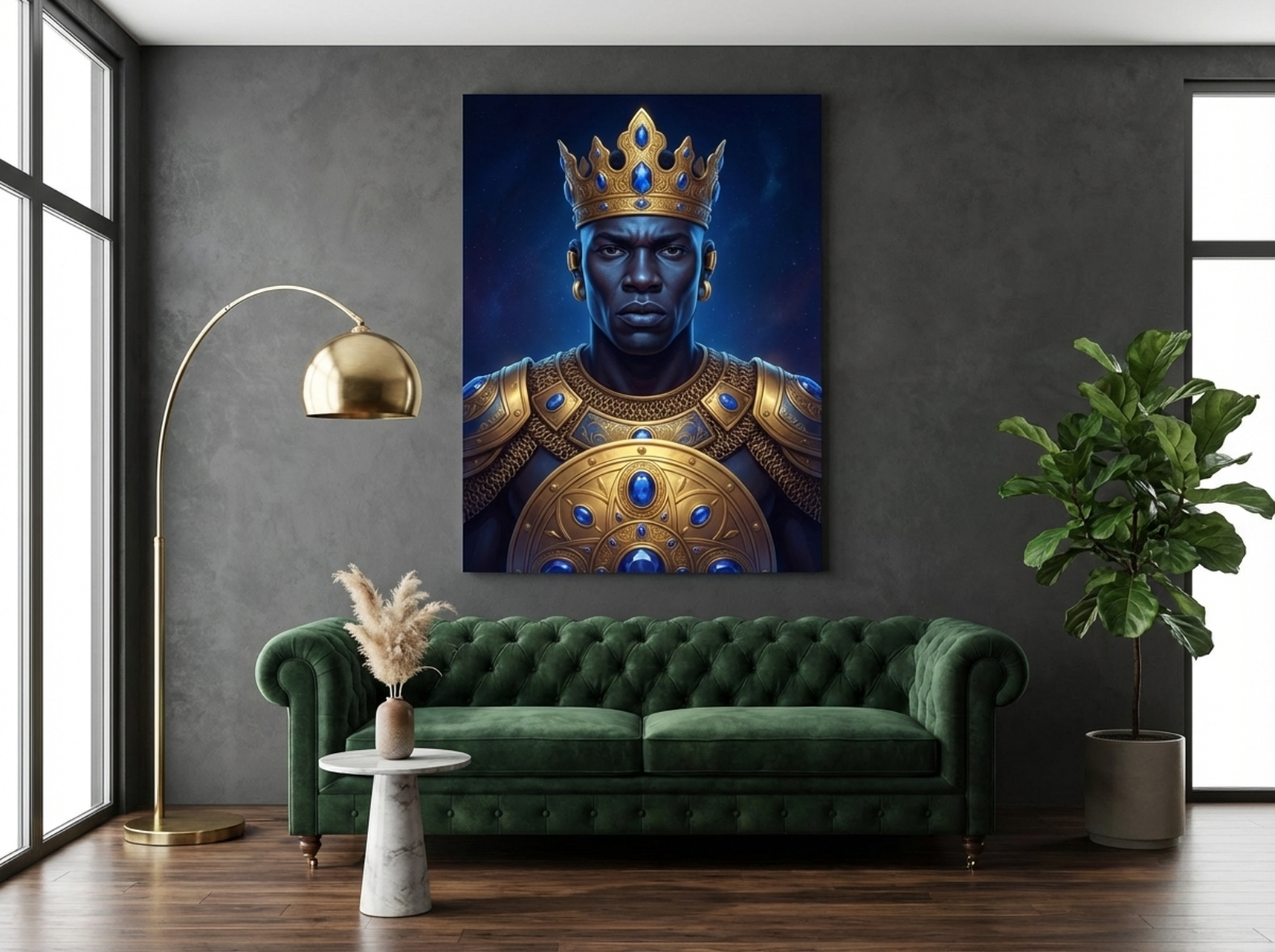
This commanding portrait captures a warrior king in ornate gold armour against a deep navy background. The composition draws from West African royal portraiture traditions, where rulers were depicted in elaborate regalia to project divine authority. Rich gold leaf tones contrast with smoky charcoal shadows, creating a sense of depth and gravitas that dominates any wall.
Best for living rooms, home offices, or entryways where you want to make a bold first impression. Hang it at eye level, roughly 150 cm (59 inches) from floor to centre, on a dark accent wall to let the gold tones radiate. The 60 x 90 cm (24 x 36 inch) size works well as a standalone statement above a console table or bookshelf.
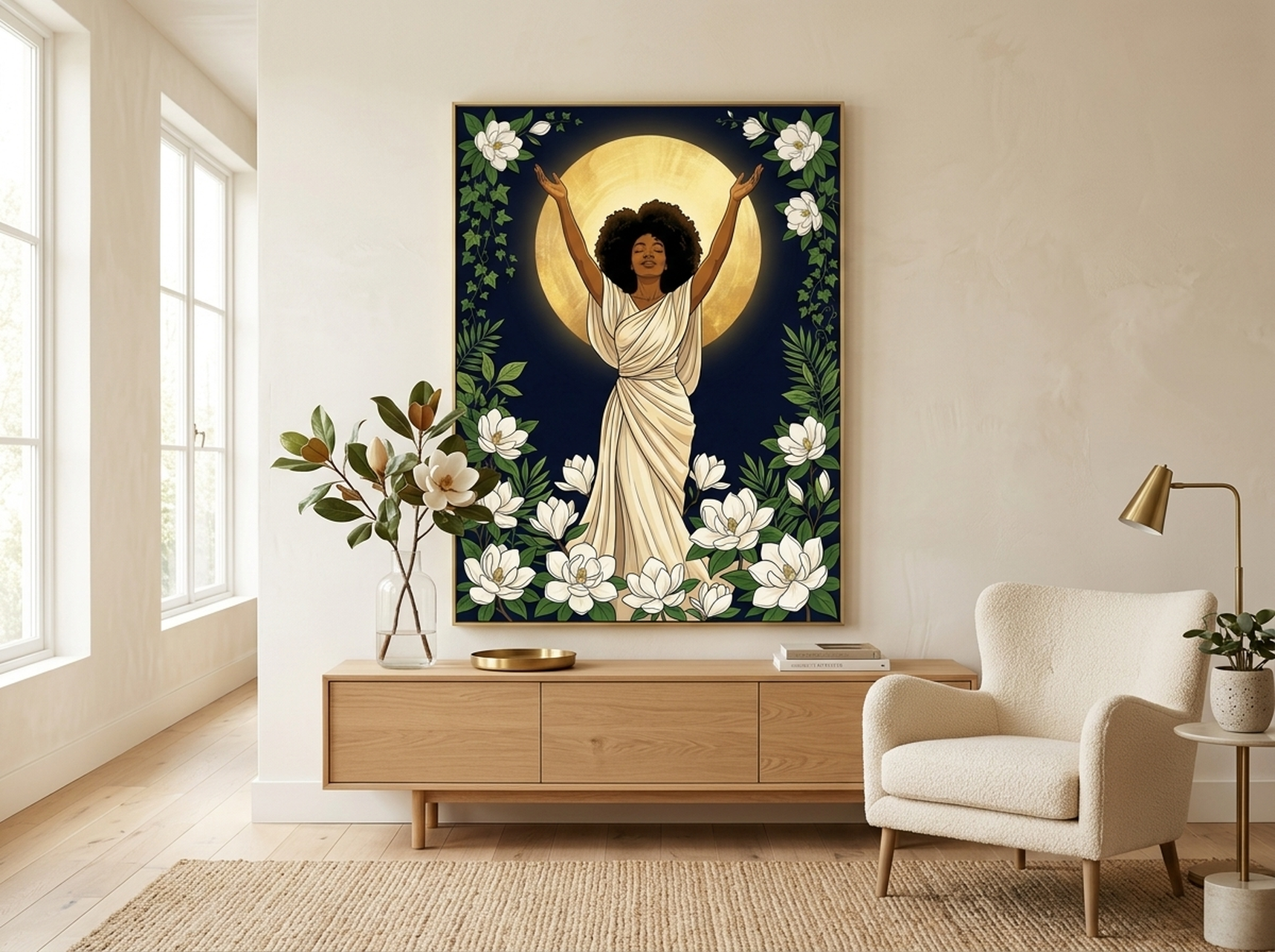
2. Black Woman Worship Canvas Wall Art
This devotional canvas blends African American spiritual expression with lush botanical elements. The figure is shown in a posture of reverent worship, surrounded by soft greenery and golden light. The palette of navy, gold, and forest green connects to the African colour tradition where gold represents divine connection and green symbolises growth and renewal.
Ideal for bedrooms, prayer rooms, or quiet reading nooks. The piece creates a sense of calm and reflection. Position it where morning light can catch the gold highlights, roughly 30 cm (12 inches) above a bedside table or 45 cm (18 inches) above a prayer bench. It pairs naturally with cream or ivory walls and wooden furniture. For more on integrating faith and culture in your decor, read our Afrohemian decor style guide.
View the Black Woman Worship Canvas
3. Gold King Portrait Canvas Wall Art
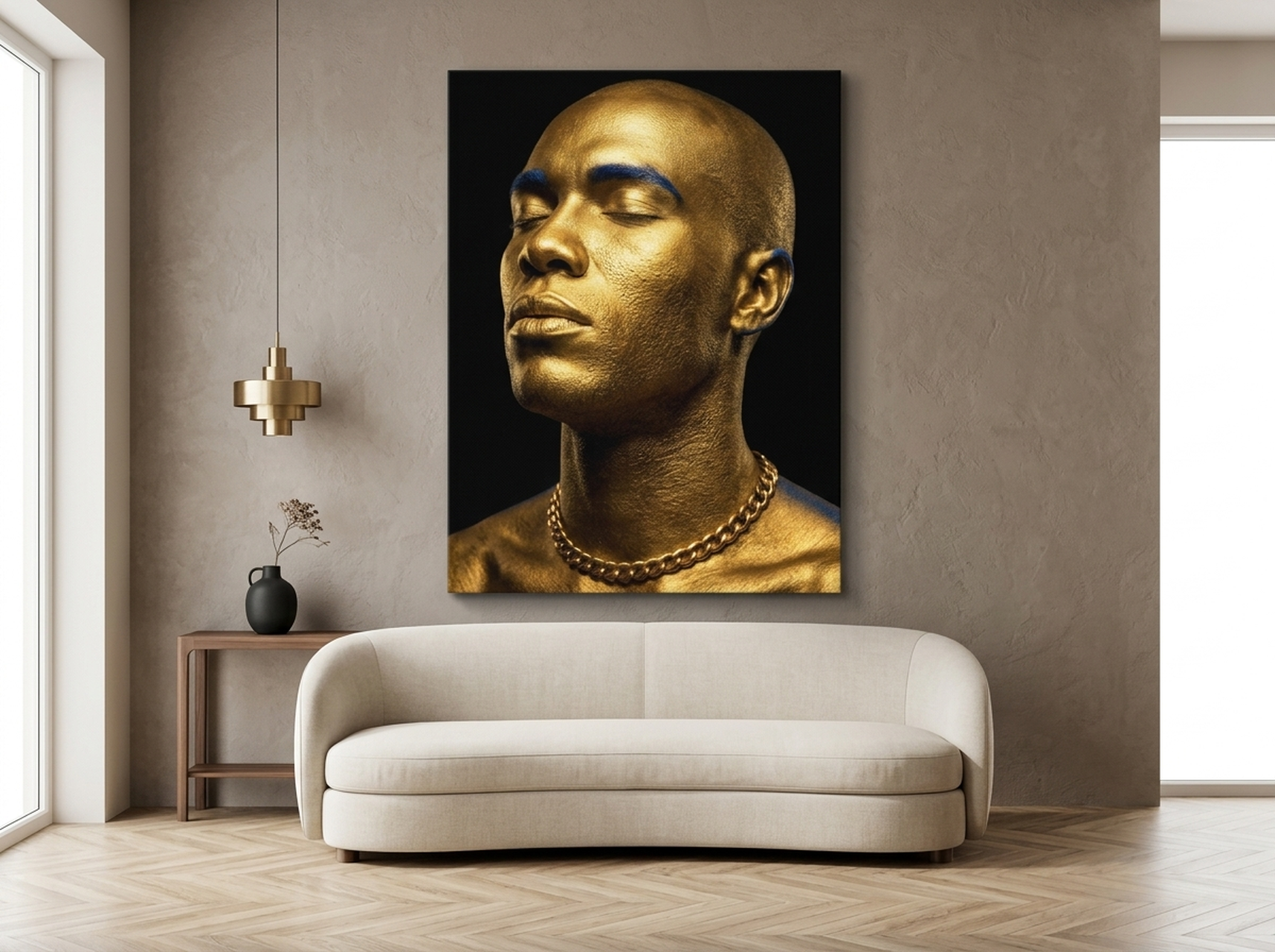
A striking editorial portrait rendered in metallic gold against deep black. This piece channels the visual language of African royal portraiture, where gold is not mere decoration but a symbol of spiritual authority and wealth. The high contrast between the luminous gold and the inky black background creates a gallery-quality focal point that immediately elevates the room.
This canvas shines in formal settings: above a fireplace mantel, centred on a feature wall in a dining room, or flanking a hallway console. Mount it 150 to 160 cm (59 to 63 inches) from floor to centre in high-traffic areas. The metallic tones work exceptionally well with black picture-ledge shelving and brass accents.
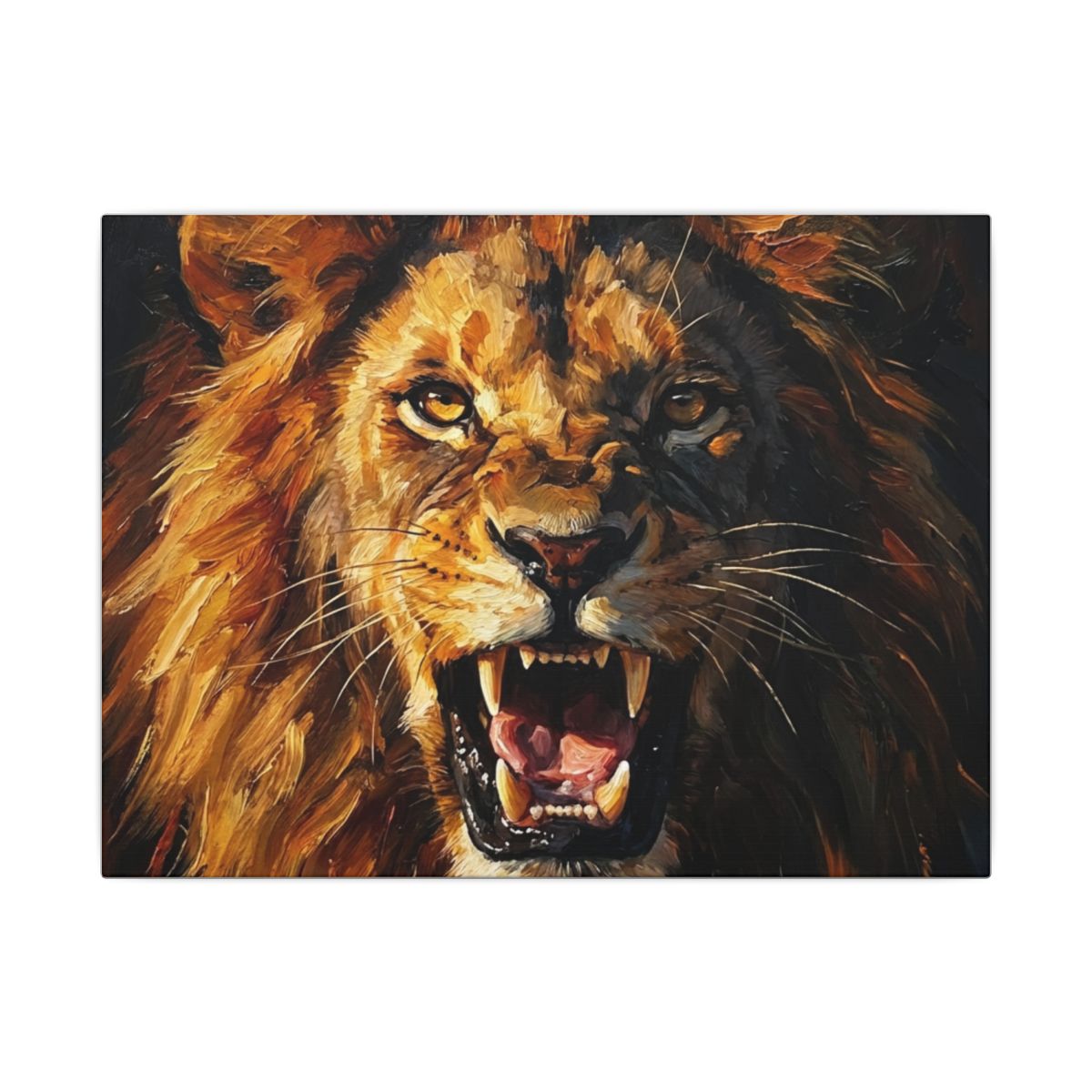
4. Roaring Lion Canvas Print
The lion is the undisputed king of African symbolism, representing courage, authority, and protective strength across dozens of cultures from the Maasai of Kenya to the Zulu of South Africa. This canvas captures a lion mid-roar in dramatic tones of black, gold, and burnt orange, evoking the raw power of the African savanna at dusk.
This is a natural fit for a living room feature wall, a home office, or a game room where you want energy and dynamism. Hang it at the centre of a 240 cm (94 inch) wide wall for maximum impact, leaving at least 20 cm (8 inches) of breathing space on each side. The warm palette complements leather furniture, dark wood, and terracotta accents.
5. Lioness Baroque Canvas Wall Art
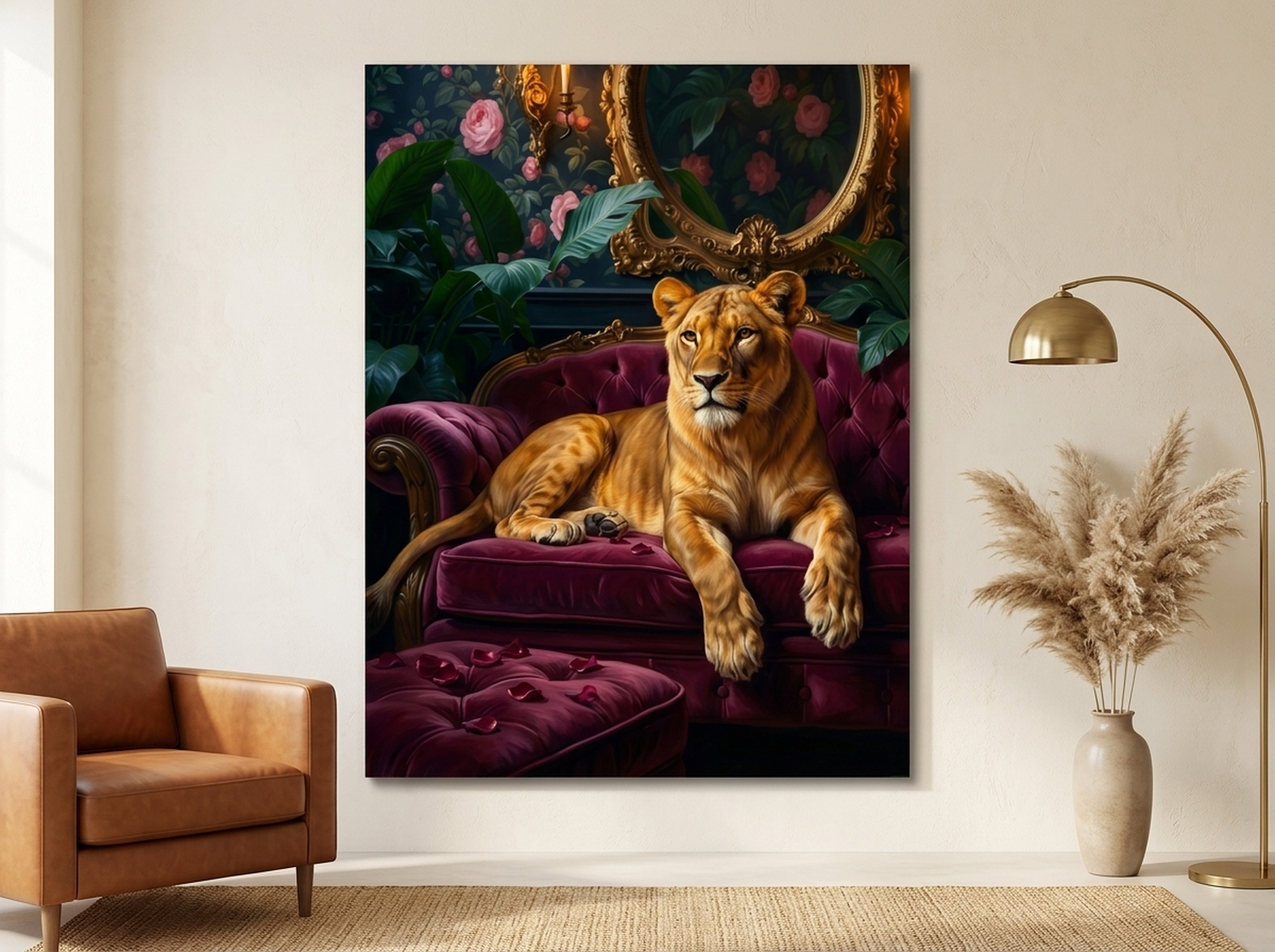
Where the roaring lion commands with brute force, the lioness rules with quiet intelligence. In many African cultures, the lioness embodies maternal strength, strategic patience, and the power of the pride. This baroque-style canvas wraps the lioness in luxurious floral ornamentation, blending African animal symbolism with opulent European decorative motifs for a fusion that feels both worldly and warm.
The rich burgundy, gold, and green palette makes this piece a natural anchor for maximalist or Afrohemian interiors. Hang it in a dining room or living room at 145 to 155 cm (57 to 61 inches) from floor to centre. Pair it with velvet cushions in complementary jewel tones, a brass side table, and woven textiles.
View the Lioness Baroque Canvas
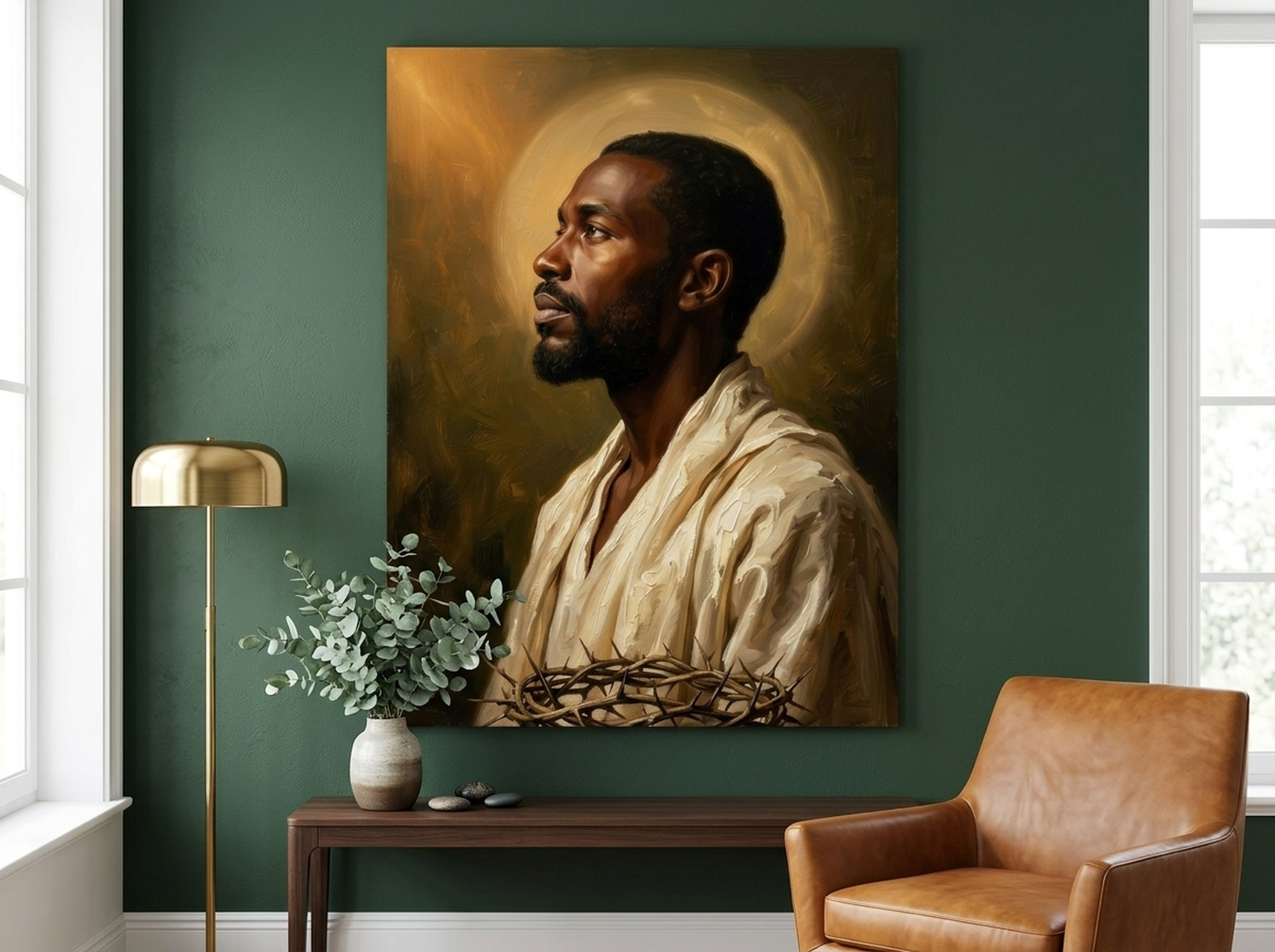
6. Black Jesus Afrocentric Portrait Canvas
This Afrocentric interpretation of Jesus bridges African spiritual identity with Christian devotion. Rendered in warm golds, deep browns, and earthy olive, the portrait draws from the Ethiopian Orthodox iconographic tradition, one of the oldest Christian art traditions in the world, predating European Renaissance depictions by centuries. The oil painting style adds texture and gravitas that feels hand-crafted even in print form.
Place this canvas in a family room, bedroom, or prayer corner. The muted earth tones blend easily with warm neutral walls. Hang it at 140 to 150 cm (55 to 59 inches) from floor to centre, ideally with a small shelf or prayer table 25 cm (10 inches) below the frame. The piece complements wooden crucifixes, woven baskets, and African-print throw pillows.
View the Black Jesus Afrocentric Portrait
How to Style African Wall Art in Your Home
African art is not a single aesthetic. It ranges from minimalist line work to maximalist layered pattern. The key to styling it well is matching the energy of the piece to the energy of the room.
Scale and Placement
For a single statement piece, choose a canvas that covers 55 to 75 percent of the wall width above your primary furniture piece. If your sofa is 200 cm (79 inches) wide, your canvas should be between 110 and 150 cm (43 to 59 inches) wide. Centre the art 15 to 25 cm (6 to 10 inches) above the top of the sofa backrest. For hallways, hang art at 150 cm (59 inches) from floor to centre so it meets the eye line of most adults.
Colour Coordination
Pull one accent colour from your chosen canvas and repeat it two to three times across the room. If your African warrior print features gold, echo that gold in a throw cushion, a table lamp base, and a picture frame on a nearby shelf. This rule of three creates visual cohesion without making the room feel overly themed. Keep your wall colour neutral, warm whites, soft taupes, or muted charcoals, to let the art take centre stage.
Mixing With Other Styles
African canvas art pairs remarkably well with mid-century modern furniture, Scandinavian minimalism, and industrial loft aesthetics. The trick is contrast: a bold, colourful African print looks most striking against a clean, simple background. Avoid competing patterns within a 2 metre (6.5 foot) radius of the canvas. If you want multiple African pieces in one room, vary the subject matter (one portrait, one animal, one geometric) and keep the colour temperature consistent, either warm or cool, but not both.
Lighting
Gallery-quality lighting transforms a good canvas into a great one. Use a picture light mounted 8 to 12 cm (3 to 5 inches) above the frame, angled at 30 degrees, to wash the surface evenly. Warm white bulbs at 2700 to 3000 Kelvin enhance the gold, burgundy, and terracotta tones common in African-inspired art. Avoid cool white or daylight-temperature bulbs, which can wash out warm pigments.
5 Common Mistakes When Decorating With African Art
- Hanging too high. The most common mistake in any wall art installation, but especially with portrait-style African art where eye contact matters. Centre your canvas at 150 cm (59 inches) from the floor, not at the ceiling line. If the piece hangs above furniture, drop to 15 to 25 cm (6 to 10 inches) above the furniture surface.
- Choosing the wrong scale. A 30 x 40 cm (12 x 16 inch) canvas on a 300 cm (10 foot) wall looks like a postage stamp. Measure your wall width and choose a canvas that fills at least 55 percent of the available space. For a 250 cm (98 inch) wall, that means a canvas at least 137 cm (54 inches) wide.
- Treating African art as a single genre. West African geometric patterns, East African wildlife paintings, and Southern African earth-toned abstracts are as different from each other as Impressionism is from Cubism. Mixing all three without intention creates visual chaos. Pick a regional style or a colour family and build around it.
- Ignoring lighting. A canvas in a dark corner is invisible. African art, with its rich colours and layered symbolism, deserves proper illumination. Dedicate at least one adjustable light source to each canvas, whether a picture light, a track light, or a well-positioned floor lamp.
- Clashing frame colours with the art palette. If your canvas features warm golds and terracotta, a chrome or silver frame will fight the composition. Match frame tones to the dominant colour temperature of the art. Warm art gets warm frames (natural wood, brass, matte black). Cool-toned pieces can handle silver or white frames.
Frequently Asked Questions
What makes African wall art different from other cultural art styles?
African art is distinguished by its emphasis on symbolism over realism. Where European art traditions often prioritise accurate depiction of the physical world, African art encodes social, spiritual, and philosophical meaning into every pattern, colour, and form. A single geometric motif might represent a proverb about community or a spiritual principle that has been passed down for generations. This layered meaning makes African art uniquely engaging as home decor because it rewards deeper looking.
How do I choose African wall art that respects the culture?
Look for pieces that draw from genuine artistic traditions rather than superficial stereotypes. Art that references specific patterns (Kente, Adinkra, Ndebele), specific cultural figures (warriors, elders, spiritual leaders), or specific regional aesthetics shows thoughtful engagement. Avoid generic "tribal" designs that flatten the diversity of 54 countries into a single look. Reading about the tradition behind the art, even briefly, helps you make informed choices.
What rooms work best for African-inspired canvas art?
Living rooms and dining rooms are the most popular choices because they are gathering spaces where the art can spark conversation. Bedrooms work well for calmer pieces like spiritual portraits or nature scenes. Home offices benefit from motivational imagery such as warrior kings or lions. Hallways and entryways are ideal for bold statement pieces that set the tone for your entire home.
Can I mix African art with modern or minimalist decor?
Absolutely. African canvas art often looks its most powerful against clean, minimal backdrops. A bold warrior portrait on a plain white wall creates a striking focal point precisely because there is no visual competition. The key is balance: let the art be the maximalist element in an otherwise restrained room. Use neutral furniture, simple lines, and let the canvas carry the colour and pattern.
How large should an African canvas print be for my living room?
Measure the wall space above your main furniture piece. Your canvas should cover 55 to 75 percent of that width. For a standard 200 cm (79 inch) sofa, aim for a canvas between 110 and 150 cm (43 to 59 inches) wide. Vertically, the bottom edge of the canvas should sit 15 to 25 cm (6 to 10 inches) above the sofa back. If you are working with a bare wall and no furniture below, centre the canvas at 150 cm (59 inches) from the floor.
Do African art colours have specific meanings I should know about?
Yes. Gold and yellow represent wealth and spiritual purity, particularly in West African Ashanti culture. Red symbolises bravery and spiritual energy. Black stands for maturity and ancestral connection. Blue represents peace and harmony. Green symbolises growth and earth. White means purity and joy. Choosing colours intentionally lets you align your decor with the values each shade traditionally embodies.
Quick Reference Table
| Product | Best For | Dominant Colours | Link |
|---|---|---|---|
| African Warrior King | Living room, home office, entryway | Navy, gold, charcoal | View |
| Black Woman Worship | Bedroom, prayer room, reading nook | Navy, gold, green | View |
| Gold King Portrait | Dining room, fireplace wall, hallway | Gold, black, navy | View |
| Roaring Lion | Living room, home office, game room | Black, gold, orange | View |
| Lioness Baroque | Dining room, maximalist living room | Burgundy, gold, green | View |
| Black Jesus Afrocentric | Family room, bedroom, prayer corner | Gold, brown, olive | View |
Bring African Heritage Into Your Home
African wall art does what few other decor choices can: it connects your living space to one of the world's oldest and richest artistic traditions while making a visually stunning impact. Whether you gravitate toward the regal authority of a warrior king, the quiet devotion of a faith-inspired portrait, or the untamed power of a roaring lion, each canvas carries stories and symbolism that go far deeper than surface beauty.
Explore the full African-inspired canvas art collection and find the piece that speaks to your heritage, your values, and your home.