African Wall Art: Styles, History, and How to Decorate With It
The Heva Team
Art Curators & Interior Design Enthusiasts · January 19, 2026 · 14 min read
Explore African wall art from ancient Egyptian motifs to North African geometric patterns. Get room-by-room decorating advice with real measurements and six expert-curated canvas picks.
African wall art carries thousands of years of storytelling, spiritual symbolism, and artistic innovation onto your walls. Whether you are drawn to the geometric precision of North African zellige tiles or the expressive brushwork of contemporary Afrocentric portraits, these pieces do far more than fill empty space. They connect you to art movements that shaped civilizations and continue to influence designers around the world.
If you have ever stood in front of an African mask at a museum and felt a pull you could not explain, this guide is for you. We will walk through the major art movements and historical traditions behind African wall art, show you six specific pieces you can hang today, and give you room-by-room decorating advice with real measurements.
Ready to browse? Shop our African wall art collection or keep reading for our top picks and expert tips.
A Brief History of African Art Movements
African art is not a single tradition. It spans at least 75,000 years across a continent of 54 countries, hundreds of ethnic groups, and dozens of distinct artistic philosophies. Understanding these movements helps you choose pieces that resonate with specific cultural narratives rather than a generic idea of "African art."
The earliest known African art appears in the Blombos Cave in South Africa, where archaeologists discovered ochre engravings dating back roughly 75,000 years. These crosshatch patterns represent some of the oldest evidence of symbolic thinking anywhere on Earth. Fast forward to the Nok civilization of present-day Nigeria (around 500 BCE to 200 CE), and you find terracotta sculptures with elaborate hairstyles, wide eyes, and expressive poses that influenced West African art for centuries.
By the 12th century, the Ife and Benin Kingdoms in what is now Nigeria were producing bronze and brass portrait heads of astonishing naturalism. These royal portraits, cast using the lost-wax technique, rivalled anything produced in Renaissance Europe. The Benin Bronzes, numbering over 3,000 pieces, are still considered among the greatest achievements in metal casting.
In the early 20th century, African art changed the trajectory of Western art entirely. According to The Metropolitan Museum of Art, artists like Pablo Picasso and Henri Matisse encountered African masks and sculptures in Parisian galleries and incorporated their angular forms, flattened perspectives, and spiritual intensity into Cubism and Fauvism. Picasso's 1907 painting "Les Demoiselles d'Avignon" drew directly on the carved geometries of Fang and Grebo masks from Gabon and Ivory Coast.
Today, as The World from PRX reports, African art is experiencing a global surge in recognition. Major museums have restructured their programming to integrate African artists within central narratives rather than relegating them to side exhibitions. Contemporary artists across the continent and its diasporas are drawing on ancestral traditions while pushing into digital media, mixed-media sculpture, and large-scale installation.
Ancient Egyptian Art and Its Lasting Impact
Ancient Egypt, located in the northeast corner of Africa, produced one of the most visually distinctive art traditions in human history. Egyptian art was governed by strict conventions: figures were shown with heads in profile, shoulders facing forward, and legs in a walking stance. These were not artistic limitations but deliberate choices rooted in the Egyptian concept of showing the most recognizable angle of each body part simultaneously.
The colour palette of Egyptian art was equally codified. Gold represented the flesh of the gods. Lapis lazuli blue symbolised the heavens and the Nile. Turquoise evoked regeneration and fertility. Black, far from being morbid, represented the fertile soil of the Nile Delta and was associated with Osiris and rebirth.
When you hang a canvas inspired by Egyptian iconography, you are tapping into a 3,000-year tradition of art that was always meant to be displayed on walls. The tombs of the Valley of the Kings were essentially galleries, with every surface covered in narrative painting. Modern canvases that reinterpret Egyptian themes bring that same monumental quality to your home. A 61 by 81 cm (24 by 32 inch) framed print of Nefertiti or Anubis becomes a focal point that anchors an entire wall.
For rooms with neutral walls in cream, taupe, or warm grey, Egyptian-inspired pieces with gold and turquoise accents create a striking contrast. Position the artwork at eye level, which means the centre of the canvas should sit approximately 145 to 150 cm (57 to 60 inches) from the floor.
North African Geometric and Islamic Art
North African art, spanning Morocco, Tunisia, Algeria, and Egypt, developed a distinctly geometric visual language influenced by Islamic artistic principles. Unlike figurative West African or Egyptian art, Islamic art in North Africa focused on intricate patterns, calligraphy, and arabesque designs. The zellige tilework of Fez and Marrakech, the carved stucco of Andalusian-Moorish palaces, and the woven textiles of Berber communities all share a mathematical precision that feels simultaneously ancient and modern.
Geometric Islamic art is built on a foundation of repeating star patterns, typically based on 6-fold, 8-fold, or 12-fold rotational symmetry. A single star motif can generate infinite pattern variations when tiled across a surface. This approach to design influenced European decorative arts, from the Alhambra tiles that inspired M.C. Escher to the Art Deco geometry of 1920s architecture.
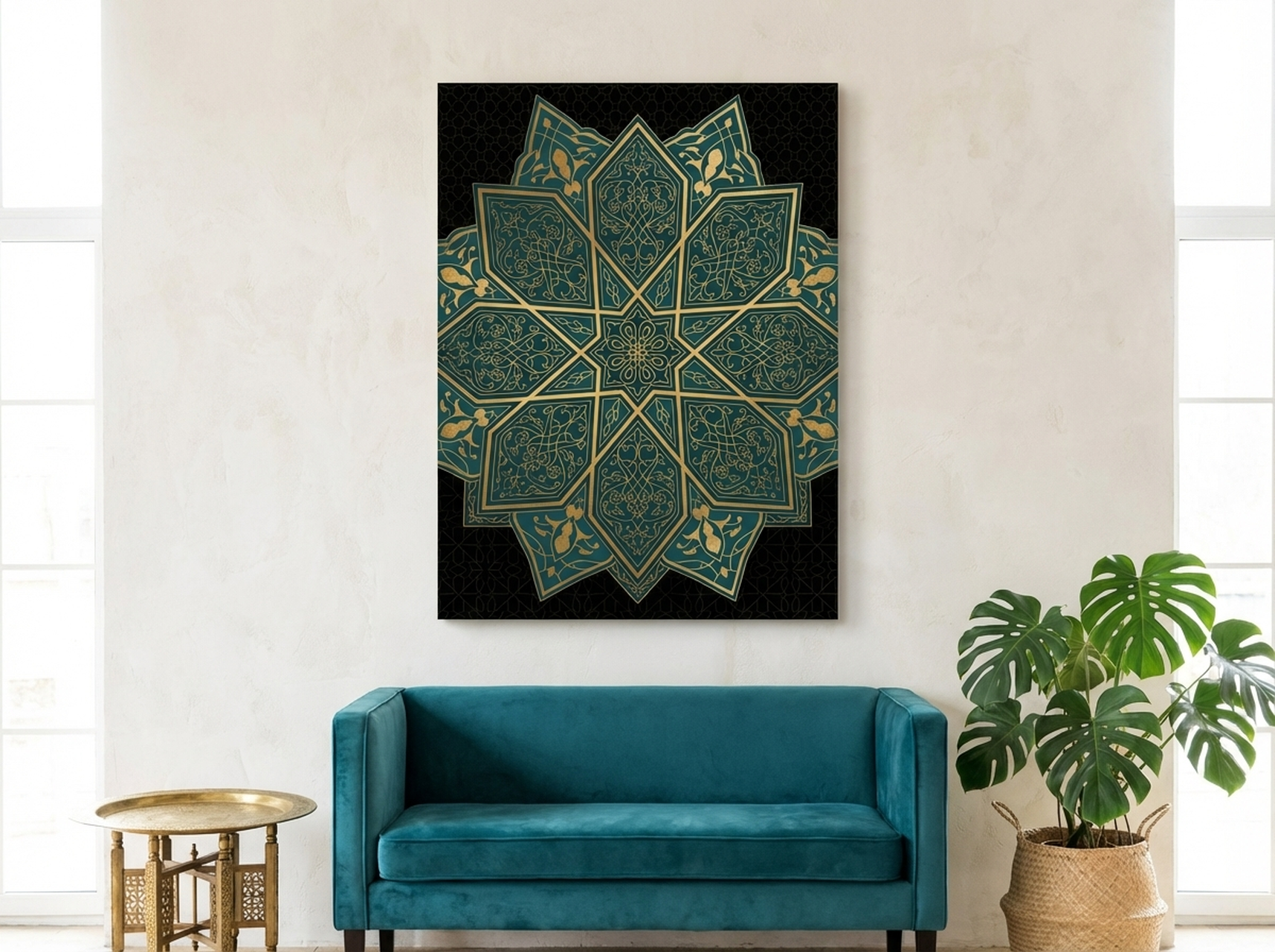
Canvas prints that capture this geometric tradition work exceptionally well in hallways, entryways, and dining rooms. The repeating patterns create a sense of calm and order that suits transitional spaces. A 51 by 71 cm (20 by 28 inch) canvas with a teal and gold zellige pattern looks striking above a console table or sideboard. Pair it with brass hardware, a carved wood mirror, or a woven jute rug to reinforce the North African aesthetic without making the room feel like a themed set.
Moroccan-inspired art also brings warmth to modern minimalist interiors. The teal, saffron, and terracotta colour combinations found in traditional Moroccan medinas create a rich, layered look that counterbalances the cool greys and whites typical of contemporary design. If your walls are white or light grey, a Moroccan scene canvas adds depth and warmth that paint alone cannot achieve.
Our 6 Top Picks for African Wall Art
1. Anubis Egyptian God Canvas Wall Art
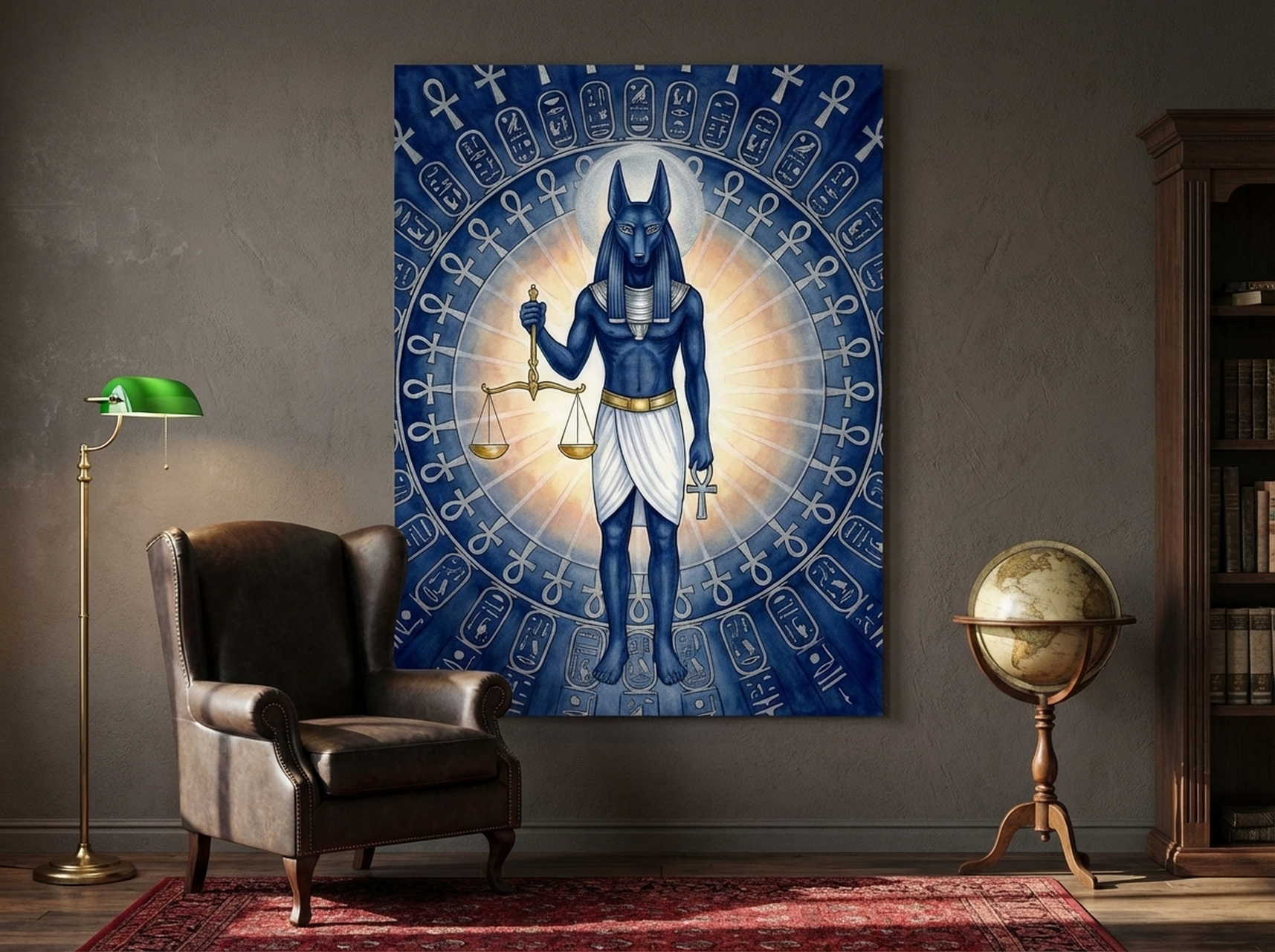
This striking canvas reimagines the Egyptian god Anubis through a mandala-inspired lens, layering intricate geometric patterns in midnight blue and silver against a deep navy background. Anubis, the jackal-headed god of the afterlife, was one of the most visually powerful figures in the Egyptian pantheon. This print captures that commanding presence while adding a contemporary mandala framework that echoes the mathematical precision of North African geometric art. Hang it in a study or home office where the dark, contemplative palette supports focused work. The silver and gold accents catch ambient light, adding visual depth without overwhelming the space. A 61 by 81 cm (24 by 32 inch) version works well above a desk or reading chair.
2. Islamic Geometric Star Canvas Wall Art
North African zellige tilework is one of the most recognisable art forms on the continent, and this canvas translates its mathematical beauty into a framed piece you can hang in minutes. The eight-pointed star pattern in teal and gold against black evokes the carved plasterwork and glazed tiles of Moroccan riads and Andalusian palaces. Each geometric element repeats with rotational symmetry, creating a mesmerising optical effect that draws the eye inward. This canvas works beautifully in an entryway or hallway, where its pattern adds visual interest to a transitional space. At 51 by 71 cm (20 by 28 inches), it sits perfectly above a narrow console table. Pair it with a brass tray and a small potted succulent for a layered Moroccan-inspired vignette.
View the Islamic Geometric Star
3. Leopard Print Canvas Wall Art
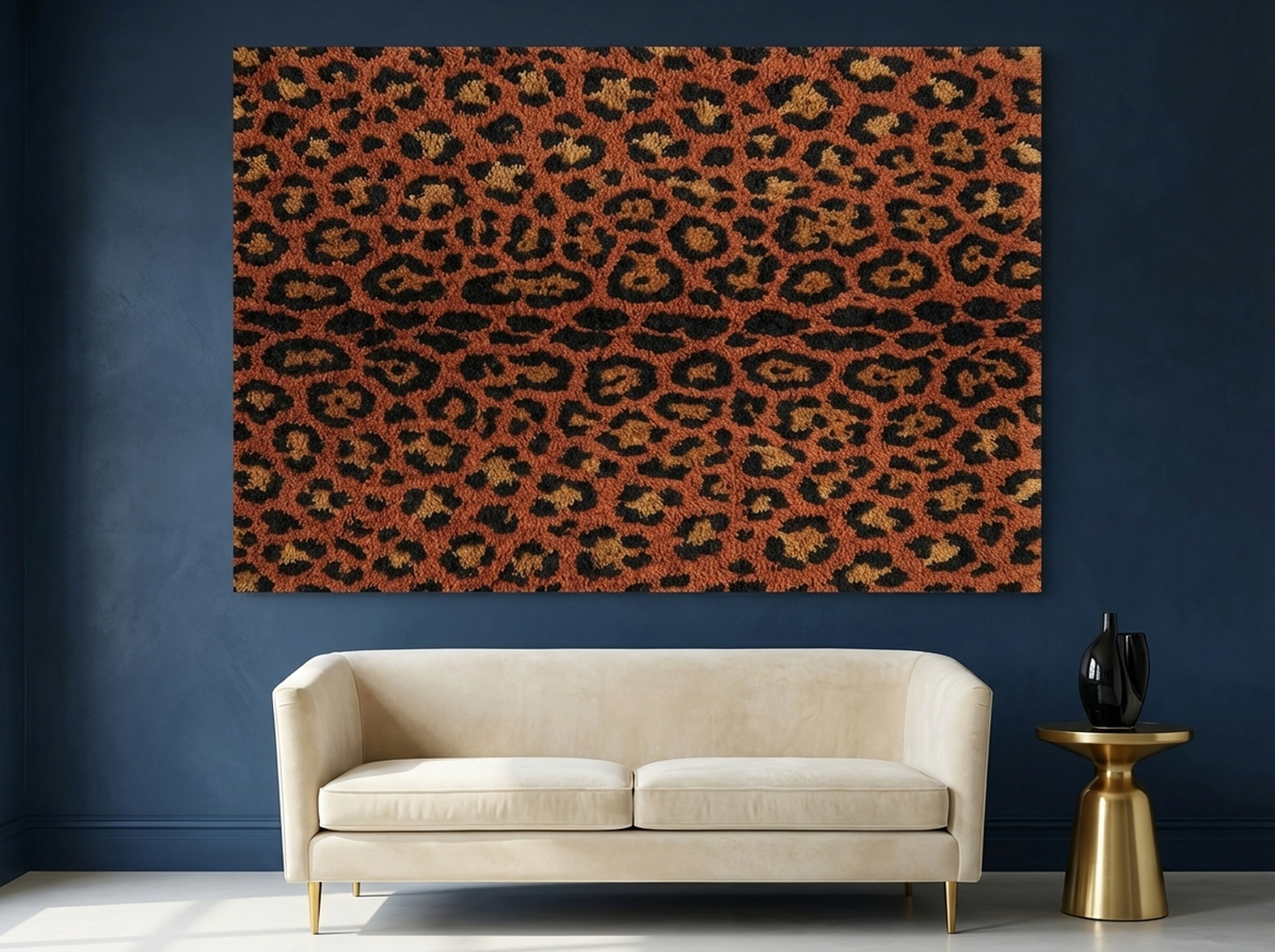
The leopard has held symbolic power across African cultures for millennia. In West Africa, leopard imagery denoted royal authority. Among the Zulu of Southern Africa, the leopard skin was reserved for chiefs. This canvas captures that primal energy through a bold terracotta and black pattern rendered as a luxury texture print. The abstract treatment transforms a literal animal print into a sophisticated design element that reads as pattern art rather than literal wildlife. It suits bold bedrooms, eclectic living rooms, or any space where you want to inject warmth and energy. A 61 by 81 cm (24 by 32 inch) frame in natural wood or espresso complements the warm earth tones. Position it as the anchor piece on a feature wall with solid-coloured cushions in burnt orange or deep brown nearby.
4. Black Panther Glitch Art Canvas Print
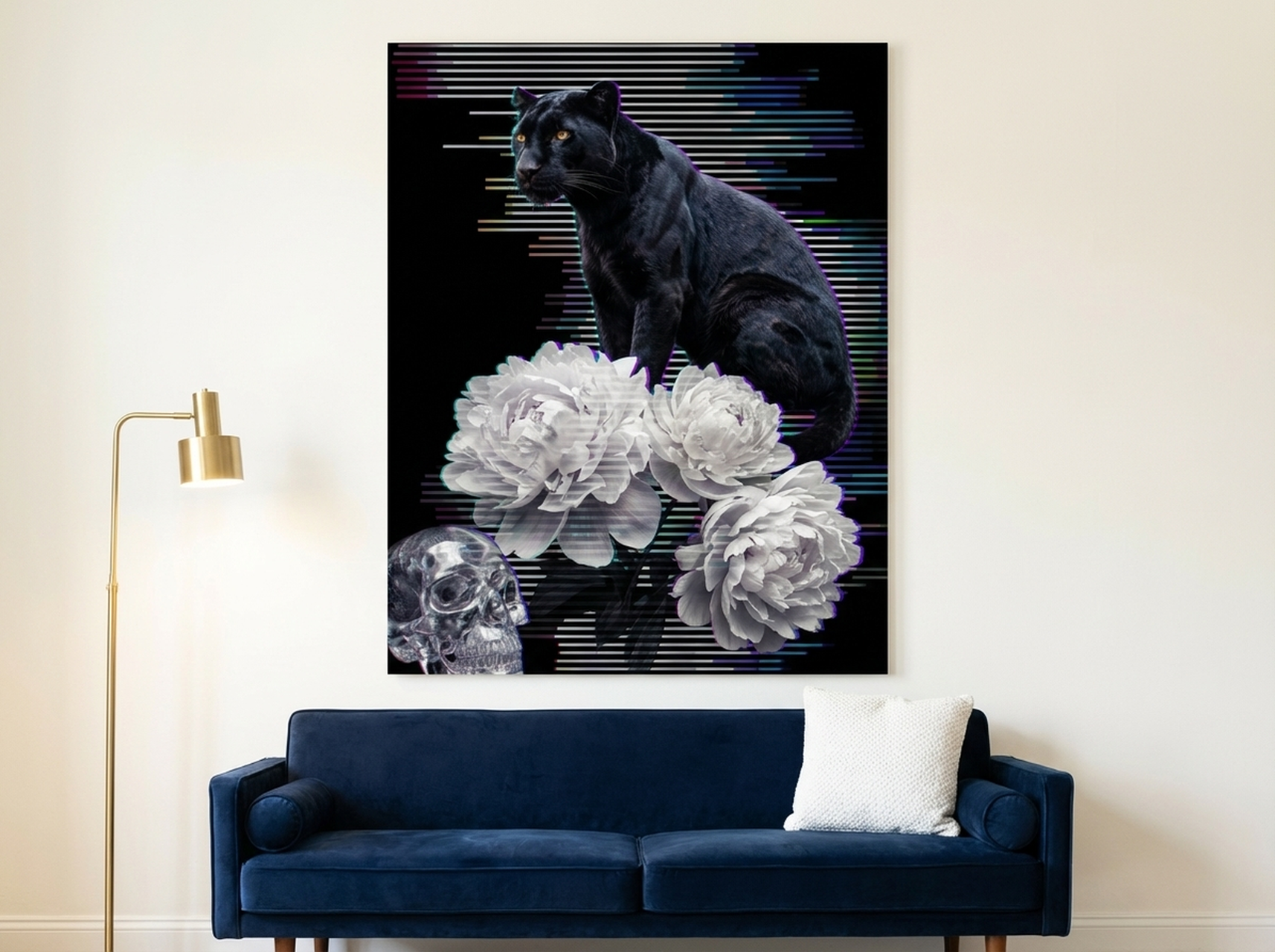
The panther holds deep significance in African and African American visual culture, symbolising power, stealth, and resilience. This contemporary canvas reimagines the black panther through a glitch-art lens, layering dark floral elements with cyan and navy digital distortion effects. The result is a piece that bridges traditional African wildlife symbolism with the visual language of vaporwave and digital art. It works perfectly in teen rooms, modern dens, or creative studios where you want art that feels both culturally rooted and forward-looking. Hang it on a dark-painted accent wall (charcoal, navy, or forest green) to let the cyan highlights pop. A 46 by 61 cm (18 by 24 inch) version suits smaller spaces, while the full 61 by 81 cm (24 by 32 inch) canvas commands a larger wall.
View the Black Panther Glitch Art
5. Geometric Texture Panels Canvas Wall Art
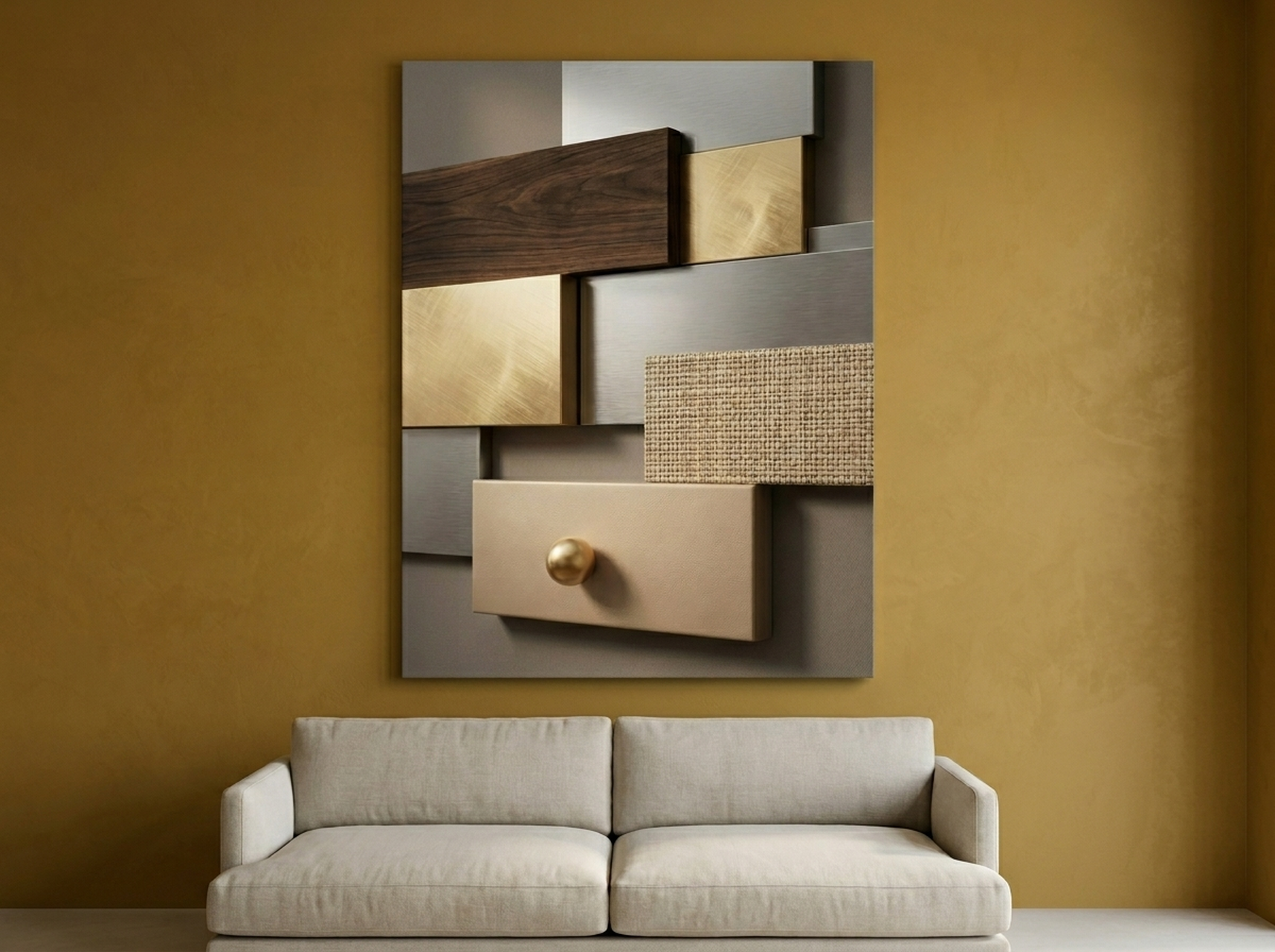
African textile traditions, from Kente cloth in Ghana to Mud cloth (Bogolan) in Mali, rely on geometric repetition to create complex visual rhythms. This canvas channels that same philosophy through a series of textured panels in walnut, gold, and silver. The layered geometric forms recall both the carved wooden doors of Swahili architecture and the woven patterns found across the Sahel region. Hang it in a hallway or dining room where the linear composition guides the eye down the length of the space. The neutral palette of brown, gold, and cream makes it one of the most versatile African-inspired pieces in our collection. It pairs easily with mid-century modern furniture, industrial shelving, or rustic wood tables without clashing.
View the Geometric Texture Panels
6. Geometric Starburst Canvas Print
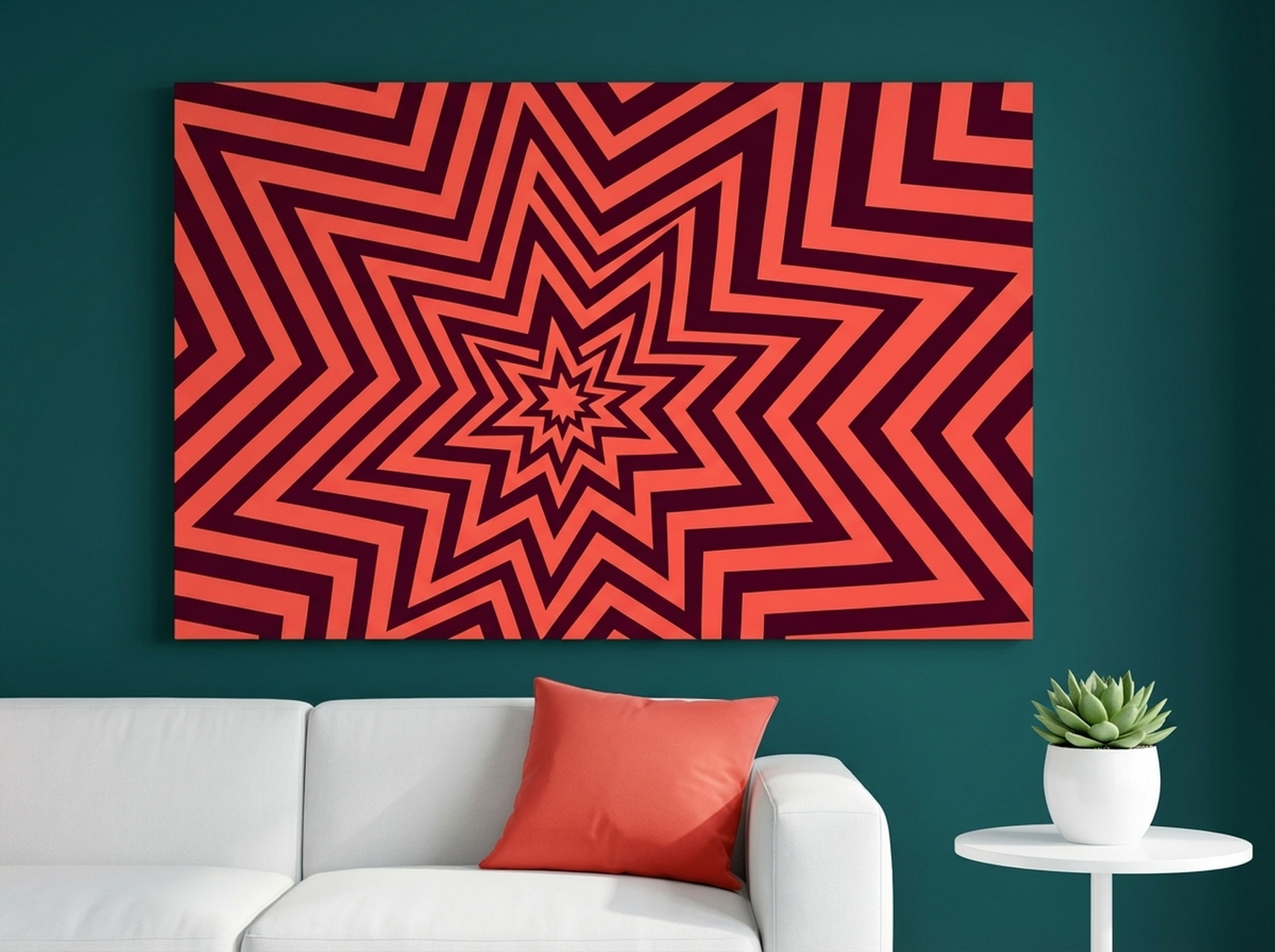
Bold concentric patterns appear throughout African art history, from the radial designs on Zulu shields to the sunburst motifs found in Ethiopian religious manuscripts. This canvas captures that visual intensity through a coral-red starburst that radiates outward with optical precision. The warm red and orange palette channels the terracotta tones of traditional African earth pigments, while the op-art treatment gives it a thoroughly modern edge. This piece is a statement maker. Hang it in a living room as a solo focal point on a white or light grey wall, where the burst of colour commands attention from across the room. At 61 by 81 cm (24 by 32 inches), it fills a standard feature wall space above a sofa perfectly. Keep surrounding decor minimal to let the colour and pattern do the talking.
Want to explore more heritage-focused picks? See our companion guide: African Wall Art: Celebrate Heritage With Bold Canvas Prints, which covers regional African art styles and traditional motifs in greater depth.
Room-by-Room Decorating Guide for African Wall Art
Choosing the right African art is only half the job. Where and how you hang it determines whether a piece looks intentional or like an afterthought. Here is a room-by-room breakdown with specific measurements.
Living Room
The living room is where most people start, and for good reason. A large canvas measuring 61 by 81 cm (24 by 32 inches) or bigger should hang above the sofa with its centre at eye level, about 145 to 150 cm (57 to 60 inches) from the floor. The bottom edge of the frame should sit 15 to 20 cm (6 to 8 inches) above the back of the sofa. For African geometric pieces, keep the surrounding wall uncluttered. A single bold canvas surrounded by 30 cm (12 inches) of open wall on each side reads as confident and intentional. For a more layered Afrohemian look, try grouping three smaller canvases in a horizontal line with 5 cm (2 inches) between each frame.
Bedroom
African art in the bedroom should support relaxation. Choose pieces with warm, muted palettes: terracotta, burnt sienna, deep gold, or midnight blue. Avoid high-contrast black-and-white graphic patterns above the headboard, as they can feel visually stimulating when you want calm. A single canvas measuring 51 by 71 cm (20 by 28 inches) centred above the headboard works best. Leave 10 to 15 cm (4 to 6 inches) between the top of the headboard and the bottom of the frame.
Hallway and Entryway
Narrow spaces benefit from vertical or square canvases that do not extend past the wall width. North African geometric patterns and Moroccan medina scenes suit hallways because the repeating patterns create rhythm as you walk past. Hang artwork so the centre sits at 150 cm (59 inches) from the floor. In narrow hallways under 120 cm (47 inches) wide, stay under 51 cm (20 inches) in canvas width to maintain comfortable visual proportions.
Home Office
For a home office, Egyptian and mythological pieces like the Anubis or Nefertiti canvases add gravitas without distraction. Position art on the wall you face while working, not behind your monitor. A piece at 45-degree angle from your line of sight provides a visual rest point during breaks. Our guide to cultural heritage wall art covers how to build a meaningful collection around a specific cultural theme.
Common Mistakes to Avoid
1. Hanging Art Too High
The most common mistake is hanging art at the height of the person who installs it rather than at a standardised eye level. The centre of your canvas should sit at 145 to 150 cm (57 to 60 inches) from the floor, regardless of your ceiling height. Going higher makes the art feel disconnected from the furniture below it.
2. Choosing Art That Is Too Small for the Wall
A 30 by 40 cm (12 by 16 inch) canvas on a 300 cm (10 foot) wide wall looks like a postage stamp. The art should cover 55 to 75 percent of the available width above your furniture. If you have a 180 cm (71 inch) sofa, your artwork or arrangement should span 100 to 135 cm (39 to 53 inches).
3. Mixing Too Many Cultural Styles Without a Unifying Thread
African art encompasses enormous diversity. A Moroccan geometric canvas next to an Egyptian deity print next to a West African expressionist portrait can look scattered if there is no unifying element. Pick one connecting thread: a shared colour palette (gold, terracotta, and navy work across most African art traditions), a consistent frame colour, or a shared material like matte canvas. This creates cohesion without forcing every piece to match exactly.
4. Ignoring Lighting
African art with metallic accents (gold, silver, bronze) looks dramatically different under warm versus cool lighting. Warm LED bulbs at 2700K to 3000K bring out gold tones and make terracotta colours glow. Cool white lights above 4000K flatten warm tones and make metallic accents look grey. If you invest in a statement canvas, add a picture light or adjustable track lighting pointed at the artwork at a 30-degree angle from the wall.
5. Treating African Art as Theme Decor
African art is not a theme you turn on and off like a seasonal display. The strongest interiors integrate African pieces alongside modern furniture, neutral textiles, and contemporary accessories. Let a single African canvas serve as the room's focal point rather than surrounding it with matching African-themed cushions, rugs, and vases. Restraint lets each piece breathe and speak for itself.
Frequently Asked Questions About African Wall Art
What makes African wall art different from other cultural art styles?
African wall art draws from the oldest continuous artistic traditions on Earth, spanning at least 75,000 years. Unlike European art traditions that prioritised photographic realism from the Renaissance onward, many African traditions used stylisation, geometric abstraction, and symbolic colour to convey spiritual meaning and social status. The result is artwork that feels simultaneously ancient and contemporary, which is why African aesthetics influenced modern Western movements like Cubism and Expressionism.
How do I choose African art that fits my existing decor?
Start with your room's dominant colour. If your space features warm neutrals (beige, cream, taupe), lean toward African art with gold, terracotta, and brown tones. For cool-toned rooms with grey or blue walls, Egyptian-inspired pieces in turquoise, silver, and midnight blue integrate naturally. Moroccan geometric art in teal and gold bridges both warm and cool palettes. The key is matching the artwork's undertone to your existing palette rather than trying to match exact colours.
Is it culturally appropriate to display African art if I am not African?
Appreciating and displaying African art is welcomed by most African artists and cultural commentators, provided it is done with respect and genuine interest. The key distinctions are appreciation versus appropriation. Buying from artists or businesses that credit the cultural origins, learning about the traditions behind the art, and displaying pieces with care all fall on the side of appreciation. Avoid reducing complex artistic traditions to generic labels, and take the time to understand what the imagery represents.
What frame colours work best with African art?
Black frames provide clean contrast for colourful pieces with gold, teal, or terracotta palettes. Espresso (dark brown) frames complement warm-toned Egyptian and wildlife art by echoing the earthy colour family. Natural wood frames suit geometric and textile-inspired pieces that have an organic or handcrafted feel. White frames work for lighter Moroccan or contemporary pieces but can look stark against very dark artwork. Our canvases ship in your choice of black, white, espresso, or natural wood frames.
How large should African wall art be above a sofa?
A single canvas above a sofa should span roughly two-thirds the width of the sofa. For a standard 180 cm (71 inch) sofa, that means a canvas or arrangement measuring about 120 cm (47 inches) wide. If you prefer a single piece, a 61 by 81 cm (24 by 32 inch) canvas works well. For a gallery-wall effect, group two or three pieces totalling 100 to 135 cm (39 to 53 inches) in combined width with 5 cm (2 inches) between frames.
Quick Reference Table
| Product | Best For | Dominant Colours | Link |
|---|---|---|---|
| Anubis Egyptian God | Dark academia study or office | navy, blue, silver, gold | View |
| Islamic Geometric Star | Entryway or hallway feature wall | black, teal, gold, navy | View |
| Leopard Print | Bold bedroom or eclectic living room | terracotta, orange, black, gold | View |
| Black Panther Glitch Art | Teen room or modern den | black, navy, purple, cyan | View |
| Geometric Texture Panels | Hallway or dining room accent | brown, gold, silver, cream | View |
| Geometric Starburst | Statement living room or creative studio | red, orange, burgundy, coral | View |
Start Your African Art Collection
African wall art is not a passing trend. It draws from artistic traditions that have influenced every major art movement of the last century and continue to shape contemporary design. Whether you start with a single Moroccan geometric canvas in your hallway or build a full gallery wall of Egyptian, West African, and North African pieces, each canvas adds a layer of history and visual sophistication to your home.
Every canvas in our collection ships framed, with pre-installed hanging hardware, and arrives ready to display. Free US shipping on all orders, with a 30-day satisfaction guarantee.