Coastal Wall Art: Bring the Beach Into Your Home
The Heva Team
Art Curators & Interior Design Enthusiasts · February 2, 2026 · 13 min read
Coastal wall art brings the calm of the ocean into your home, no beach house required.
If your home feels like it is missing something calm, spacious, and deeply restful, coastal wall art might be the answer. Ocean-inspired artwork brings the serenity of open water, the soft glow of a sunset horizon, and the organic beauty of marine life directly onto your walls, regardless of how far you live from the nearest shore. In this guide you will discover which coastal styles suit each room, learn the colour psychology behind why ocean hues feel so calming, explore six hand-picked canvas prints from our gallery, and pick up expert hanging and styling tips you can use today.
Ready to browse? Explore our full coastal art collection, or keep reading for our top picks and expert tips.
What You Will Find in This Guide
- Why Coastal Art Makes Any Room Feel Bigger and Calmer
- The Colour Psychology of Ocean-Inspired Art
- Our 6 Top Coastal Canvas Picks
- Room-by-Room Coastal Styling Guide
- How to Hang and Display Coastal Wall Art
- Common Mistakes to Avoid
- Coastal Art FAQ
- Quick Reference Table
Why Coastal Art Makes Any Room Feel Bigger and Calmer
Interior designers regularly use coastal artwork to create an optical sense of depth, and the reason is simple: ocean scenes feature a natural horizon line that draws the eye outward and tricks the brain into perceiving more space. A canvas that sits 60 cm (24 inches) wide above a console table can make a narrow hallway feel twice its actual depth. Place a larger piece, around 90 cm to 120 cm (36 to 48 inches), above a sofa and the wall appears to extend toward the sea.
The calming power of coastal imagery is not just anecdotal. A 2017 study published in the journal PLOS ONE found that blue lighting accelerates post-stress relaxation, with participants recovering roughly three times faster under blue tones than under conventional white light. When you hang ocean-palette artwork in a room where you unwind, you are surrounding yourself with those same wavelengths of calm.
Beyond relaxation, coastal art creates visual continuity. Because ocean tones, soft blues, sandy neutrals, seafoam greens, are inherently neutral-adjacent, they complement almost every furniture finish and flooring colour. That versatility is why coastal themes consistently rank among the most popular wall art categories in interior design, regardless of whether the home is a beachfront cottage or a city apartment.
The Colour Psychology of Ocean-Inspired Art
Colour drives the emotional impact of any artwork, and coastal palettes are especially powerful because they draw from the colours our ancestors associated with safety: fresh water, open skies, and fertile land. Understanding these associations will help you choose pieces that do more than match your sofa.
Ocean Blue (deep navy to bright cerulean): Blue lowers heart rate and blood pressure, according to colour psychology research covered by Psychology Today. Deep navy adds gravitas and works in formal living rooms, while brighter cerulean energises bathrooms and kitchens. A canvas with a dominant blue of at least 40 percent of the surface area will anchor the mood of the whole room.
Seafoam Green (muted sage to teal): Green sits at the centre of the visible spectrum, requiring the least adjustment from the human eye, which is why it feels so restful. In coastal art, seafoam bridges the gap between blue and green, making it the most versatile accent for bedrooms and reading nooks. Pair seafoam artwork with warm oak or walnut frames for a modern coastal look.
Sandy Neutral (warm beige to driftwood brown): Sandy tones ground a coastal palette and prevent it from feeling cold or clinical. A canvas that combines blue water tones with warm sandy foregrounds will feel balanced in any room, day or night, because the warmth compensates for the coolness of artificial evening lighting.
Coral and Amber (sunset warmth): These accent colours inject energy without abandoning the coastal theme. Use them sparingly: a single statement piece with coral or amber highlights, placed opposite a window, catches the golden-hour light and turns any wall into a miniature sunset. The 2026 trend toward warm coastal palettes, documented by HGTV Home by Sherwin-Williams, confirms that coastal design is moving beyond stark blues into richer, layered combinations.
For a deeper dive into how colour choices affect mood and energy in every room, read our guide to the psychology of colours in wall art.
Our 6 Top Coastal Canvas Picks
1. Sea Turtle Canvas Wall Art
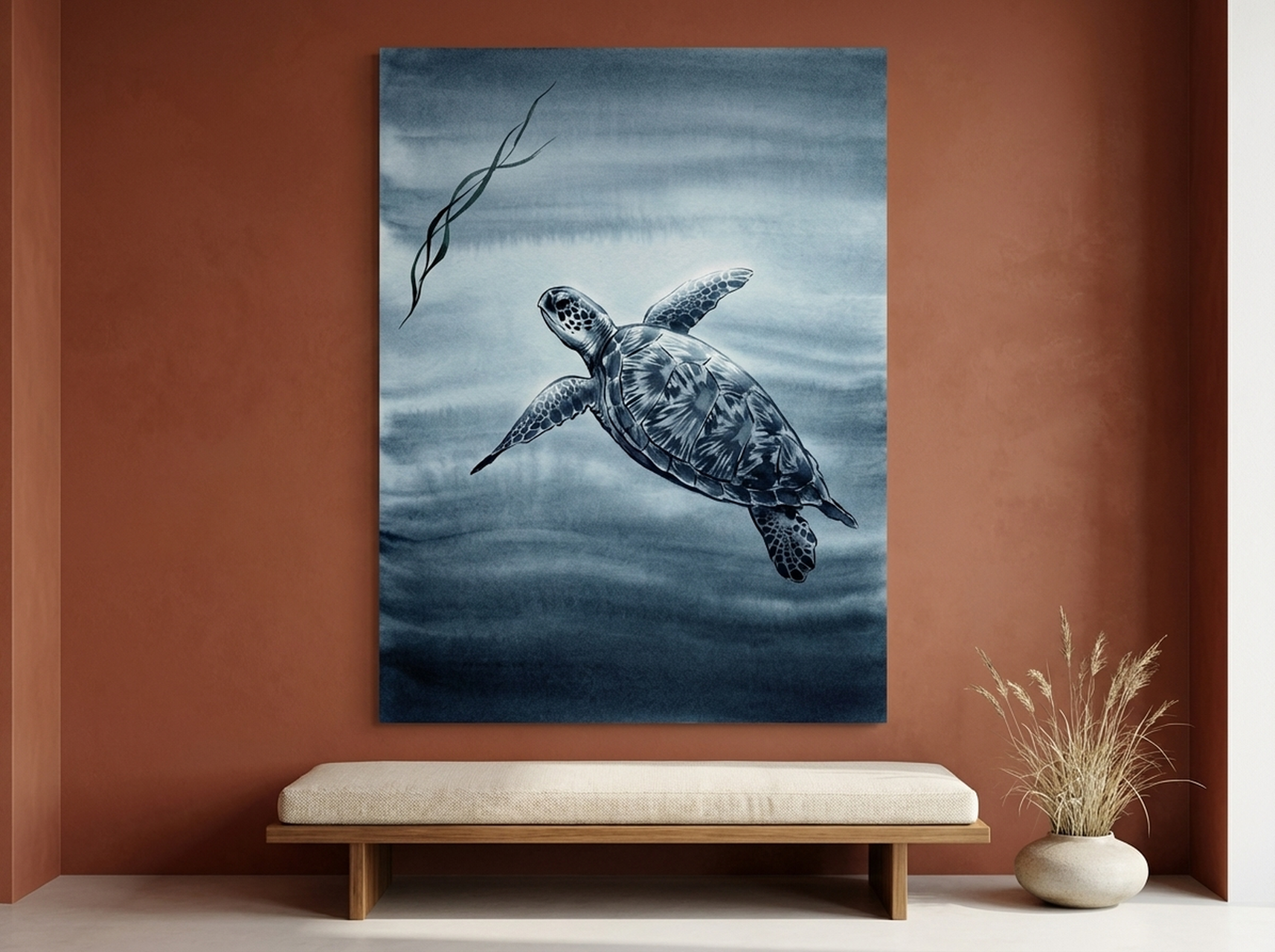
This minimalist sea turtle painting distils the grace of one of the ocean's most beloved creatures into a composition of sweeping navy and teal brushstrokes against a muted gray background. The turtle's shell glows with subtle teal highlights, creating a focal point that draws the eye without overwhelming a calm room. At 60 cm by 80 cm (24 by 32 inches), it sits perfectly above a bathroom vanity or a hallway console table. The restrained palette, navy, teal, charcoal, and cream, pairs effortlessly with white subway tile, light wood cabinetry, and chrome or brushed-nickel fixtures.
2. Poseidon Stone Relief Canvas Wall Art
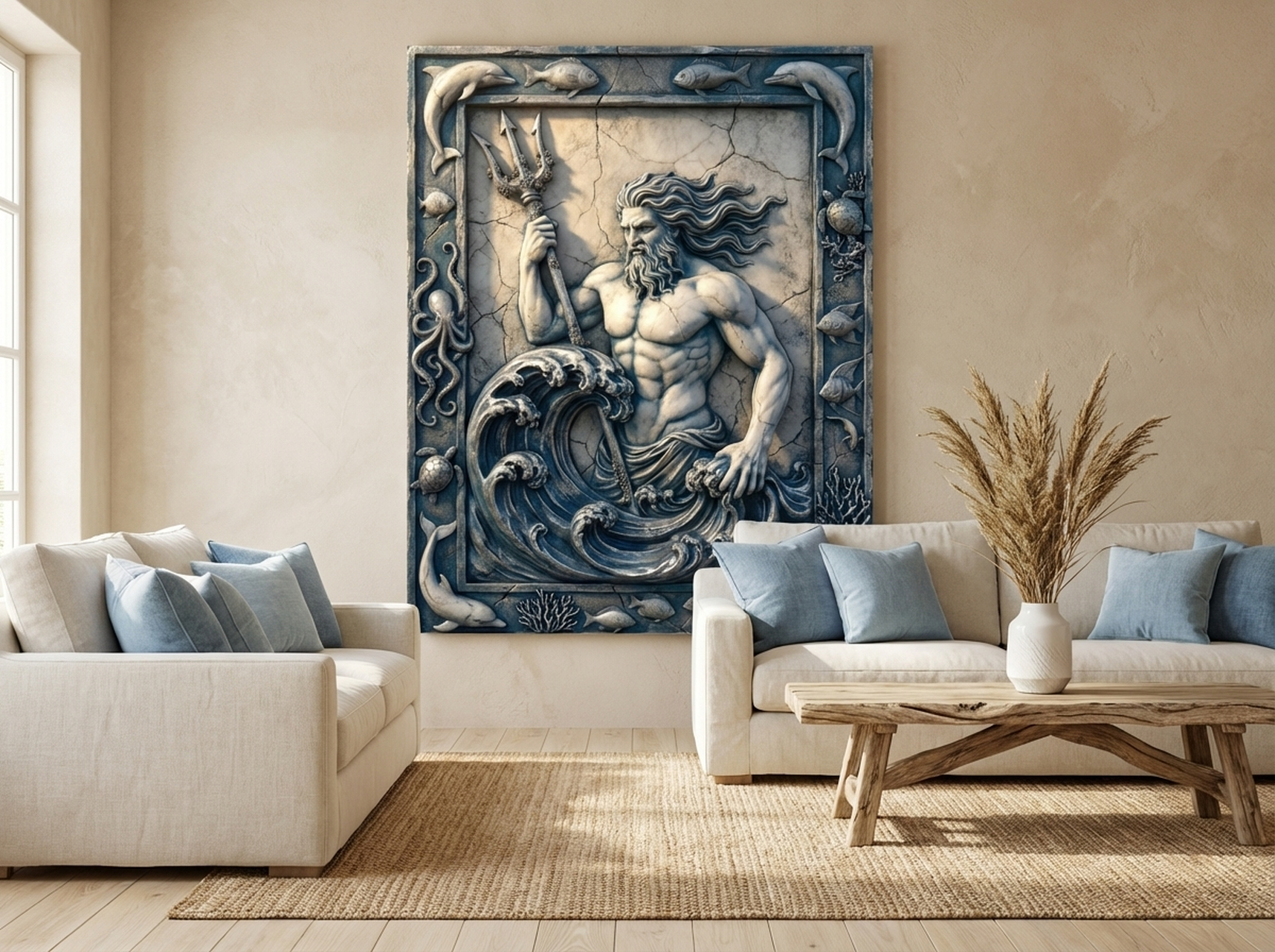
For homeowners who want coastal art with a sense of history and drama, this Poseidon stone-relief print is a striking statement piece. The design mimics a carved marble relief of the Greek god of the sea, complete with cresting waves and a trident, rendered in cool blues, creams, and silver-gray tones. It brings an old-world Mediterranean grandeur to a modern living room or home office. Hang it centred above a fireplace mantel or on the main accent wall where it can command 150 cm (60 inches) of clear wall space. The neutral stone colours mean it works with both cool-toned Scandinavian furniture and warmer traditional wood finishes.
View the Poseidon Stone Relief
3. Egret Canvas Wall Art
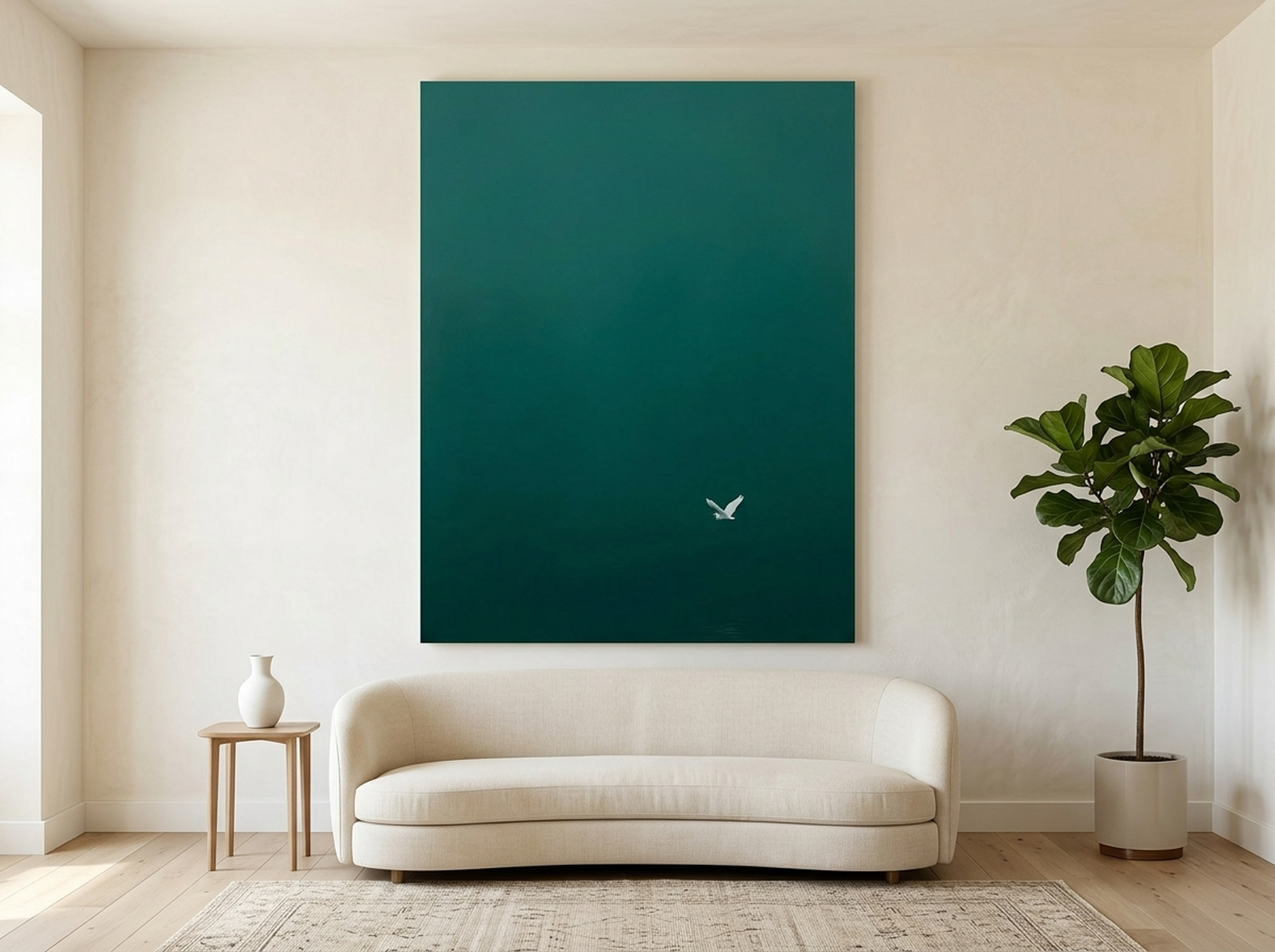
This minimalist egret print captures the elegant stillness of a wading bird in soft teal and sage tones against a warm cream background. The composition is deliberately simple, a single egret in profile, which gives it a calming, almost meditative quality that works beautifully in bedrooms and hallways. The muted colour palette avoids the cliche of bright tropical birds, instead offering a sophisticated coastal accent that feels modern and restrained. Position it at eye level in a bedroom, roughly 145 cm (57 inches) from the floor to the centre of the canvas, alongside natural linen bedding and a rattan side table for a complete coastal-calm bedroom.
4. Osprey Canvas Wall Art
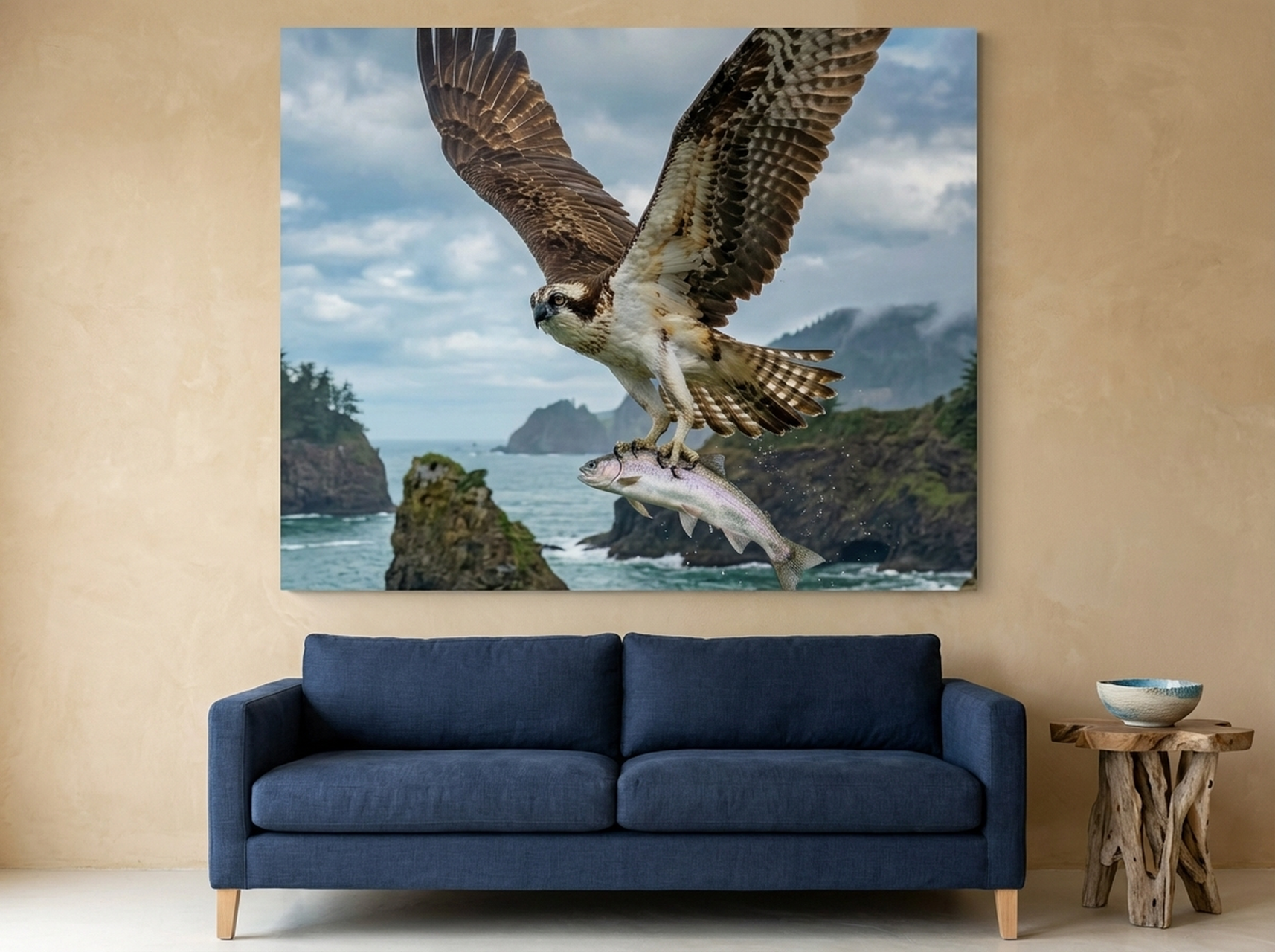
The osprey is one of the few raptors that hunts exclusively over water, and this painting captures the fierce beauty of the bird mid-flight above a sunlit ocean. Rich browns and whites in the osprey's plumage contrast against a vivid blue sky, creating a dynamic composition with real visual energy. Unlike calmer coastal pieces, this artwork adds a sense of adventure and wildness to a room. It is ideal for kitchens, bathrooms, or any space where you want nature's power on display. The warm brown tones in the feathers also make it a natural companion for wooden open shelving and warm-toned countertops.
5. Cote d'Azur Vintage Convertible Canvas Print
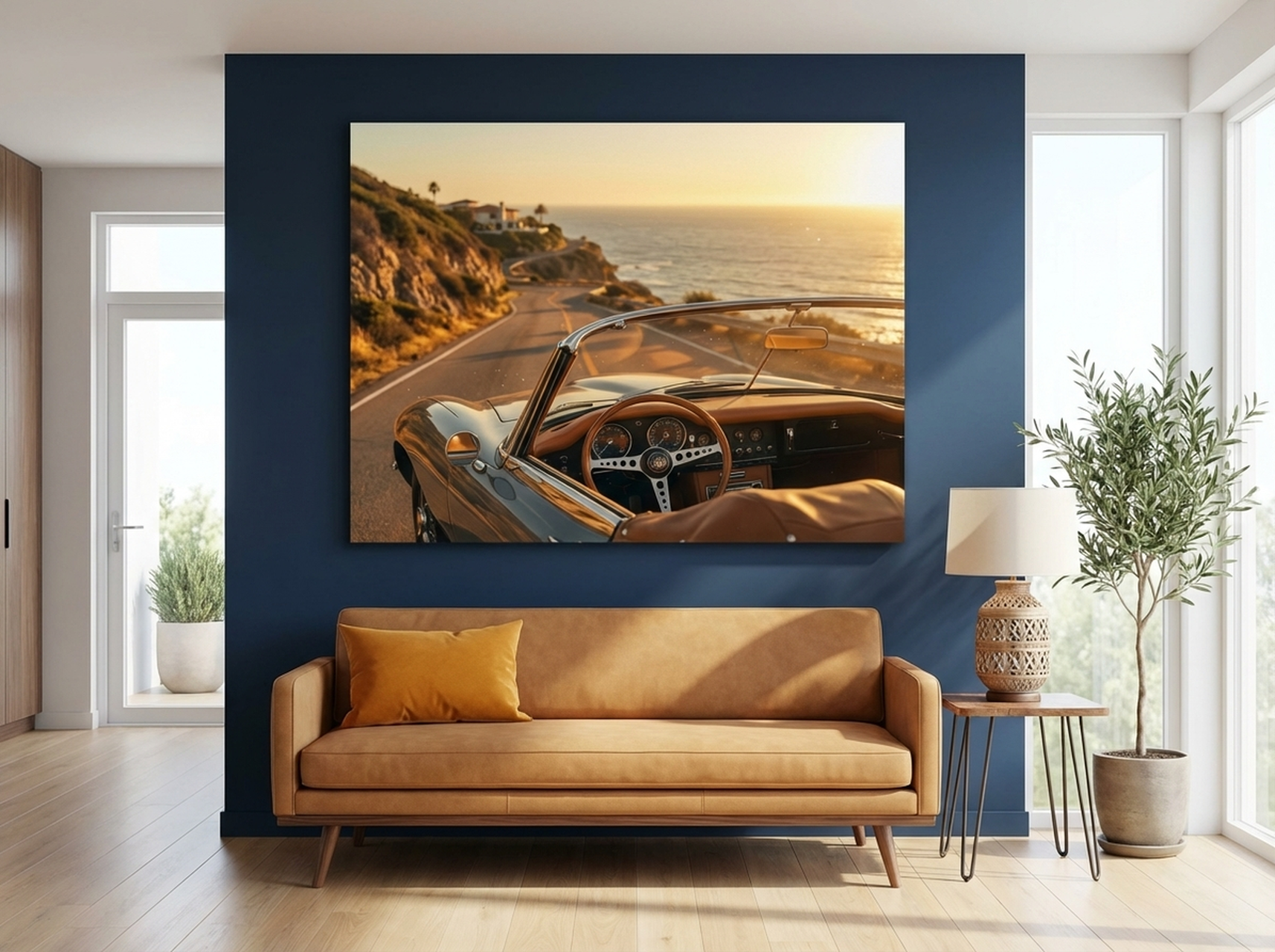
This nostalgic print transports you to the sun-drenched French Riviera, where a vintage convertible basks in amber afternoon light with the Mediterranean stretching beyond. The warm gold, orange, and navy palette gives it a distinctly European coastal feel that is more Amalfi than Atlantic, more glamour than surf shack. It is perfect for living rooms and entryways where you want to set a sophisticated, travel-inspired mood. The amber warmth also makes it one of the best coastal pieces for rooms that get limited natural light, because the golden tones compensate for what the windows cannot provide. Pair it with a brass floor lamp and a cream linen sofa for full Riviera effect.
6. Otter Canvas Wall Art
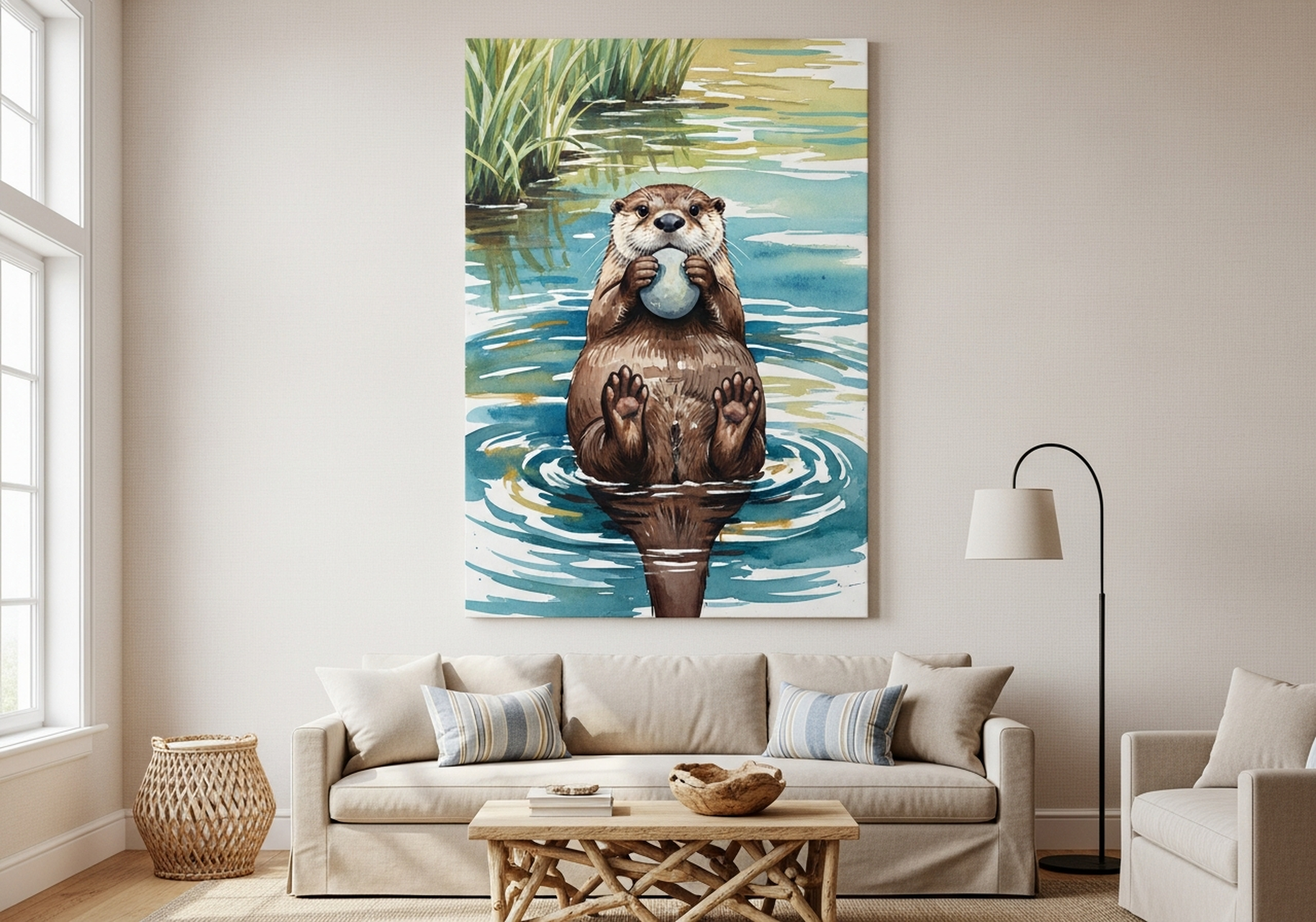
This charming watercolour-style otter print brings a playful, approachable energy to any coastal-themed space. The painting features warm brown fur tones set against a backdrop of teal and turquoise water, with loose, expressive brushwork that gives the piece a hand-painted feel. It works brilliantly in children's rooms and home offices where you want a touch of coastal whimsy without the formality of a seascape. The teal-and-brown combination also bridges coastal and woodland aesthetics, making it an excellent choice for rooms that blend natural themes. Hang it at a child's eye level, around 120 cm (48 inches) from the floor, in a nursery or reading corner.
Room-by-Room Coastal Styling Guide
Living Room. The living room is where coastal art makes its biggest impression. Choose a large canvas, 90 cm to 120 cm (36 to 48 inches) wide, and centre it above the sofa so it covers roughly two-thirds of the sofa's width. For a modern coastal feel, pick abstract ocean compositions rather than literal beach photographs. Pair the artwork with a jute or sisal area rug, white or oatmeal upholstery, and bleached-wood side tables. Leave at least 15 cm (6 inches) of clear wall space between the top of the sofa cushion and the bottom of the frame.
Bedroom. Coastal bedrooms need calm, not drama. Choose art with muted ocean tones: pale blues, seafoam greens, warm creams. Horizontal formats work especially well above the headboard because they mimic the horizon line of a quiet sea. Avoid high-contrast or energetic pieces; this is a room for rest. The canvas width should be roughly 50 to 75 percent of the headboard width, never wider than the headboard itself.
Bathroom. Bathrooms are a natural home for coastal art, and a single well-chosen canvas turns a functional room into a personal spa. Stick to pieces in aquatic tones: blues, teals, and sandy neutrals. All our framed canvas prints use archival inks that resist humidity, but avoid hanging art directly above a shower where it receives constant steam. For practical tips on which finishes and placements work best in wet rooms, see our bathroom wall art guide.
Kitchen and Dining Area. Coastal art in eating spaces creates a vacation mood for everyday meals. A medium canvas, around 60 cm by 80 cm (24 by 32 inches), on the dining room wall or a smaller print above open shelving in the kitchen is all you need. Pair soft nautical tones with warm wood furniture and simple ceramic dishware for a cohesive coastal kitchen.
Entryway and Hallway. A vertical or square canvas in ocean tones sets an inviting first impression. Keep the artwork at standard gallery height, 145 cm (57 inches) from the floor to the centre. Narrow hallways benefit particularly from coastal art because the horizon-line effect makes the corridor feel wider and more open.
Home Office. Blue is consistently identified as the most productivity-boosting colour for workspaces. Coastal art with dominant blue and green tones can reduce perceived stress and sharpen concentration during long work sessions. Choose a piece large enough to occupy your peripheral vision when you glance up from the screen, roughly 60 cm (24 inches) wide, positioned on the wall directly opposite your desk.
How to Hang and Display Coastal Wall Art
The 145 cm Rule. Centre your artwork so the vertical midpoint sits 145 cm (57 inches) from the floor. This is the standard gallery height used by museums worldwide and ensures comfortable viewing from both standing and seated positions.
Above Furniture Spacing. Leave 15 to 25 cm (6 to 10 inches) between the top of the furniture and the bottom edge of the frame. Less than 15 cm looks cramped; more than 25 cm makes the art appear disconnected from the piece below it.
Width Proportion. The artwork should cover 57 to 75 percent of the width of the furniture beneath it. For a 180 cm (72-inch) sofa, that means your canvas should be 100 cm to 135 cm (40 to 54 inches) wide. Smaller than that and the art looks lost; wider and it overwhelms the seating below.
Lighting Matters. Coastal rooms tend to have abundant natural light, which can wash out lighter artwork during the day. If your room faces south or west, choose coastal pieces with enough contrast, deeper blues, richer teals, to hold their visual weight under bright conditions. For rooms with less natural light, warmer coastal tones like amber, gold, and coral maintain their impact under lamp light. For a full guide to art lighting, read our post on how to light wall art like a gallery.
Gallery Wall Layout. If you want to group multiple coastal pieces, keep a consistent 5 cm to 8 cm (2 to 3 inch) gap between frames. Start with your largest piece at eye level, then build outward. A grouping of three to five pieces in a loose grid or organic cluster creates a collected, beachy feel without the formality of a perfect grid. For a complete walkthrough, check our gallery wall layout guide.
Common Mistakes to Avoid
Going too literal. A photo of a specific beach ties your decor to one location and can feel like a vacation souvenir rather than intentional design. Abstract coastal art captures the essence of the ocean, the movement, the colour, the light, without pinning your room to a postcard. Aim for pieces that evoke a feeling rather than a place.
Hanging too small. The single most common wall art mistake is choosing a piece that is too small for the wall. A 30 cm by 40 cm (12 by 16 inch) canvas on a large living room wall looks like a postage stamp. Measure the wall width, multiply by 0.57, and use that number as your minimum canvas width. When in doubt, size up.
Ignoring the room's lighting temperature. Art that looks stunning in a showroom with cool daylight can appear muddy under the warm LED bulbs common in living rooms. Before buying, consider your room's primary light source. Warm bulbs shift blues toward green and can dull silver tones, while cool bulbs intensify blues and can make warm coastal art look flat.
Matching everything too perfectly. A room where every item is the same shade of blue feels flat and lifeless. Effective coastal styling mixes tones: pair a deep navy canvas with seafoam throw pillows and a sandy neutral rug. Contrast within the same colour family creates depth and visual interest.
Forgetting about scale with furniture. Art that is wider than the sofa beneath it looks top-heavy and visually unstable. Art that covers less than half the sofa width looks abandoned on the wall. The two-thirds rule, canvas width equals roughly two-thirds of sofa width, produces a balanced, anchored composition every time.
Coastal Art FAQ
What makes wall art "coastal" rather than just blue?
Coastal art draws from the full palette and subject matter of the seaside: not just blues, but sandy beiges, seafoam greens, driftwood browns, and sunset ambers. Subject matter ranges from marine wildlife and seascapes to nautical abstracts and beach-town photography. The key is that the piece evokes the feeling of being near the ocean, whether through colour, subject, or both.
Can coastal wall art work in a room that is not beach-themed?
Absolutely. Modern coastal art, especially abstract pieces, functions as a colour accent rather than a theme statement. A muted ocean canvas pairs as well with Scandinavian minimalist furniture as it does with rattan and driftwood. The secret is choosing pieces where the coastal reference is in the palette rather than in literal subject matter like seashells or anchors.
Will canvas prints hold up in a humid bathroom?
Yes. Our canvas prints use archival-quality inks on premium matte canvas with kiln-dried stretcher bars that resist warping. Hang the canvas at least 60 cm (24 inches) away from direct shower spray, and ensure the room has adequate ventilation, either a window or an exhaust fan. Under these conditions, canvas prints hold up well for years in bathroom environments.
What frame colour works best for coastal art?
White and natural wood frames are the most popular for coastal pieces because they echo beach-house aesthetics: whitewashed walls and sun-bleached timber. Black frames work for moody coastal palettes (deep teal, charcoal, slate) where you want a sharper, more contemporary edge. Espresso frames suit warm coastal tones like amber and coral.
How many coastal pieces should I hang in one room?
For most rooms, one large statement piece or a curated group of three to five smaller pieces is ideal. A single 90 cm (36-inch) canvas above a sofa makes a bold, clean focal point. A gallery wall of three to five pieces, ranging from 30 cm to 60 cm (12 to 24 inches), creates a collected, layered look. Avoid scattering single small pieces across multiple walls, which dilutes the impact and makes the room feel cluttered rather than curated.
Do your prints come framed and ready to hang?
Yes. Every canvas print ships in a solid wood frame with pre-installed hanging hardware. Choose from four frame colours: black, white, espresso, or natural wood. The canvas is printed on premium matte material using archival inks, and it arrives ready to hang straight out of the box.
Quick Reference Table
| Product | Best For | Dominant Colours | Link |
|---|---|---|---|
| Sea Turtle Canvas | Bathrooms, Bedrooms | Navy, Teal, Gray | View |
| Poseidon Stone Relief | Living Rooms, Offices | Blue, Cream, Silver | View |
| Egret Minimalist Print | Bedrooms, Hallways | Teal, Sage, Cream | View |
| Osprey Ocean Wildlife | Bathrooms, Kitchens | Blue, Brown, White | View |
| Cote d'Azur Vintage | Living Rooms, Entryways | Gold, Orange, Navy | View |
| Otter Watercolor | Kids Rooms, Offices | Brown, Teal, Cream | View |
Bring the Coast Home Today
Every piece in our collection is a gallery-quality framed canvas print, printed on premium matte canvas with archival inks, framed in solid wood, and ready to hang the moment it arrives. Free US shipping on all orders.
Coastal wall art turns any room into a seaside retreat. Whether you choose a serene sea turtle for the bathroom, a dramatic Poseidon relief for the living room, or a playful otter print for a child's bedroom, the right piece brings the ocean's calm, beauty, and spacious energy into your daily life. Start with one canvas, follow the hanging tips above, and let the coast come to you.