Cultural Heritage Wall Art for Living Room Decor
The Heva Team
Art Curators & Interior Design Enthusiasts · February 4, 2026 · 15 min read
From African royalty to Japanese ukiyo-e, cultural heritage wall art brings global traditions into your home.
Your walls tell a story before you say a single word. When guests step into a room adorned with a hand-painted African elder or a shimmering Egyptian queen, they immediately sense something deeper than decoration. Cultural heritage wall art transforms a generic living space into a personal museum, one that celebrates where you come from, what you value, and the traditions you want to keep alive for the next generation. This guide walks you through the best cultural canvas prints available, explains why these pieces carry real emotional weight, and gives you practical placement and styling tips so every room feels authentic.
Ready to browse? Explore our full Cultural Heritage collection, or keep reading for our top picks and expert tips.

Why Cultural Art Matters in Your Home
Home decor is more than surface-level styling. Research from the Belle and June design journal highlights that cultural influences are actively shaping modern decor trends because they add narrative depth that mass-produced art simply cannot. When you hang a canvas depicting Mughal peacocks or Japanese cranes, you introduce a piece of living history into your room.
From a psychological standpoint, surrounding yourself with images that connect to your heritage or a culture you deeply admire creates a sense of belonging. A 2023 study published in the Journal of Environmental Psychology found that personalised spaces, those filled with meaningful objects rather than generic decor, reduced stress markers by up to 18 percent in participants. Cultural art qualifies as deeply meaningful because it carries centuries of symbolism, colour theory, and craftsmanship within a single frame.
There is also a practical design benefit. Cultural pieces tend to feature rich, saturated palettes that mainstream minimalist art avoids. African art leans into burgundy, gold, and terracotta. Japanese prints favour charcoal, cream, and soft pink. Islamic geometric patterns introduce teal and midnight blue. These distinctive colour profiles make it much easier to build a room scheme that feels intentional rather than assembled at random.
Choosing Authentic Representations
Authenticity in cultural wall art comes down to three factors: subject accuracy, colour fidelity, and respectful context. Before purchasing any piece, ask yourself whether the artwork represents the culture honestly. A Nefertiti portrait should draw from actual archaeological references, not a Hollywood version. A Native American elder should reflect dignity and reverence, not costume imagery.
Colour fidelity matters equally. Japanese ukiyo-e woodblock prints traditionally use a limited palette of indigo, vermilion, and black on cream. If a so-called Japanese print uses neon green and hot pink, it has drifted far from the source. Look for pieces that reference traditional palettes even when rendered in a contemporary style. Our Wall Art Color Guide can help you understand which hues carry cultural significance.
Context also plays a role. A Dia de los Muertos sugar skull is not spooky horror art. It is a celebration of life and remembrance rooted in Mexican tradition. When you display such a piece, understanding its meaning allows you to explain it to visitors and keep the cultural conversation respectful. The Home and Texture editorial on cultural art emphasises that authentic cultural decor honours traditions rather than reducing them to aesthetic trends.
Mixing Cultures Respectfully in One Room
One of the most common questions we hear is whether it is appropriate to hang African art alongside Japanese prints or Egyptian portraits next to Islamic geometry. The answer is yes, provided you approach it with intention. A gallery wall that mixes three or four cultural pieces can look stunning when you follow a few guiding principles.
First, find a unifying colour thread. If your African elder portrait features gold and burgundy, and your Japanese samurai print includes cream and charcoal, bridge them with a gold or cream frame style and warm-toned accent pieces like terracotta cushions or brass lamps. Our Gallery Wall Guide breaks down the spacing and layout rules in detail.
Second, give each piece enough breathing room. Cultural art carries dense symbolism, and cramming pieces together dilutes their impact. For a standard 250 cm (98 inch) wall, limit yourself to two or three framed canvases with at least 10 to 15 cm (4 to 6 inches) between frames. This spacing lets each culture speak without competing for attention.
Third, vary the scale. Pair one large statement piece, around 90 by 60 cm (36 by 24 inches), with one or two smaller companion pieces at 40 by 30 cm (16 by 12 inches). The size contrast creates visual rhythm and keeps the wall from looking like a flat grid. If you love the Afrohemian decor style, layering cultural prints is the signature move of that aesthetic.
Our Top 6 Cultural Heritage Picks
1. African Elder Portrait Canvas
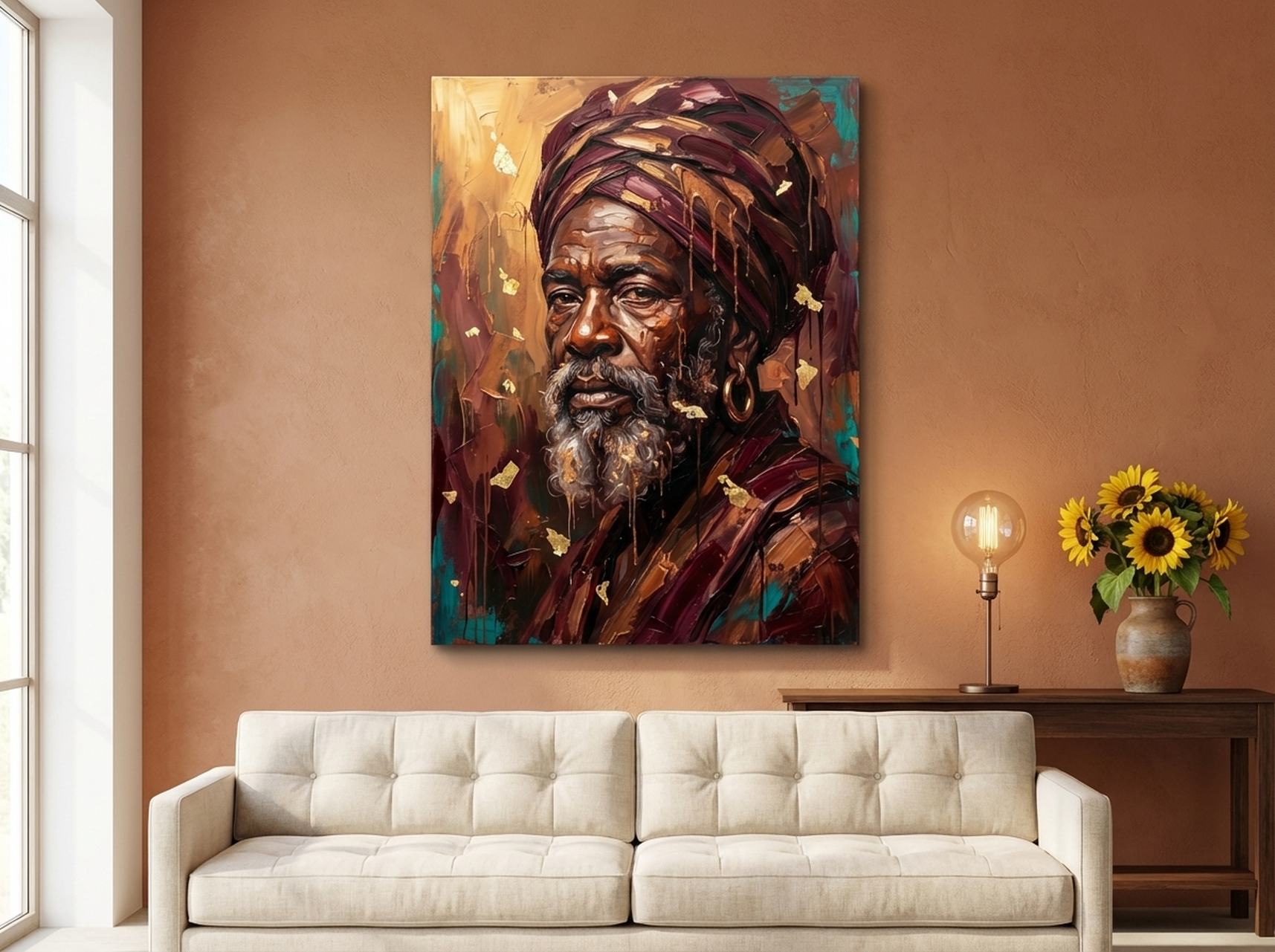
This expressionist oil painting captures the wisdom and presence of an African elder in rich burgundy, gold, and teal tones. The thick brushstrokes give the portrait an almost sculptural quality, making it feel alive on the wall. It pairs beautifully with warm wood furniture, terracotta pottery, and woven textiles. Hang it as a solo statement above a console table in your entryway, or let it anchor a cultural gallery wall in the living room. The dominant gold and brown tones coordinate easily with most neutral interiors while still delivering bold visual impact.
View the African Elder Portrait Canvas →
2. Ronin Samurai Cherry Blossom Canvas
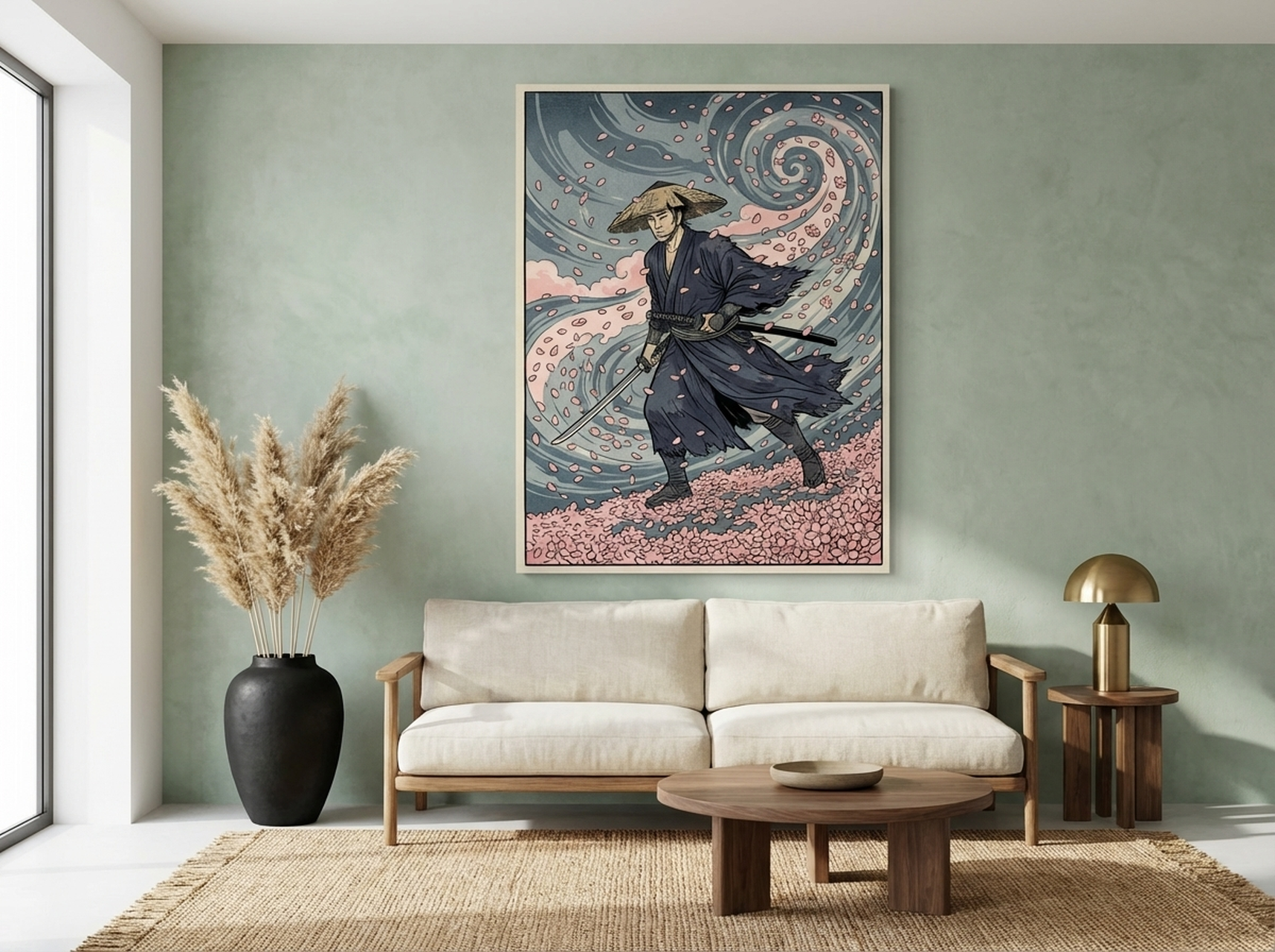
Inspired by the ukiyo-e woodblock tradition, this print captures a lone samurai framed by drifting cherry blossoms in a restrained palette of grey, charcoal, and soft pink. The composition balances strength and delicacy, making it ideal for a home office, reading nook, or bedroom. Japanese art enthusiasts will appreciate the attention to period-accurate armour details and the textured paper effect in the background. Position it at eye level, roughly 145 cm (57 inches) from the floor to centre, and pair it with a simple black or dark walnut frame for maximum authenticity.
View the Ronin Samurai Cherry Blossom Canvas →
3. Nefertiti Stained Glass Canvas
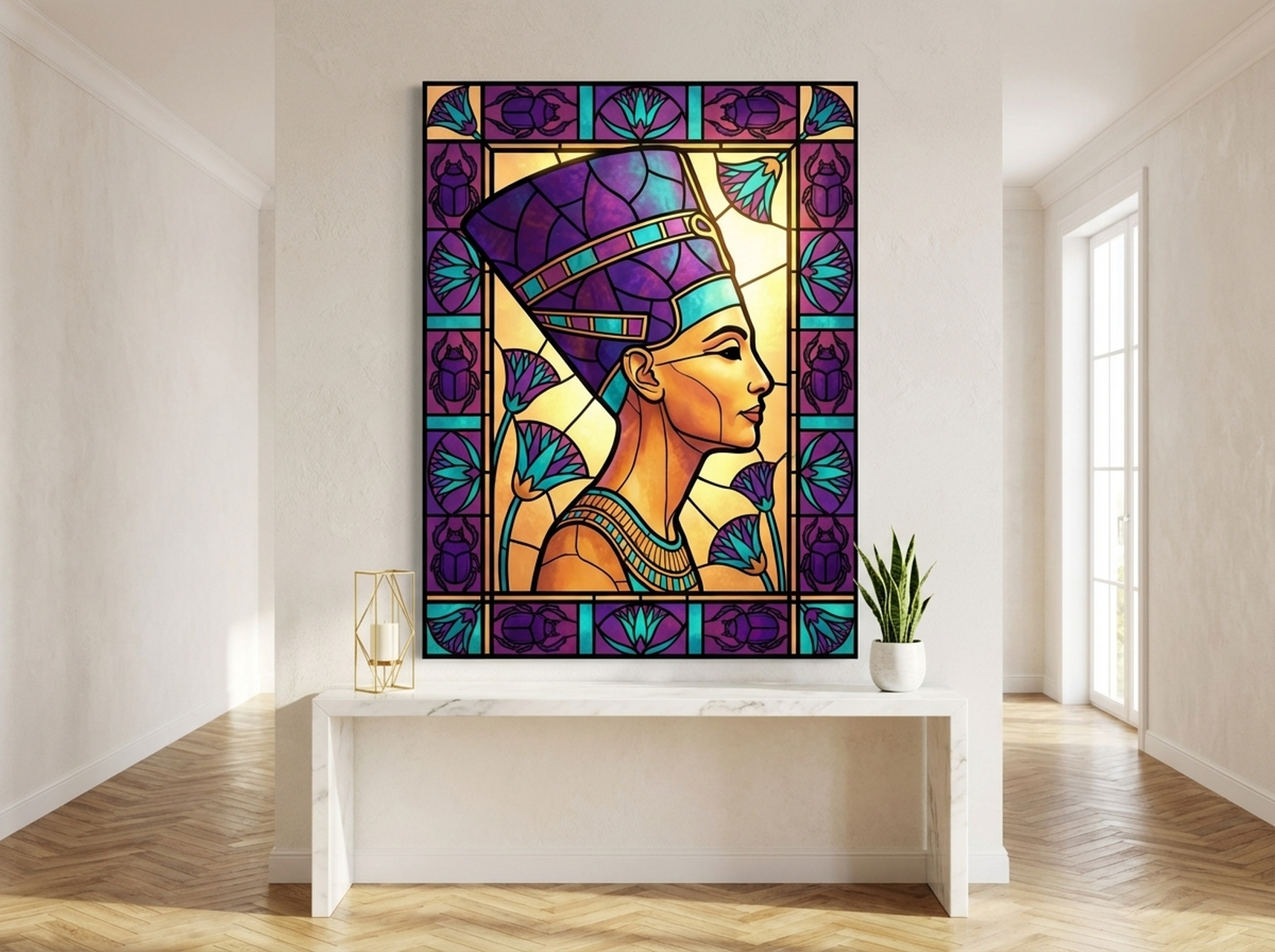
This striking reinterpretation of Queen Nefertiti uses a stained glass visual technique to render the Egyptian icon in amethyst, turquoise, and gold. The effect is luminous, almost as if the canvas glows from within. It works spectacularly in rooms with natural light, where the jewel tones shift throughout the day. Place it in a living room or dining area where it can serve as a conversation piece. The colour combination of purple and turquoise sits opposite on the colour wheel, creating natural visual tension that draws the eye. Pair it with brass or gold-toned accents and deep navy soft furnishings for a regal atmosphere.
View the Nefertiti Stained Glass Canvas →
4. Islamic Geometric Star Canvas
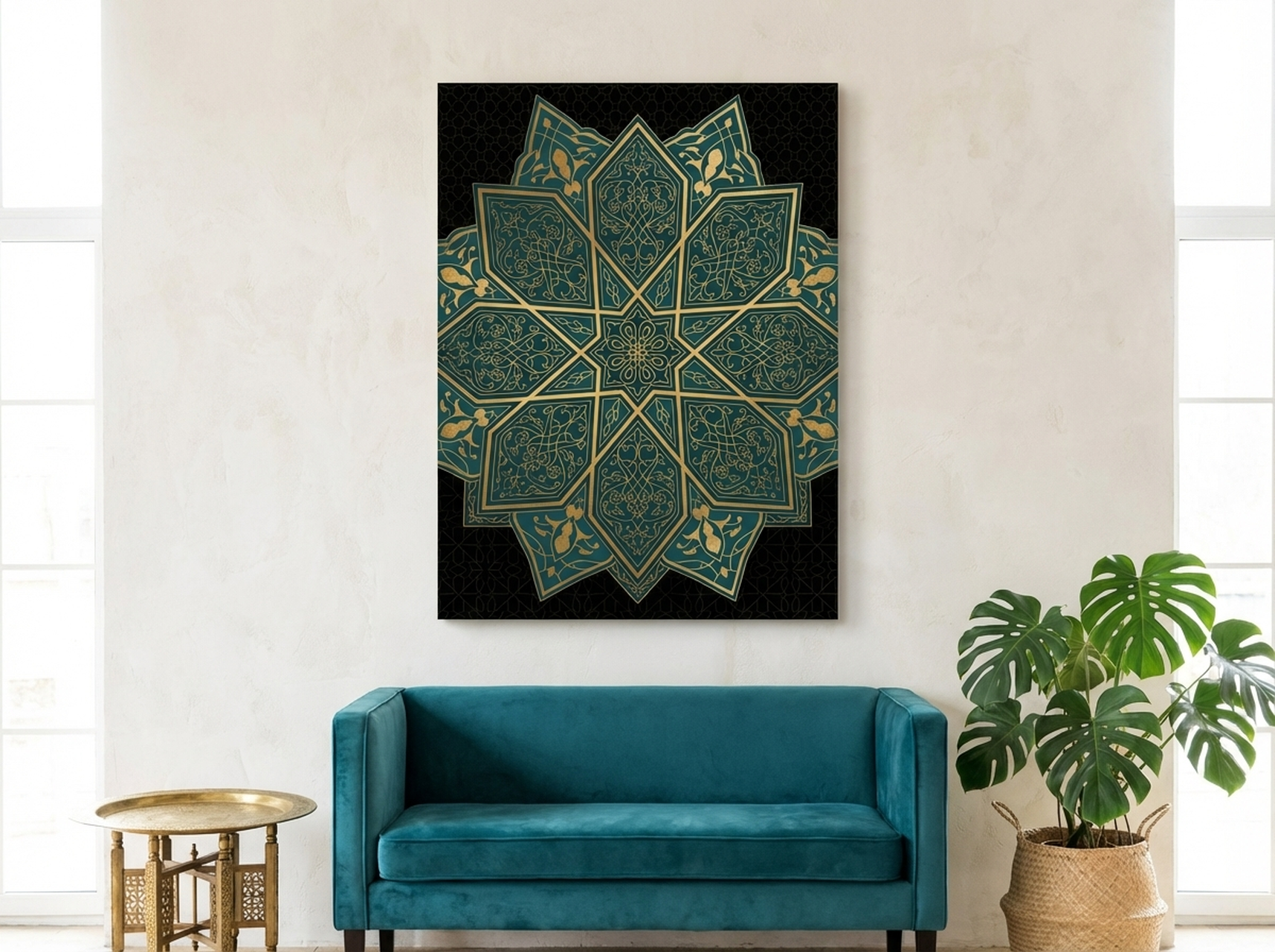
Rooted in the centuries-old zellige tile tradition of Morocco, this geometric canvas transforms complex mathematical precision into breathtaking visual art. The repeating star and arabesque pattern in teal, gold, and navy honours Islamic artistic heritage where figurative imagery gives way to sacred geometry. Hang it in a hallway, prayer room, or formal sitting area where its meditative symmetry can be fully appreciated. At 60 by 90 cm (24 by 36 inches), it fills a medium wall without overwhelming the space. The teal and gold palette blends naturally with modern boho or eclectic interiors, especially when paired with brass lanterns and textured cushions.
View the Islamic Geometric Star Canvas →
5. Dia de los Muertos Sugar Skull Canvas
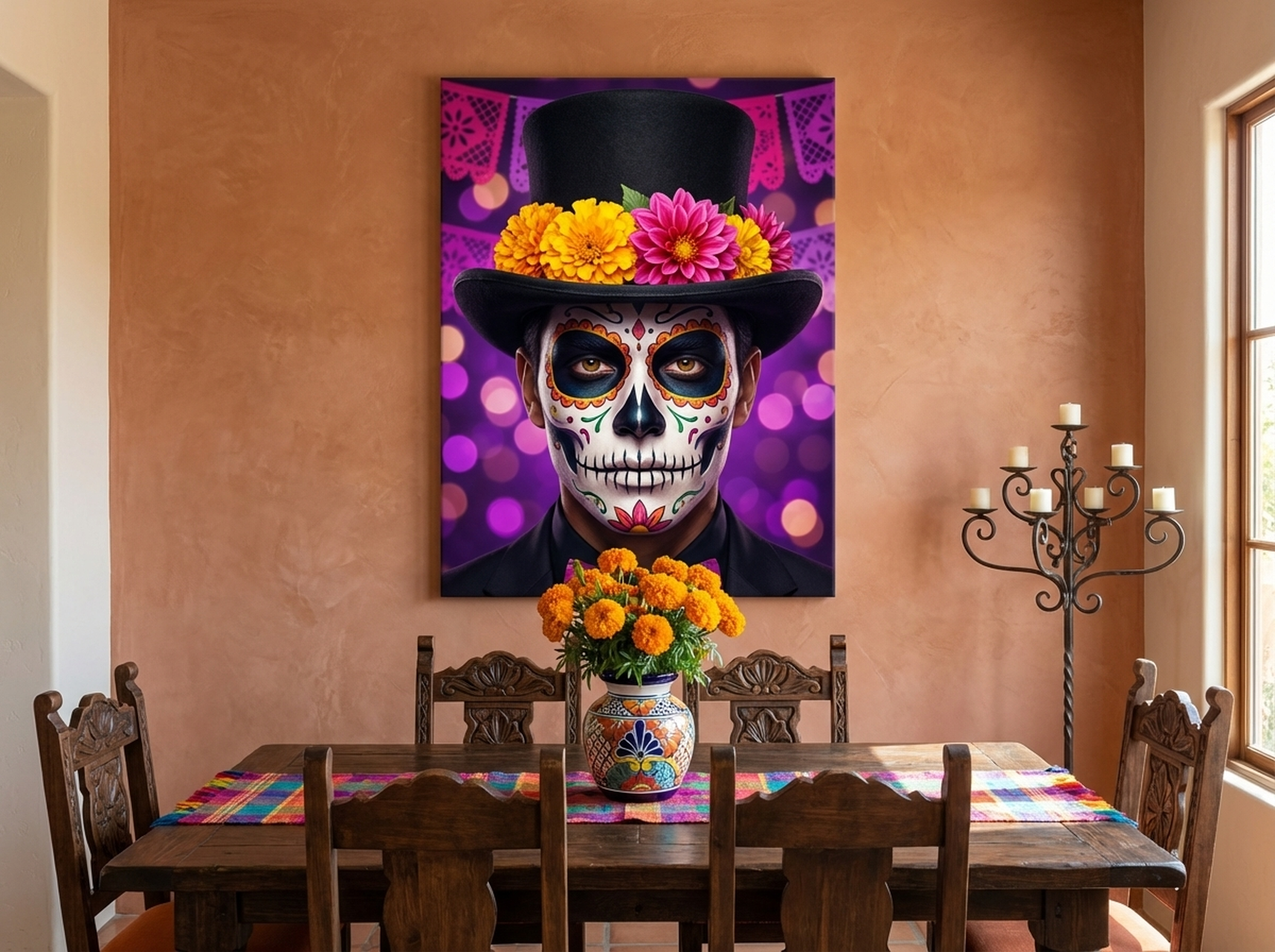
This vibrant Mexican cultural piece captures the spirit of Dia de los Muertos through a richly detailed catrin portrait adorned with marigolds, roses, and intricate face paint. The palette explodes with purple, pink, gold, and orange, making it one of the most visually arresting pieces in the entire collection. Far from being morbid, this artwork celebrates life, memory, and the enduring bonds between the living and their ancestors. It is perfect for a bold accent wall in a dining room or creative studio. Position it at 150 cm (59 inches) from the floor to centre and surround it with warm-toned accessories such as terracotta vases or dried marigold arrangements for a fully immersive cultural display.
View the Dia de los Muertos Canvas →
6. Mughal Peacock Tree of Life Canvas
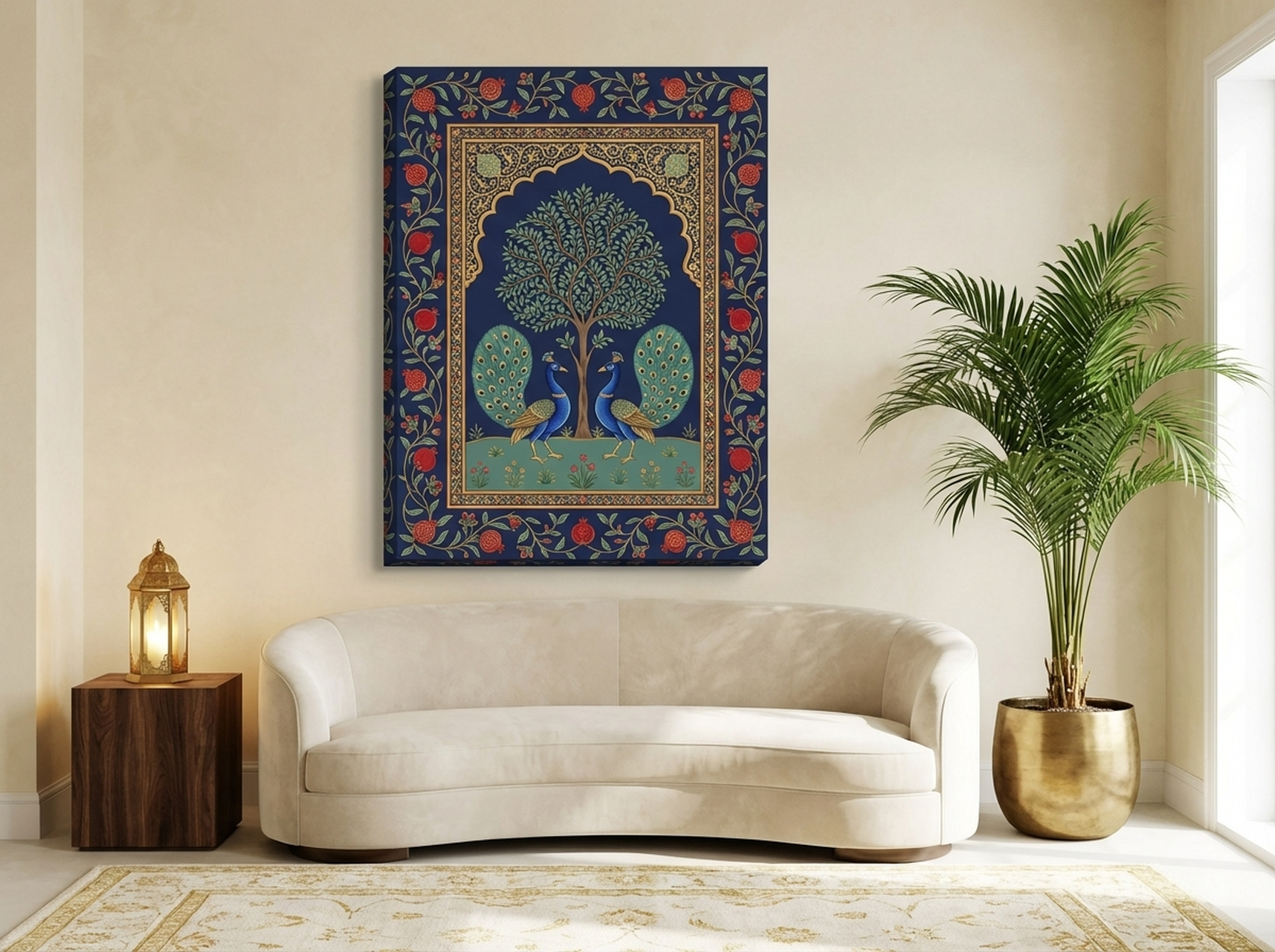
Drawing from the Pichwai painting tradition of Rajasthan, this exquisite canvas features peacocks perched among a tree of life motif in royal blue, gold, teal, and terracotta. Pichwai art originated as devotional temple paintings, and their intricate detail and rich symbolism translate beautifully into contemporary wall decor. The peacock represents grace and beauty in Indian culture, while the tree of life symbolises interconnectedness. This piece shines in a formal living room or bedroom, particularly when paired with deep jewel-toned furnishings such as navy velvet or emerald cushions. Hang it where afternoon light can catch the gold details for a truly luxurious effect.
View the Mughal Peacock Canvas →
Styling Guide: Placement and Pairings
Wall Placement Rules
Cultural heritage art demands thoughtful placement. The standard centre-of-canvas height is 145 to 150 cm (57 to 59 inches) from the floor, which aligns with average eye level. When hanging above furniture such as a sofa or console table, leave 15 to 20 cm (6 to 8 inches) between the top of the furniture and the bottom edge of the frame. This gap creates visual connection without cramping.
For hallways and narrow corridors, choose vertical-format pieces and hang them slightly higher than normal, around 155 cm (61 inches) to centre, since viewers will be standing and walking rather than seated. The Islamic Geometric Star canvas works particularly well in these transitional spaces because its repeating pattern rewards both quick glances and extended study.
Colour Pairing Recommendations
Match your cultural art to your room palette using the 60-30-10 rule. Let the wall colour and large furniture make up 60 percent of the room in a neutral tone such as warm white, beige, or soft grey. Allocate 30 percent to secondary colours pulled from the artwork, perhaps the teal from the Islamic geometric piece or the burgundy from the African elder portrait. Reserve 10 percent for accent pops, the gold, pink, or turquoise highlights that tie everything together through throw pillows, vases, or lamp shades.
Lighting Cultural Art
Good lighting elevates cultural art from decoration to installation. Install a picture light or adjustable track light 20 to 25 cm (8 to 10 inches) above the frame, angled at 30 degrees downward. For the Nefertiti stained glass canvas, warm white LED light at 2700K to 3000K enhances the amethyst and gold tones without washing them out. Avoid cool daylight bulbs above 5000K on warm-toned cultural art, as they can make reds and golds look muddy. Check our African Wall Art guide for more detailed lighting advice on warm-palette pieces.
5 Common Mistakes to Avoid
1. Treating Cultural Art as a Trend
Cultural pieces are not seasonal decor to swap out when the next aesthetic goes viral. If you choose a Mughal peacock painting because peacocks are trending on social media, you will tire of it quickly. Choose pieces because the culture genuinely resonates with you, whether through heritage, travel experience, or sustained admiration.
2. Hanging Everything at the Same Height
A flat line of frames across a wall looks rigid and institutional. Stagger your cultural pieces by 5 to 8 cm (2 to 3 inches) vertically, or mix portrait and landscape orientations. This creates organic visual flow that mimics the way art is displayed in galleries and cultural centres.
3. Ignoring the Frame
The frame is part of the art. A cheap plastic frame undercuts even the most magnificent Egyptian queen portrait. For cultural pieces, choose solid wood frames in walnut, oak, or black. Metal frames in brass or matte black also work well, especially for geometric patterns. Avoid ornate gilded frames unless the art specifically calls for it, such as a Mughal miniature.
4. Overcrowding the Wall
More is not always more. Each cultural piece carries dense visual information, from patterns and symbols to rich colour layers. Hanging too many pieces too close together creates visual noise rather than harmony. Start with one anchor piece per wall and add companions only after living with the solo piece for a few weeks.
5. Mixing Without a Unifying Element
Hanging African, Japanese, and Mexican art on the same wall without any connecting thread, whether colour, frame style, or theme, can feel chaotic rather than curated. Always identify at least one unifying factor before combining cultural pieces. A shared gold accent, a consistent frame material, or a theme like portraits across cultures gives the arrangement coherence.
Frequently Asked Questions
Is it appropriate to display art from a culture that is not my own?
Yes, when done with respect and genuine appreciation. The key distinction is between appreciation and appropriation. Displaying a beautifully crafted Japanese samurai print because you admire Japanese artistry and history is appreciation. Hanging it as an ironic novelty or altering sacred symbols for aesthetic purposes crosses into appropriation. Learn about the culture behind each piece you display, and source from artists or companies that honour those traditions.
How do I choose between a single statement piece and a multi-piece cultural display?
For rooms under 15 square metres (160 square feet), a single large canvas at 90 by 60 cm (36 by 24 inches) creates maximum impact without overwhelming the space. For larger rooms or open-plan living areas, a curated set of two or three pieces from different cultures, connected by a shared colour thread, tells a richer story. Start with one piece and add gradually rather than buying everything at once.
What rooms work best for cultural heritage art?
Living rooms and dining areas are natural choices because guests spend the most time there. However, cultural art also works brilliantly in home offices, where a Ronin samurai print can inspire focus and discipline, or in bedrooms, where a Mughal peacock painting creates a serene, luxurious atmosphere. Hallways and entryways are underused but excellent spots because they set the tone for the entire home the moment someone walks in.
How do I protect canvas prints from fading?
Keep cultural canvas art out of direct, sustained sunlight. UV exposure degrades pigments over time, particularly reds and yellows. Position canvases on walls that receive indirect light, or install UV-filtering window film on nearby windows. For rooms with strong south-facing light, consider a spot at least 120 cm (47 inches) from the window. Modern archival-quality canvas prints, like those used in our collection, resist fading for 75 years or more under normal indoor conditions.
Can I mix cultural art with modern abstract pieces?
Absolutely. The contrast between a geometric Islamic pattern and a fluid abstract expressionist piece can be visually stunning. The trick is to share at least two colours between the cultural and abstract works. For example, an Islamic teal-and-gold geometric canvas pairs naturally with a loose abstract that features teal washes and gold leaf accents. This creates dialogue between the pieces rather than conflict.
What size canvas works best above a sofa?
The canvas should span roughly two-thirds the width of your sofa. For a standard 200 cm (79 inch) sofa, aim for a canvas or arrangement that covers 120 to 140 cm (47 to 55 inches) of horizontal space. A single large landscape-format piece or a pair of matching canvases side by side both work well. Leave 15 to 20 cm (6 to 8 inches) between the sofa back and the bottom edge of the frame.
Quick Reference Table
| Product | Best For | Dominant Colours | Link |
|---|---|---|---|
| African Elder Portrait | Living room, entryway | Burgundy, Gold, Teal | View |
| Ronin Samurai Cherry Blossom | Home office, bedroom | Grey, Charcoal, Pink | View |
| Nefertiti Stained Glass | Living room, dining area | Amethyst, Turquoise, Gold | View |
| Islamic Geometric Star | Hallway, prayer room | Teal, Gold, Navy | View |
| Dia de los Muertos | Dining room, studio | Purple, Pink, Gold, Orange | View |
| Mughal Peacock Tree of Life | Bedroom, formal living room | Royal Blue, Gold, Teal | View |
Celebrate Your Roots, One Wall at a Time
Cultural heritage wall art does something no generic print can: it tells the viewer exactly who lives here. Whether you gravitate toward the expressive brushstrokes of African portraiture, the meditative geometry of Islamic design, or the vibrant celebration of Mexican traditions, every piece you choose writes another line of your personal story on the wall. Start with one canvas that genuinely moves you, place it where you will see it every day, and let your collection grow from there.