Faith-Inspired Wall Art: Sacred Spaces in Your Home
The Heva Team
Art Curators & Interior Design Enthusiasts · February 7, 2026 · 15 min read
Create a sacred space at home with faith-inspired canvas prints that bring peace and beauty to your walls.
Creating a sacred space at home is one of the most personal acts of interior design. Whether you bow toward Mecca, sit in morning meditation, tend a small Zen garden, or keep a quiet corner for prayer, the art on your walls shapes the atmosphere of your practice. The challenge is that most "spiritual decor" online skews heavily toward a single tradition, leaving practitioners of other paths without a visual language for their homes. This guide takes a different approach: it covers wall art for multi-faith and broadly spiritual homes, including Zen, mindfulness, indigenous sacred symbols, Islamic geometric art, botanical scripture, and nature-as-spiritual practice. Whatever calls you to quiet, there is a canvas print here for your space.
Ready to browse? Shop the full Sacred Spaces collection or keep reading for our top picks and expert tips on designing a sacred corner in any room.
What Makes a Space Feel Sacred
A sacred space is not defined by its square footage or its address. It is defined by intention. Research from the National Institutes of Health found that individuals who maintained a dedicated space for spiritual practice reported lower stress levels and greater sense of purpose than those who practiced without a defined space. The visual environment of that space matters enormously: your eyes are the first organs to arrive in a room, and what they find either invites depth or invites distraction.
Across traditions, sacred spaces share certain qualities: visual simplicity that quiets the busy mind, symbolic imagery that connects the personal to the universal, and colour palettes that slow the nervous system. A Zen meditation corner uses clean lines and natural tones. A Muslim prayer space might feature intricate geometric patterns that mirror the infinite. A nature-based spiritual practice might surround itself with botanical imagery and earthy textures. What unites all of these is that the art is chosen, not default. Every piece on the wall has been placed with the same care you bring to the practice itself.
If you are designing a multi-faith or interfaith home, the key is to find imagery that speaks to shared spiritual values: stillness, connection, reverence, and wonder. Sacred geometry, lotus flowers, flowing water, and intertwining natural forms all belong to the common vocabulary of human spirituality. They transcend any single tradition without diluting the depth of any.
Colour Psychology for Calm and Reflection
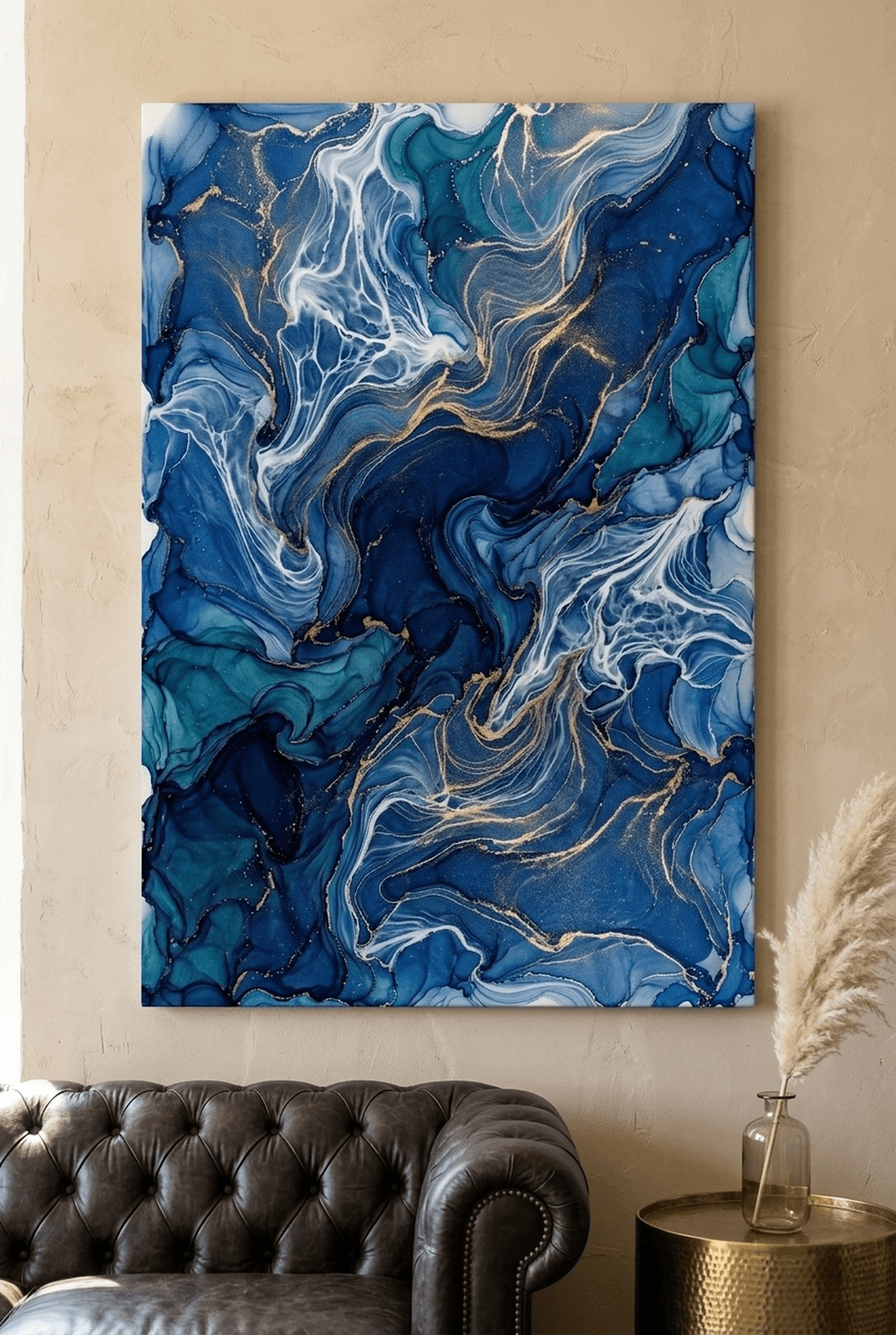
Colour is the fastest way to shift the atmosphere of a room. In the context of sacred spaces, the goal is not stimulation but settledness. A 2013 study published in International Journal of Environmental Research and Public Health found that exposure to blue and blue-green tones significantly reduced cortisol levels and heart rate, creating measurable physiological calm. This is why deep navy, teal, and sage appear so frequently in contemplative spaces across cultures.
Gold and amber are the second language of sacred spaces. Gold carries symbolism across nearly every spiritual tradition, from Christian iconography to Buddhist temples to Islamic architecture. In wall art, gold tones create warmth and a sense of significance without agitation. Paired with navy or black, gold reads as deep and serious. Paired with cream or white, it reads as soft and inviting.
Earthy tones, terracotta, brown, ochre, and burnt sienna, connect the space to the ground. They are grounding colours in the literal sense, evoking soil, clay, and stone. Indigenous spiritual art frequently uses this palette because it encodes the relationship between spirit and earth. For a home meditation or prayer space, earthy tones prevent the room from feeling ethereal to the point of disconnection. They remind you that spiritual practice happens in a body, in a room, on this earth.
For specific colour guidance by room type, see our post on the psychology of colours in wall art. The principles covered there apply directly to sacred spaces.
6 Spiritual Wall Art Picks for Multi-Faith Homes
Lotus Flower Canvas Wall Art
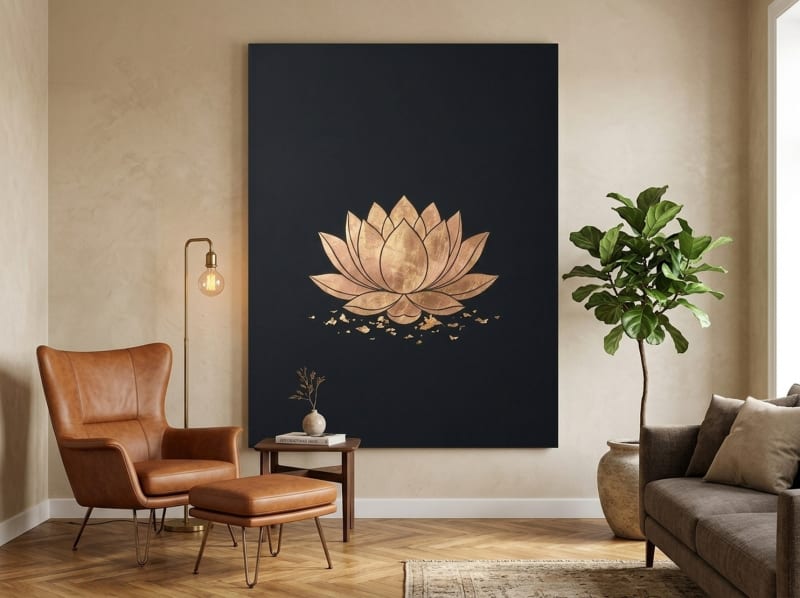
The lotus is the most universal spiritual symbol in the world. Found in Hindu, Buddhist, Egyptian, and Sufi traditions, it represents the soul rising from the mud of ordinary life toward clarity and enlightenment. This canvas renders the lotus in gold leaf on a deep black ground, creating an image that is both strikingly modern and timelessly sacred. The black ground quiets the room immediately. The gold lotus draws the eye and holds it in contemplation without demanding interpretation. It works at 24 by 32 inches (61 by 81 cm) above a low meditation bench, or at 18 by 24 inches (46 by 61 cm) on a bedside feature wall. The minimalist palette pairs naturally with dark walnut, bamboo, and natural linen in Zen-style rooms.
Yin Yang Cranes Canvas Wall Art
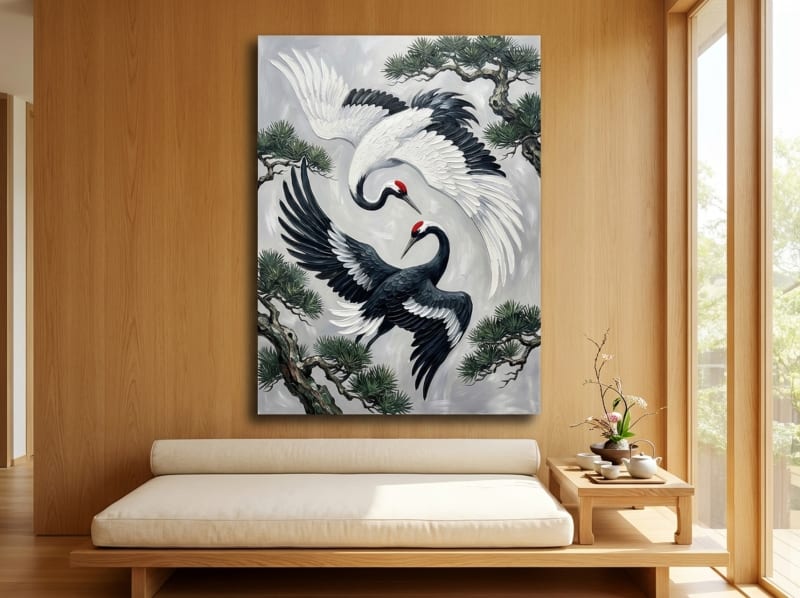
Few symbols communicate balance and interconnectedness as directly as the yin yang, and this interpretation uses two Japanese ink-style cranes to embody that duality. The cranes circle each other within the yin yang form, their curves creating a composition of absolute stillness and absolute movement simultaneously. The black, white, and red palette is classically Japanese and exceptionally versatile in modern interiors: it reads clean against white walls, dramatic against charcoal, and harmonious against natural wood tones. Cranes carry spiritual meaning in Japanese, Chinese, and Korean traditions, representing longevity, wisdom, and divine favour. This makes the piece appropriate for both dedicated practice spaces and shared living areas where multiple spiritual traditions are present.
View the Yin Yang Cranes Canvas
Medicine Wheel Canvas Wall Art
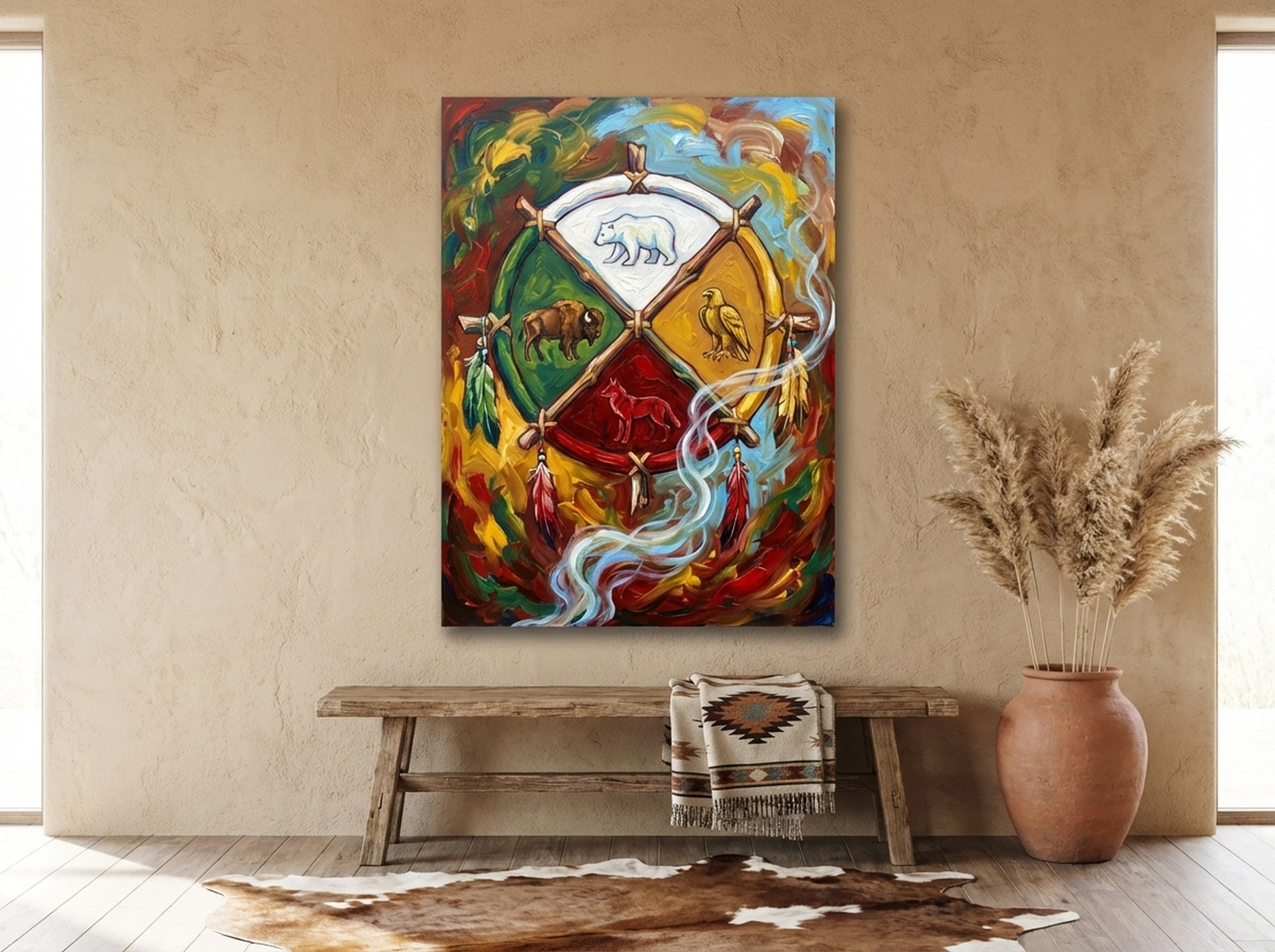
The Medicine Wheel is one of the oldest and most complete spiritual maps in the human record. Used by many Indigenous North American nations, it represents the four directions, the four seasons, the four elements, and the four stages of life as a unified whole. This expressionist canvas renders the Medicine Wheel in deep earth tones: red, yellow, green, and blue on a warm ochre ground. The result is an image of extraordinary spiritual density that wears lightly on the wall. It does not shout its symbolism; it radiates it. For practitioners of Indigenous spirituality, earth-based traditions, or anyone drawn to cosmological imagery, this piece creates a powerful anchor for a meditation or reflection space. The earthy palette suits rooms with terracotta tiles, rammed earth tones, or organic linen textiles.
View the Medicine Wheel Canvas
Agnus Dei Stained Glass Canvas Wall Art
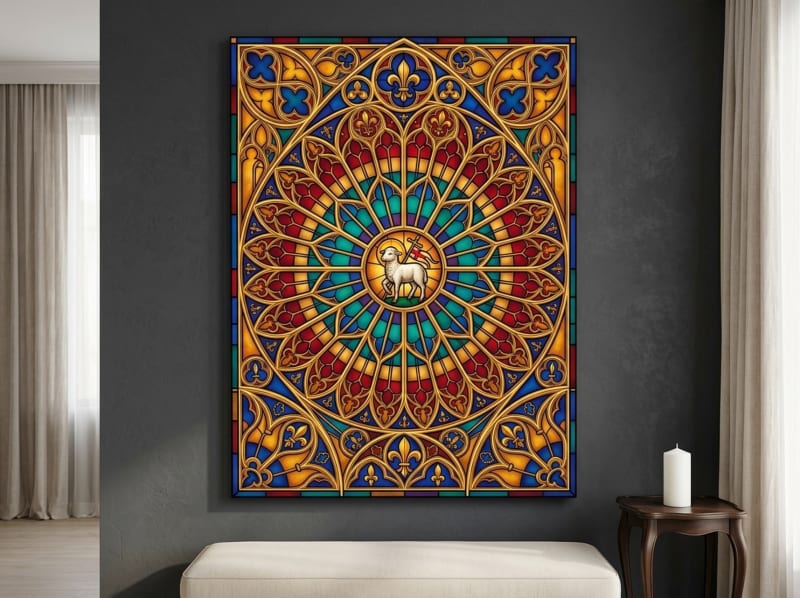
Gothic rose window design translates remarkably well to canvas because it was always meant to be looked at for extended periods. The Agnus Dei, the Lamb of God, sits at the centre of a radiating stained glass pattern in deep jewel tones: gold, cobalt blue, burgundy, and teal. The effect is simultaneously architectural and intimate, bringing the sacred quality of a cathedral into a bedroom or sitting room without the scale of stone. Sacred geometry, which underlies all great religious architecture from Gothic cathedrals to Islamic mosques to Hindu temples, is precisely what makes this image so broadly resonant. The radial symmetry itself is a spiritual form. Hang this at 24 by 32 inches (61 by 81 cm) as a focal point on a feature wall, centred at 145 cm (57 inches) from the floor.
View the Agnus Dei Stained Glass Canvas
Botanical Scripture Canvas Wall Art
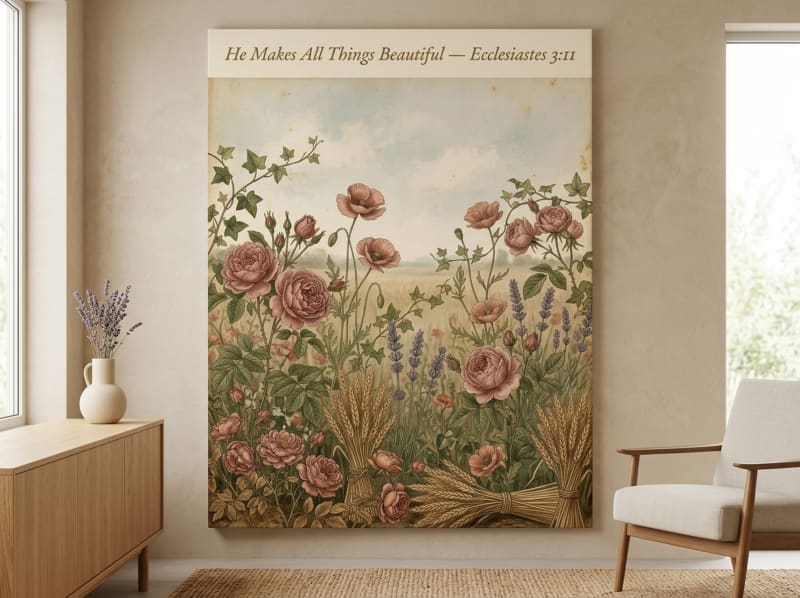
This canvas brings together two powerful spiritual languages: the language of scripture and the language of the natural world. Ecclesiastes verse flows through delicate botanical illustrations of wildflowers and herbs in a vintage linocut style. The palette of cream, terracotta, sage, and warm gold is both deeply calming and visually rich. The botanical element matters because, across many traditions, the natural world is itself a form of sacred text. Ecclesiastes 3, with its famous meditation on seasons and cycles, is one of the most universally resonant passages in scripture because it speaks in the language of nature: time, growth, flowering, and rest. This piece works beautifully in prayer rooms, home offices, bedrooms, and anywhere you want a daily reminder of the rhythms that hold you.
View the Botanical Scripture Canvas
Islamic Geometric Star Canvas Wall Art
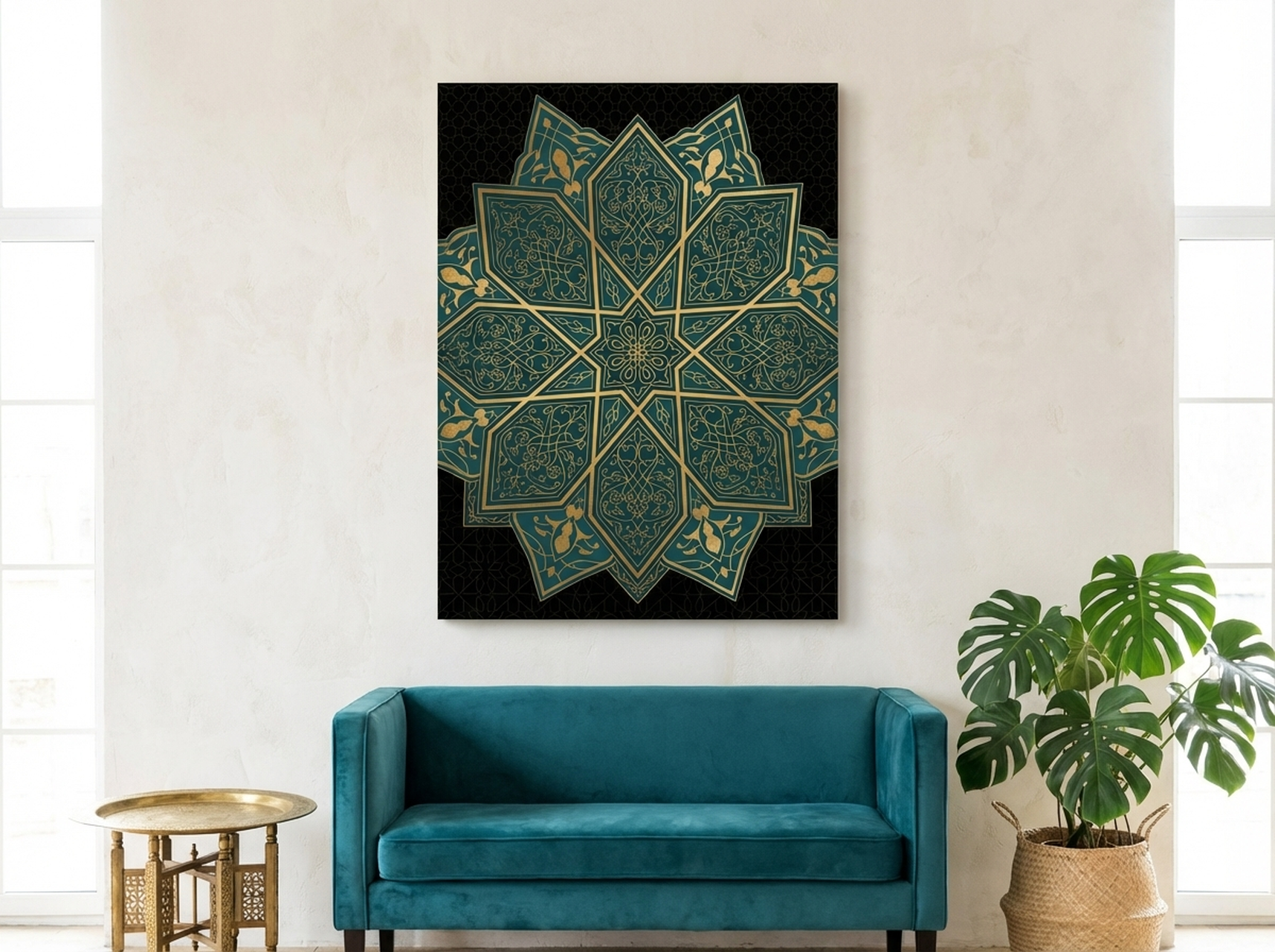
Islamic geometric art is among the most mathematically precise and spiritually intentional art forms ever developed. The eight-pointed star pattern at the centre of this canvas derives from a tradition in which visual repetition and perfect symmetry are themselves acts of worship, mirroring the infinite order of creation. The Arabesque zellige pattern radiates outward from the central star in deep teal and black with gold accents, creating a composition of extraordinary visual depth. Look closely and the pattern continues indefinitely, which is exactly the point: the eye never reaches a terminus because the pattern is meant to evoke the infinite. This piece works beautifully in Islamic homes, but it also speaks powerfully to anyone drawn to sacred geometry, Moroccan design, or the contemplative quality of intricate pattern-making.
View the Islamic Geometric Star Canvas
Where to Display Sacred Art at Home
The most important principle for placing spiritual wall art is that it should be visible during the practice itself, not just as ambient decor. A piece intended for meditation should hang where you will see it when you are seated in your meditation posture. A prayer room canvas should face the direction of prayer or serve as a focal point on the wall you face when you enter. An intention-setting piece for a bedroom should be positioned above or beside the bed so you encounter it first thing in the morning.
Dedicated meditation corners are increasingly common in homes, and they do not require a full room. A corner of a bedroom or living room, clearly delineated by a small rug, a cushion, and a single significant piece of art, functions as a sacred space. Interior designers suggest using a canvas no smaller than 40 by 50 cm (16 by 20 inches) as the visual anchor of a meditation corner. Anything smaller fails to hold the space. For a full meditation room with walls measuring 300 cm (118 inches) or more, a 60 by 80 cm (24 by 31 inch) or 60 by 90 cm (24 by 35 inch) canvas creates the appropriate presence.
Prayer rooms benefit from clean, uncluttered walls. The Islamic tradition in particular calls for simplicity and the avoidance of figurative imagery in spaces of formal prayer, which is why geometric art like the Islamic Geometric Star canvas is so well suited to these spaces. A single large geometric canvas, framed in black or natural wood, on the qibla-facing wall creates a space of clarity and reverence.
For more on sizing principles, see our complete guide on how to choose the right wall art size, which applies directly to meditation and prayer rooms.
Placement Rules and Sizing for Prayer and Meditation Rooms
The standard hanging height for wall art is 145 cm (57 inches) to the centre of the piece from the floor. This is the average human eye line when standing, and it ensures the art is seen at full presence rather than requiring you to tilt your head. In a meditation room where you will be seated on the floor, lower the centre point to approximately 110 to 120 cm (43 to 47 inches) so the piece is at eye level when you are seated.
For above-furniture placement, leave 15 to 20 cm (6 to 8 inches) between the top of the furniture (altar table, meditation bench, prayer rug edge) and the bottom of the frame. This creates a visual connection between the object below and the art above without letting the two elements compete.
A single focal artwork is almost always more powerful than a gallery arrangement in a sacred space. Gallery walls work well in living rooms and hallways where the goal is visual interest and narrative variety. In a meditation corner or prayer room, the goal is singular focus. One well-chosen canvas of appropriate scale is more effective than five smaller prints arranged around each other.
Frame choices matter more in sacred spaces than in any other room. Black frames create formality and emphasis, appropriate for geometric and symbolic art. Natural wood frames (espresso, walnut, or raw pine) create warmth and connection to nature, ideal for botanical and earth-toned pieces. White frames open the composition and suit minimalist Zen-style rooms. Avoid ornate or highly decorative frames, which add visual noise to spaces intended for quiet.
Common Mistakes to Avoid
Treating Spiritual Art as Generic Home Decor
Spiritual wall art deserves the same intentional placement as a ritual object. The most common mistake is buying a piece for its aesthetic qualities alone and hanging it wherever there is empty wall space. A lotus canvas hung in a bathroom says something entirely different from a lotus canvas in a dedicated meditation corner. Location communicates intention. Before you hang a spiritual piece, decide where it will be seen and what you want to feel when you see it there.
Mixing Traditions Without Awareness
There is nothing wrong with a multi-faith home that honours multiple spiritual paths. There is something to think carefully about, however, when spiritual symbols from different traditions are combined decoratively without understanding their meanings. A Medicine Wheel and a yin yang on the same wall can coexist beautifully if both are placed with genuine respect. They look different from a situation where symbols are chosen purely for aesthetic coordination. The distinction is intention, the same quality that separates a sacred space from a nicely decorated room.
Hanging Art Too High
Sacred art hung at ceiling height disconnects from the space below it. The eye has to work to find it, and when you are in a meditative or prayerful state, you want the visual focus to be effortless. Centre every piece at 145 cm (57 inches) from the floor when standing, and at 110 to 120 cm (43 to 47 inches) when the space is used primarily while seated.
Choosing Scale That Is Too Small
A 20 by 25 cm (8 by 10 inch) canvas on a large wall reads as decorative detail, not focal point. Sacred spaces need art that commands the space proportionally. For a typical 300 cm (118 inch) wide wall in a meditation room, a minimum size of 60 by 80 cm (24 by 31 inches) is needed for the piece to hold visual gravity. For the piece to genuinely anchor the space, 80 by 100 cm (31 by 39 inches) or larger is more effective.
Ignoring Lighting
Natural light from a window makes matte canvas prints glow. Direct harsh overhead lighting flattens them. If your meditation or prayer corner has access to natural light, position the art to benefit from it during practice hours. If the space is interior, a single warm-toned directed lamp or recessed spotlight focused on the canvas transforms the experience of looking at it entirely.
Frequently Asked Questions
What types of art work best in a meditation room?
Meditation rooms benefit most from art that has a strong, clear focal point and a calm colour palette. Symbolic imagery such as the lotus, yin yang, or sacred geometry patterns work especially well because they give the mind a point of focus during practice. Avoid busy, multi-element compositions or highly saturated colours, which can overstimulate the visual cortex and make it harder to settle into stillness. A single 60 by 80 cm (24 by 31 inch) canvas in navy, gold, black, or earthy tones is typically the right choice for a dedicated meditation corner.
Can I mix spiritual art from different faiths in one room?
Yes, especially if you choose imagery that speaks to shared spiritual values rather than tradition-specific theology. Lotus flowers, flowing water, sacred geometry, and universal symbols of balance and interconnectedness are appropriate in interfaith and multi-spiritual spaces. The key is to give each piece genuine placement consideration rather than treating spiritual symbols as interchangeable decor items. A curated selection of two or three pieces from different traditions, placed with intention, creates a richer spiritual environment than a single-tradition space.
What is sacred geometry and why does it appear in spiritual art?
Sacred geometry refers to geometric patterns and forms that appear consistently across religious and spiritual traditions worldwide, from Islamic architecture to Gothic cathedrals to Buddhist mandalas to indigenous art. These patterns, including the circle, the star, radial symmetry, and the spiral, are considered sacred because they mirror patterns found in nature at every scale, from the molecular to the cosmic. In wall art, sacred geometry creates a sense of order, infinity, and the presence of something larger than any individual tradition. The Islamic Geometric Star canvas is an excellent example: its repeating pattern is simultaneously mathematical precision and spiritual contemplation.
What is the best wall art for a dedicated prayer room?
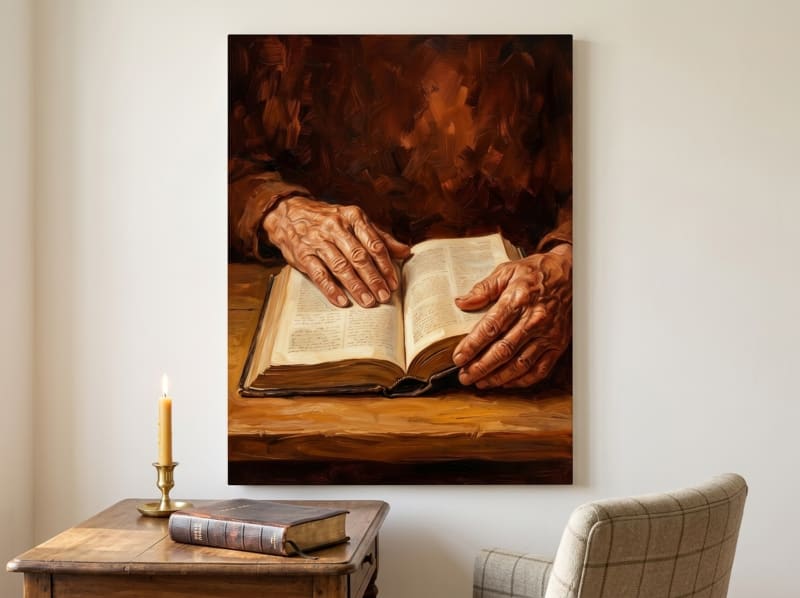
For Islamic prayer rooms, geometric or calligraphic art without figurative imagery is traditionally appropriate. For Christian prayer rooms, sacred portraits, biblical scenes, and scripture typography all work well. For multi-faith or non-denominational prayer spaces, symbolic imagery such as the lotus, hands in prayer, or abstract representations of light and spirit create appropriate atmospheres. In all cases, choose a piece with a calm, focused colour palette and hang it as the single dominant visual element on the primary wall of the room.
How do I create a Zen corner in a bedroom?
Designate a corner of the room with a low meditation cushion or floor mat on a natural fibre rug. Place a single significant canvas at seated eye level on the wall directly ahead of where you sit, centred at approximately 110 to 120 cm (43 to 47 inches). Choose artwork in a restrained palette: black and gold, navy and cream, or earthy sage and terracotta. The Lotus Flower canvas or the Yin Yang Cranes canvas are excellent choices for Zen-inspired corners because their imagery is simple, their symbolism is deep, and their palettes are designed for contemplative spaces. Keep the surrounding walls clear to prevent visual clutter.
Does nature-themed art count as spiritual decor?
Absolutely. Many spiritual traditions, including indigenous earth-based practices, Buddhist and Taoist philosophy, and various forms of Christian mysticism, treat the natural world as a primary site of spiritual encounter. A canvas of a tropical waterfall, a botanical print of sacred wildflowers, or a painting of a mountain at dawn can all serve as spiritual focal points for practitioners who experience the divine primarily through nature. The key is the quality of attention you bring to the image, which is why choosing art with visual depth and staying power matters more than whether the subject is explicitly religious.
Quick Reference: Sacred Wall Art by Tradition and Space
| Product | Best For | Dominant Colours | Link |
|---|---|---|---|
| Lotus Flower Canvas | Meditation corners, Zen bedrooms, Buddhist-inspired spaces | Black, gold, cream | View |
| Yin Yang Cranes Canvas | Balance-focused spaces, East Asian-inspired rooms, shared spiritual homes | Black, white, red | View |
| Medicine Wheel Canvas | Earth-based practice rooms, indigenous spiritual art, nature-connected spaces | Red, yellow, green, blue, ochre | View |
| Agnus Dei Stained Glass Canvas | Christian sacred spaces, Gothic-inspired rooms, sacred geometry enthusiasts | Gold, cobalt, burgundy, teal | View |
| Botanical Scripture Canvas | Prayer rooms, bedrooms, nature-as-spiritual spaces | Cream, terracotta, sage, gold | View |
| Islamic Geometric Star Canvas | Prayer rooms, Moroccan-style spaces, sacred geometry decor | Black, teal, gold, navy | View |
Creating a sacred space at home is an act of intention that rewards you every time you enter the room. Whether you need a Zen corner for morning meditation, a prayer room with geometric clarity, or a bedroom that carries the quiet weight of nature-as-spirit, the art you choose sets the tone for everything that happens there. Browse the Sacred Spaces collection to find the piece that belongs in your practice. Every canvas is printed on premium archival-quality cotton-polyester blend and arrives framed in solid pinewood, ready to hang.