Framed vs Unframed Canvas Wall Art: Which Is Better?
The Heva Team
Art Curators & Interior Design Enthusiasts · February 10, 2026 · 14 min read
Framed adds polish. Unframed adds texture. Which is right for your space?
You have found the perfect canvas print, but now comes the real decision: should you frame it or leave it gallery-wrapped? This is not just an aesthetic preference. The choice between a framed canvas and an unframed (gallery-wrapped) canvas affects edge finishing, visual weight, room suitability, and long-term durability. This guide breaks down everything you need to know so you can choose confidently the first time.
Ready to browse? Explore our full collection of framed canvas wall art, or keep reading for our top picks and expert tips.
What Is a Gallery-Wrapped (Unframed) Canvas?
A gallery-wrapped canvas is printed material stretched taut over thick wooden stretcher bars, typically 3.8 cm (1.5 inches) deep, with the image continuing around all four edges. There is no external frame. The canvas wraps around the sides and is stapled on the back, creating a clean, contemporary profile that appears to float off the wall. This style became popular in modern art galleries because it removes any visual interruption between the artwork and the surrounding space.
Gallery-wrapped canvases work beautifully in minimalist, contemporary, and Scandinavian-inspired rooms. They create a seamless, airy look, especially when you hang multiple pieces together in a grid or salon-style arrangement. Because there is no frame protruding beyond the canvas, they sit closer to the wall and take up less visual real estate, which is ideal for narrow hallways or small apartments.
However, gallery wraps have two limitations worth knowing. First, the exposed canvas edges are vulnerable to scuffs, dust accumulation, and pet damage. Second, the edge treatment (mirrored image, extended image, or solid colour) significantly affects the final appearance, and not all edge treatments suit all artworks. A landscape that mirrors well on the edges may look strange if the edge crops a face in a portrait painting.
What Is a Framed Canvas Print?
A framed canvas print is a stretched canvas enclosed within an external frame, typically made of wood, metal, or composite material. The frame adds a defined border around the artwork, creating visual separation between the piece and the wall. According to Franklin Arts, framed canvas gives artwork a more formal, finished appearance that suits traditional and transitional interiors.
The frame serves multiple practical purposes beyond aesthetics. It protects the canvas edges from physical damage, prevents dust from settling on the sides, and adds structural rigidity that helps the canvas keep its shape over decades. For kitchens, dining rooms, and bathrooms where moisture and cooking splatter are present, the frame acts as a protective barrier. If you want to learn more about choosing between canvas and other print types, our guide on canvas wall art versus framed prints covers the broader comparison.
Frame materials range from natural wood species like oak, walnut, and pine to sleek metal profiles in black, gold, or silver. Each option changes the mood. A slim 2 cm (0.8 inch) black frame feels modern and gallery-like, while a chunky 5 cm (2 inch) natural wood frame brings warmth to farmhouse or bohemian rooms. Gold and brass frames add unmistakable luxury to traditional or glam spaces.
Edge Finishing: The Detail Most Buyers Overlook
Edge finishing is where framed and gallery-wrapped canvases differ most noticeably, yet most buyers never think about it until the artwork is on the wall. Here is what you need to know about each approach.
Gallery-Wrap Edge Options
Mirrored edges reflect the outer portion of the image onto the sides. This creates the cleanest look when the border area contains simple textures like sky, water, or foliage. It fails when the mirror cuts through a face, text, or geometric pattern.
Image continuation extends the full composition around the edges. This gives the piece a three-dimensional effect but requires the original artwork to have extra canvas area beyond the visible face.
Solid colour edges (typically black, white, or a colour sampled from the artwork) create a subtle built-in border. Black edges add drama; white edges feel lighter and gallery-like. This is the safest option when you are unsure which treatment will work.
Framed Canvas Edges
With a framed canvas, edge finishing becomes largely invisible because the frame covers the canvas sides. This means you never have to worry about mirrored distortions, image continuation, or colour-matched edges. The frame does the finishing work for you, which is one reason interior designers frequently recommend framed canvas for pieces with complex compositions, detailed portraits, or geometric patterns where an edge treatment would create visual noise.
Floating Frames: The Best of Both Worlds
If you love the contemporary feel of a gallery wrap but want the polish of a frame, a floating frame is worth considering. A floating frame is a shallow frame that sits around the canvas with a small gap of 3 to 6 mm (0.12 to 0.25 inches) between the canvas edge and the inner lip of the frame. The artwork appears to float inside the frame, revealing the canvas edges while still providing a defined border.
Floating frames are especially effective for abstract art, textured paintings, and pieces where the canvas edges are intentionally part of the design. According to American Frame, floating frames have become increasingly popular for gallery-style displays because they combine the depth of a gallery wrap with the structure of traditional framing. They work well in both modern lofts and traditional living rooms.
Visual Weight and Room Suitability
Visual weight is how heavy or prominent a piece of art feels on the wall. A thick, dark frame on a large canvas creates high visual weight, commanding attention and anchoring the room. An unframed gallery wrap in light colours produces low visual weight, blending quietly into the space. Choosing the right visual weight depends on the room, the wall size, and the role you want the art to play.
Living Room
Above a sofa or fireplace, framed canvas usually performs best. The frame adds the visual weight needed to anchor the artwork as the focal point of the room. Choose a frame finish that complements your furniture hardware. If your coffee table has brass legs, a gold or brass-toned frame ties the room together. For a standard 180 cm (71 inch) sofa, aim for artwork that spans 100 to 135 cm (40 to 53 inches) wide, including the frame.
Bedroom
Both styles work above the bed. Gallery-wrapped canvas creates a relaxed, dreamy atmosphere, while a framed piece adds sophistication. For a romantic or luxury bedroom, a slim gold or black frame elevates the space. For a casual or bohemian bedroom, gallery-wrapped canvas keeps the mood laid-back. Our guide on how to hang wall art explains proper height placement above headboards.
Kitchen and Dining Room
Framed canvas wins here. The frame protects the artwork from moisture, cooking splatter, and accidental bumps. A sealed frame also makes cleaning easier with a damp cloth rather than risking water contact on exposed canvas edges.
Hallway and Entryway
Gallery-wrapped canvas excels in narrow hallways because the slim 3.8 cm (1.5 inch) profile does not protrude far from the wall. A row of three unframed canvases creates a clean gallery effect in tight spaces where a framed piece might feel cramped.
Home Office
Framed art conveys professionalism, making it ideal for video call backgrounds. A matching set of framed prints behind your desk projects a polished, intentional look. For sizing guidance, see our article on choosing the perfect wall art size.
Bathroom
If you want art in a bathroom, framed canvas with a sealed back is recommended. The frame helps protect against humidity damage. Avoid hanging any canvas directly above a shower or bath where steam accumulates constantly.
Our Four Frame Colours and When to Use Each
Every print in our collection ships in one of four frame finishes. Here is how to choose the right one.
Black: The most versatile option. Black frames disappear visually, letting the artwork take centre stage. They suit modern, industrial, and minimalist interiors. A black frame on a vibrant abstract or bold wildlife print creates striking contrast without competing with the image.
White: Ideal for coastal, Scandinavian, and airy spaces. White frames lighten the overall feel of the artwork and blend beautifully with white or light-grey walls. They work especially well with pastel or light-toned art.
Espresso: A rich, dark brown that adds warmth without the severity of black. Espresso frames pair naturally with mid-century modern furniture, leather upholstery, and warm-toned rooms. They complement earthy artwork, landscapes, and still-life pieces.
Natural Wood: Shows visible grain and brings organic texture to the wall. Natural wood frames are perfect for farmhouse, bohemian, and Scandinavian styles. They work beautifully with botanical prints, nature scenes, and any artwork with warm, earthy tones.
Six Framed Canvas Picks for Every Style
1. Roaring Lion Matte Canvas Print
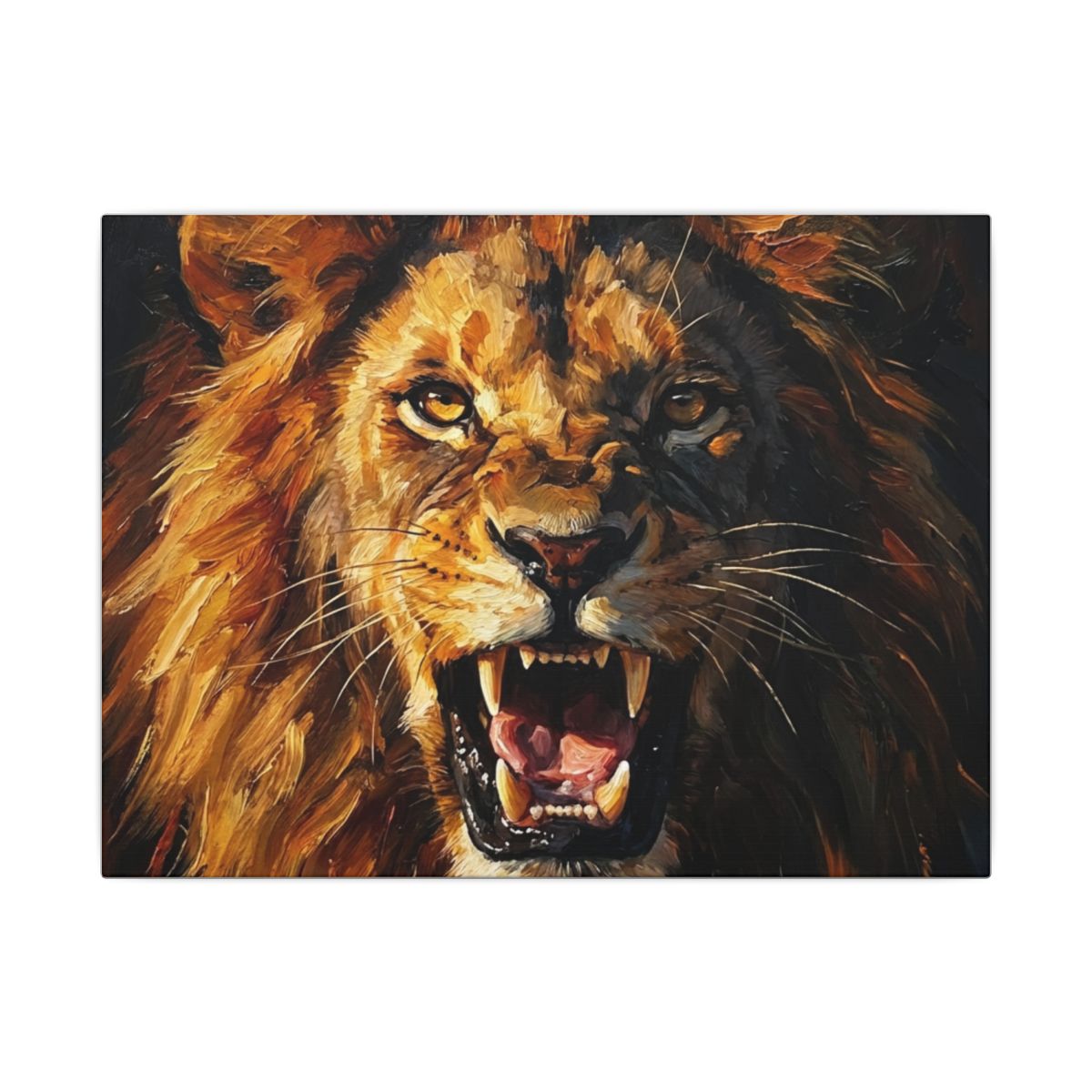
This commanding lion portrait demands a frame. The bold golds and deep browns in the mane create intense visual weight that a gallery wrap would soften at the edges. In a black or espresso frame, the lion becomes the undeniable focal point of any living room, study, or man cave. The rich warm tones pair naturally with leather furniture and dark wood accent pieces. Hang it above a fireplace mantel or centred on a feature wall at eye level, roughly 145 cm (57 inches) from floor to centre.
2. Islamic Geometric Star Canvas Wall Art
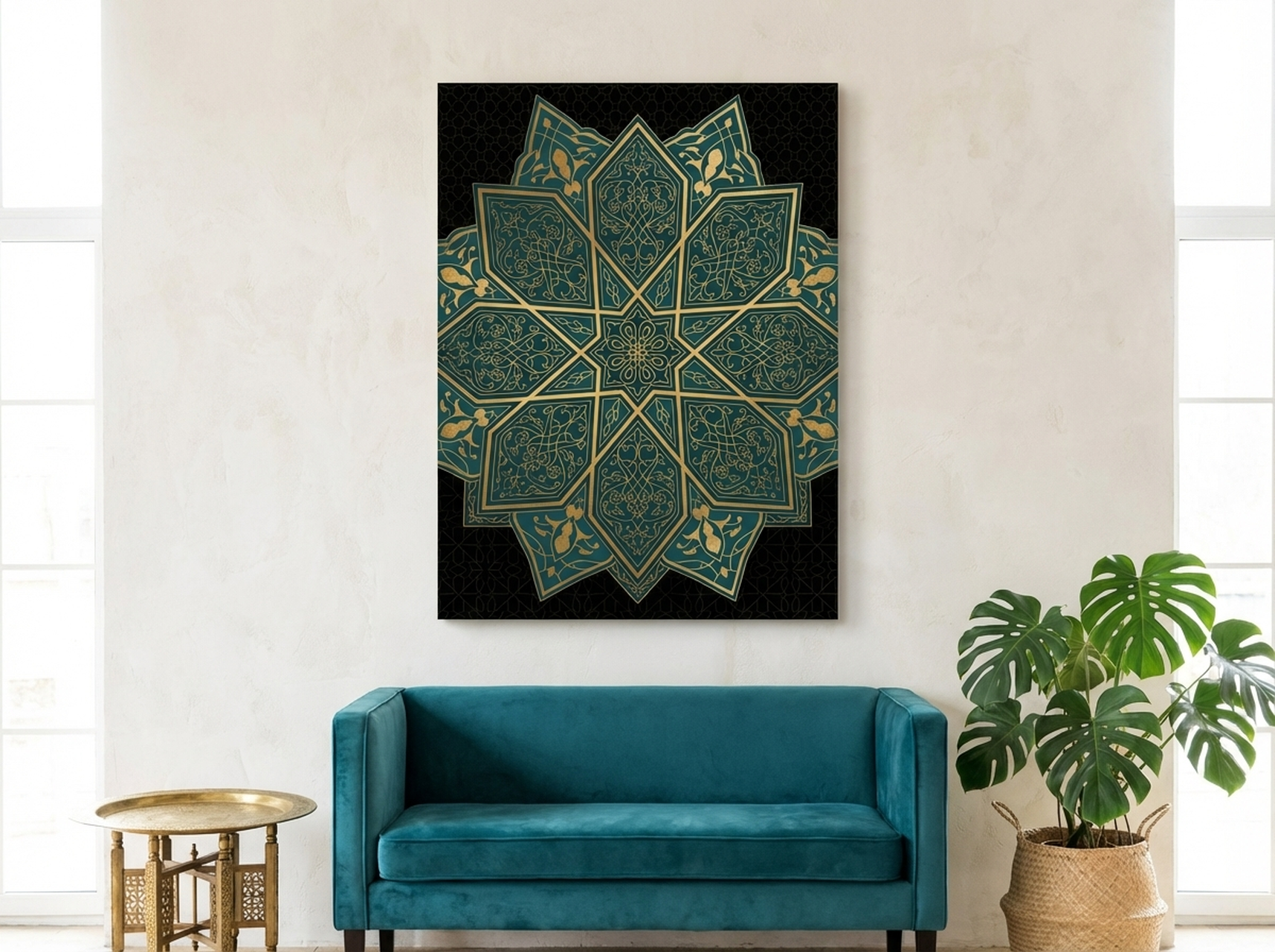
Geometric patterns are a perfect case study for why framing matters. The repeating teal and gold zellige star pattern in this piece would create distracting mirror effects on gallery-wrap edges. A frame cleanly defines where the pattern ends, preserving the mathematical precision of the design. The teal and gold palette brings life to neutral rooms. Choose a black frame for maximum contrast or a natural wood frame for warmth. This piece works beautifully in entryways, dining rooms, or as part of a symmetrical pair flanking a mirror.
View the Islamic Geometric Star
3. Hummingbird Watercolor Canvas Wall Art
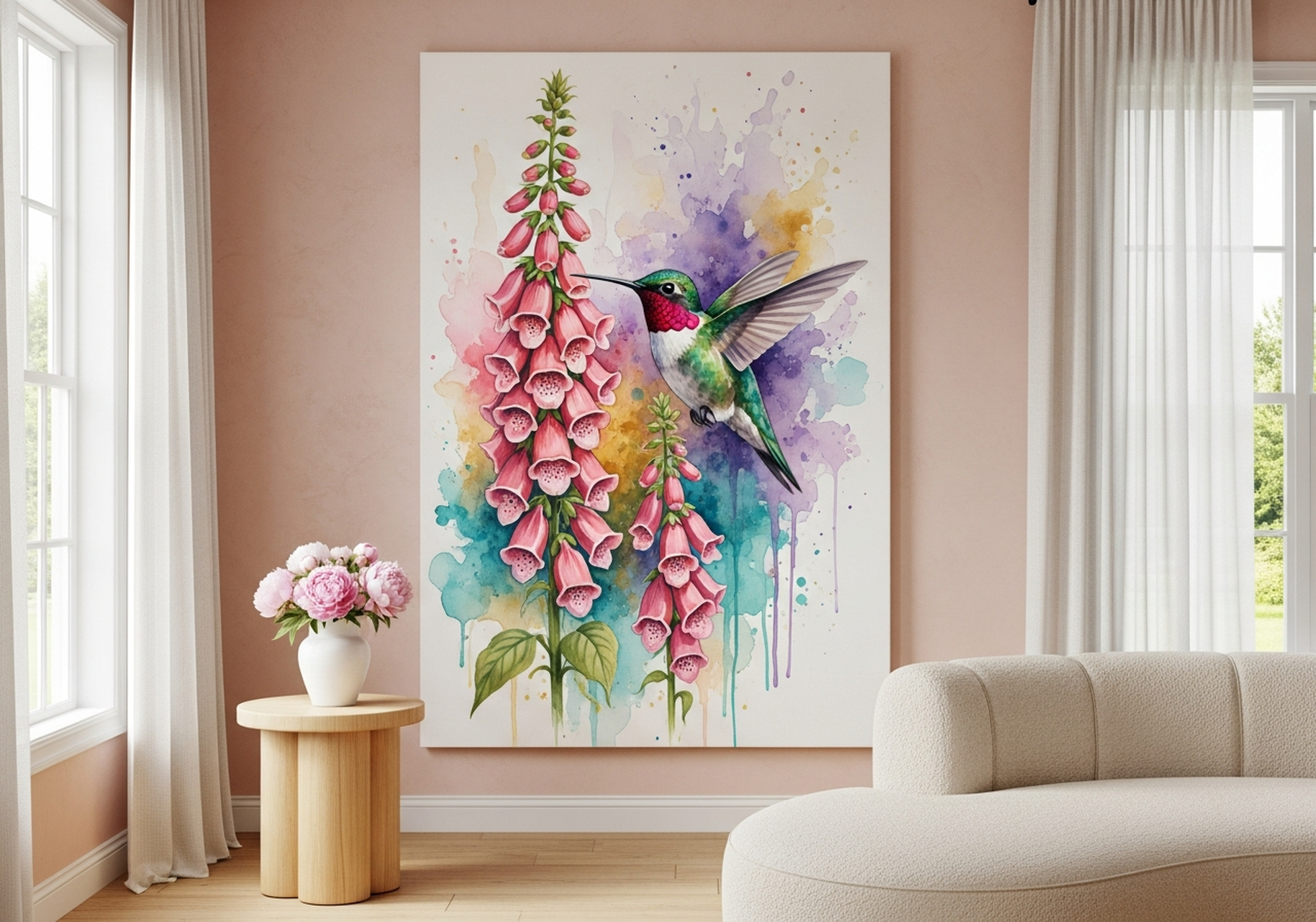
Delicate watercolour art like this ruby-throated hummingbird benefits enormously from a white or natural wood frame. The soft pink, green, and crimson tones feel ethereal, and a light frame enhances that airiness without overpowering the brushwork. This is an ideal piece for a sunroom, bedroom reading nook, or bathroom wall where you want something calming and nature-inspired. At 61 by 46 cm (24 by 18 inches), it fits perfectly on a narrow wall between windows or above a bedside table. The watercolour splashes at the edges would look unfinished on a gallery wrap, so the frame provides essential visual closure.
View the Hummingbird Watercolor
4. Sunbeam Forest Canvas Wall Art
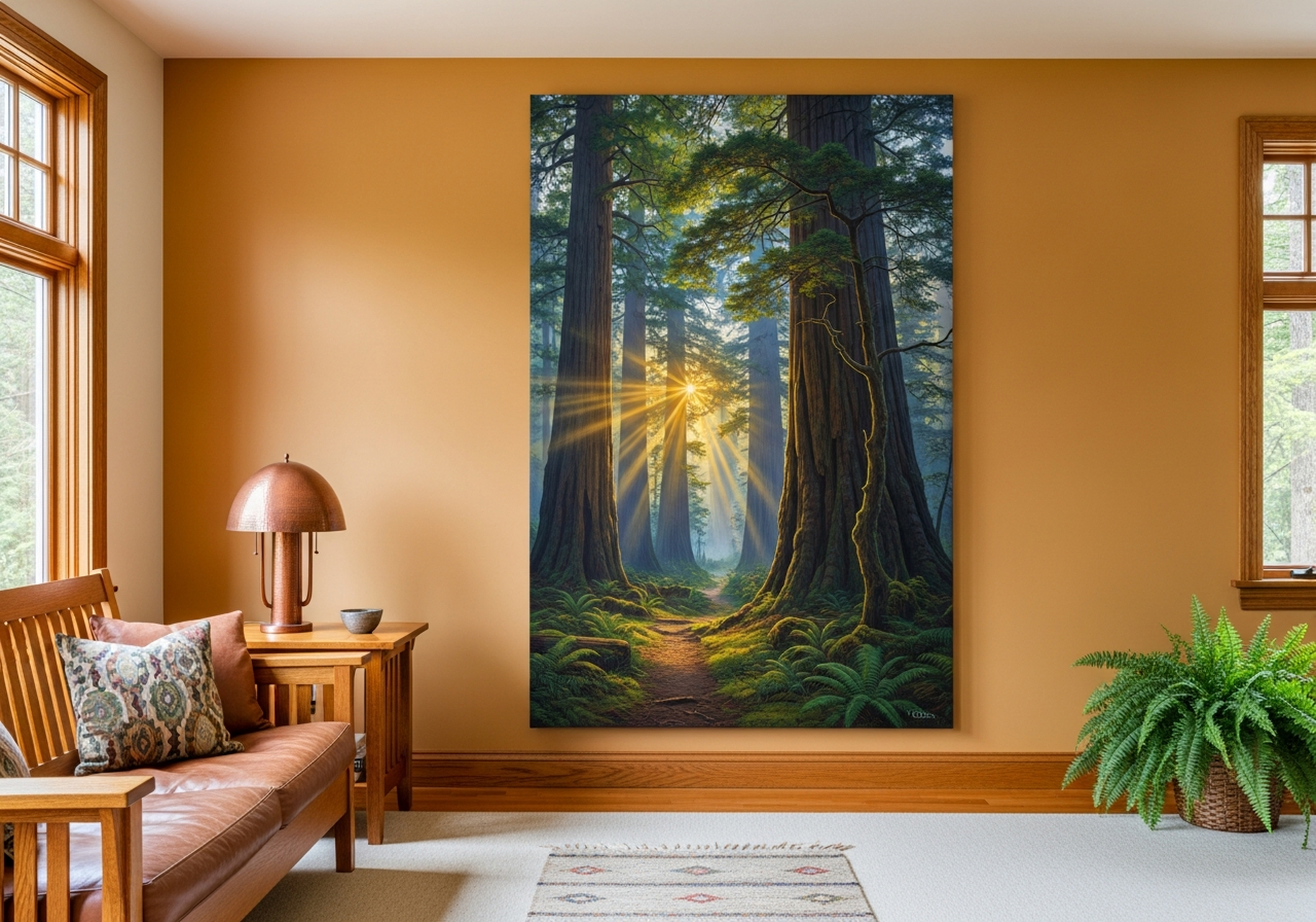
This old-growth redwood scene with golden sunbeams filtering through the canopy is a piece that could work either framed or gallery-wrapped, but a natural wood or espresso frame elevates it. The warm amber light and deep forest greens create a meditative atmosphere suited to living rooms, bedrooms, and home offices. The wood grain of the frame echoes the tree bark in the image, creating a cohesive nature-inspired vignette. Hang it where it catches actual sunlight in the morning to amplify the golden tones. This is one of our most popular nature prints for a reason: it brings the calm of the outdoors inside without overwhelming the room.
5. Peaches and Cherries Still Life Canvas Wall Art
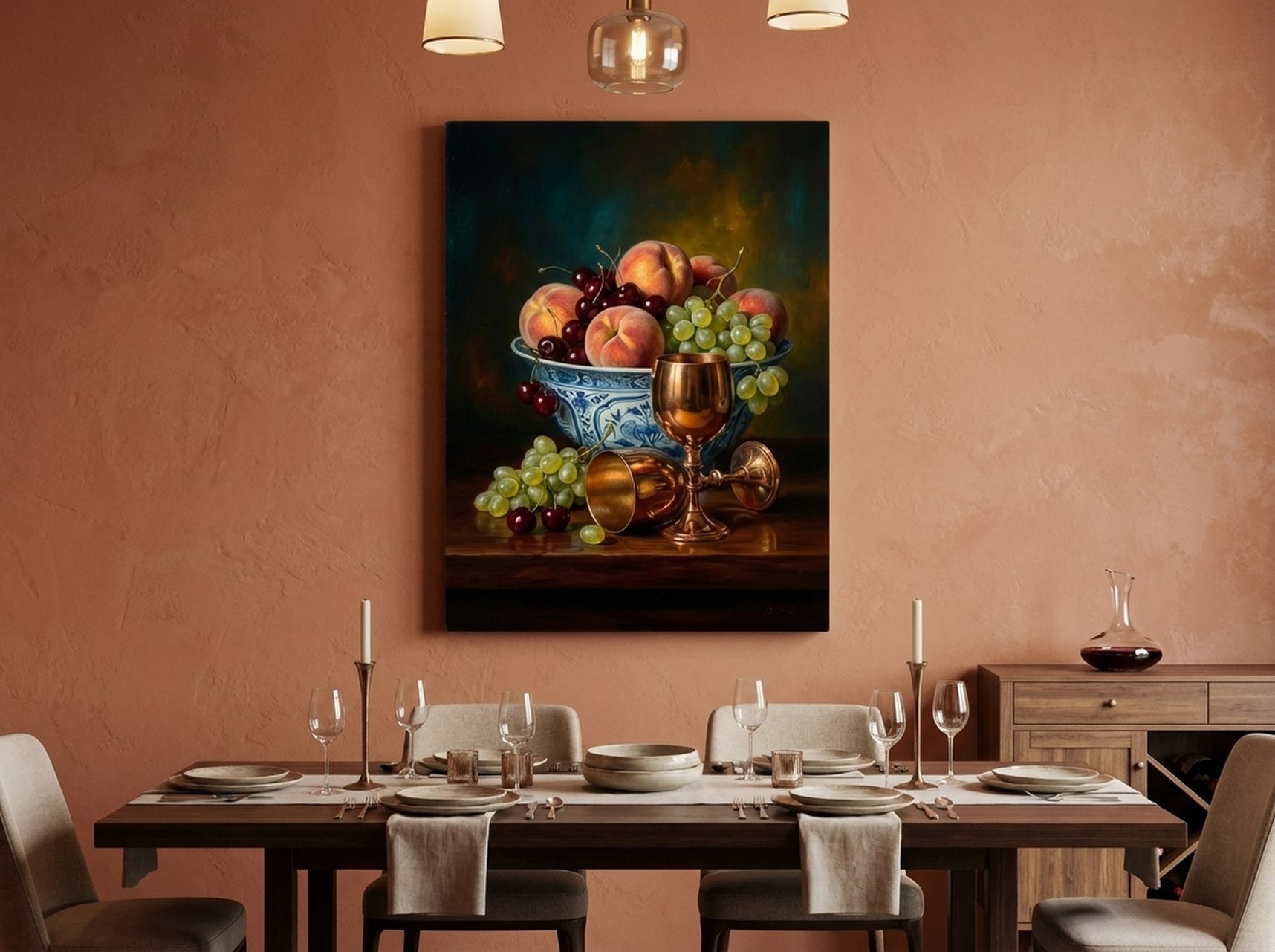
Dutch Golden Age still-life paintings practically demand a frame. The dark, moody background with luminous fruit, vine leaves, and dew drops is a style originally designed to be displayed in ornate frames in 17th-century homes. An espresso or black frame honours that tradition while keeping the look contemporary. This piece is made for dining rooms and kitchens, where the food subject matter feels natural and the frame protects against kitchen humidity. The warm peach, ruby, and green tones complement terracotta tiles, wooden dining tables, and copper cookware beautifully.
View the Peaches and Cherries Still Life
6. Northern Lights Canvas Wall Art
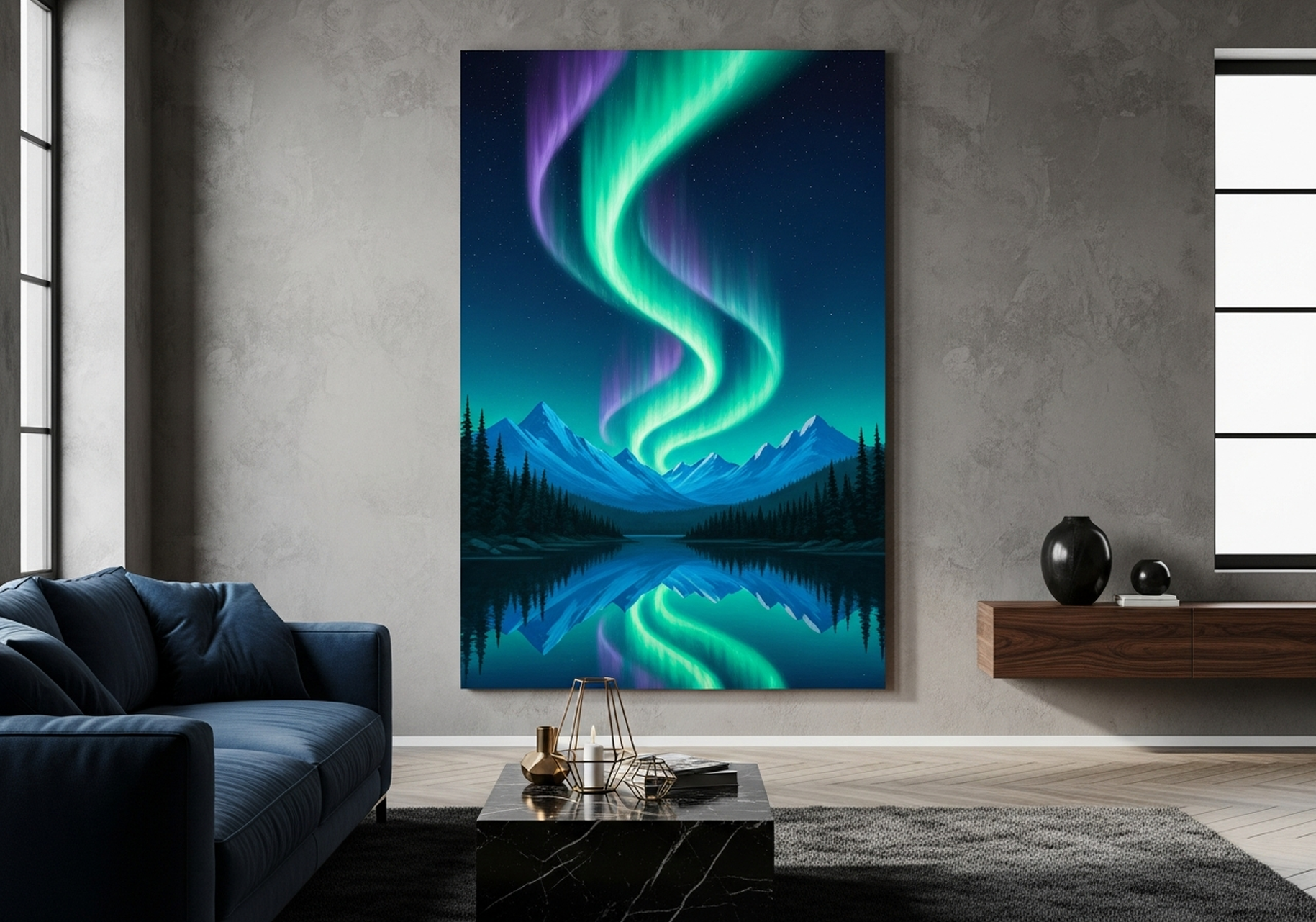
The aurora borealis is one subject where both framing options genuinely compete. The sweeping greens and purples of the northern lights look spectacular as a gallery wrap because the colours can continue around the edges, creating an immersive, panoramic feel. But in a black frame, the dark border mimics the night sky, containing the luminous colours and making them pop even more dramatically. For bedrooms and relaxation spaces, this piece in a black frame creates a serene, almost otherworldly atmosphere. The cool blue, green, and purple palette pairs with grey, navy, or white walls and silver-toned furniture.
Buying Guide: Measurements and Placement
Getting the right size and position matters as much as the art itself. Follow these practical rules to avoid costly mistakes.
Frame adds to total dimensions. A 61 by 91 cm (24 by 36 inch) canvas in a 5 cm (2 inch) frame becomes roughly 71 by 101 cm (28 by 40 inches) total. Always measure your wall space and subtract twice the frame width to determine the maximum canvas size that fits.
The two-thirds rule for furniture. Artwork above a sofa, bed, or console table should span roughly two-thirds the width of the furniture below it. For a 183 cm (72 inch) sofa, aim for art that measures 122 to 137 cm (48 to 54 inches) wide, frame included.
Eye-level centre at 145 cm (57 inches). The centre of the artwork should sit approximately 145 cm (57 inches) from the floor. When hanging above furniture, leave 15 to 20 cm (6 to 8 inches) between the top of the furniture and the bottom of the frame.
Weight and wall type. Framed canvas is heavier than gallery-wrapped canvas because the frame adds 1 to 3 kg (2 to 7 pounds). For drywall, use anchors rated for the total weight. For masonry or plaster walls, use appropriate wall plugs. Always check the hanging hardware before mounting.
Lighting matters. Position art where it catches indirect natural light or install a picture light 15 to 20 cm (6 to 8 inches) above the frame. Avoid direct sunlight, which causes fading over time regardless of framing style.
Five Common Mistakes to Avoid
1. Choosing Gallery Wrap for Geometric or Portrait Art
Geometric patterns and portrait faces look distorted when mirrored on gallery-wrap edges. Frames eliminate this problem entirely by covering the edges. If your chosen artwork features faces, repeating patterns, text, or precise lines, framed is almost always the better choice.
2. Ignoring Frame Width in Your Measurements
A 5 cm (2 inch) frame adds 10 cm (4 inches) to both width and height. Buyers who measure only the canvas often end up with a piece that overwhelms the wall or crowds surrounding furniture. Always calculate total dimensions including the frame before ordering.
3. Mixing Framed and Unframed on the Same Wall
A gallery wall works best when all pieces share the same framing treatment. Mixing framed and gallery-wrapped canvases on one wall creates visual inconsistency that makes the arrangement look unplanned. Commit to one style or the other for each display grouping.
4. Using an Ornate Frame on an Oversized Canvas
For canvases wider than 76 cm (30 inches), thin or simple frames look best. A thick, ornate frame on a large canvas can feel overwhelming and heavy, making the room feel smaller. Save ornate frames for smaller accent pieces under 51 cm (20 inches).
5. Hanging Canvas Art in High-Humidity Zones Without a Frame
Gallery-wrapped canvas absorbs moisture through its exposed edges. In bathrooms, laundry rooms, or kitchens near the stove, a frame provides a critical moisture barrier. If you must use unframed canvas in these spaces, keep it at least 2 metres (6.5 feet) from any water or steam source.
Frequently Asked Questions
What is the main difference between framed and gallery-wrapped canvas?
A framed canvas has an external border (wood, metal, or composite) that covers the canvas edges and adds visual definition. A gallery-wrapped canvas has the printed image continuing around the sides of the stretcher bars with no external frame. The key practical differences are edge protection (framed is better), visual weight (framed is heavier), and overall dimensions (the frame adds 5 to 10 cm to each side).
Is a framed canvas more expensive than gallery-wrapped?
Pre-framed canvas prints (where the frame is included at manufacturing) are only slightly more expensive than gallery-wrapped versions. The real cost difference comes with custom framing after purchase, which can add $100 to $300 or more depending on material and size. Buying pre-framed saves you that expense entirely.
Can I add a frame to a gallery-wrapped canvas later?
Yes. A floating frame is the most popular option for framing a gallery-wrapped canvas after purchase. The floating frame sits around the canvas with a narrow gap that shows the canvas edges. You can also use a traditional frame, but you may need to adjust the depth of the frame to accommodate the thick stretcher bars of a gallery wrap.
Which framing style is better for a gallery wall?
Both work, but consistency is key. For a clean, modern gallery wall, use all gallery-wrapped canvases in the same size. For a traditional gallery wall, use matching frames in the same colour and profile. The most important rule is not to mix framed and unframed pieces on the same wall unless you are going for a deliberately eclectic, bohemian look.
Do your prints come framed and ready to hang?
Yes. Every canvas print in our collection ships in a sturdy frame with pre-installed hanging hardware. Choose from four frame colours: black, white, espresso, or natural wood. The canvas is printed on premium matte material and arrives ready to hang straight out of the box.
What frame colour works with most wall colours?
Black is the most universally compatible frame colour. It works on white, grey, beige, navy, and even dark-coloured walls because it creates contrast without clashing. If your walls are very dark (charcoal, navy, or black), switch to a white or natural wood frame so the artwork stands out rather than blending in.
Quick Reference Table
| Product | Best For | Dominant Colours | Link |
|---|---|---|---|
| Roaring Lion | Living room statement wall, study | Gold, brown, black | View |
| Islamic Geometric Star | Entryway, dining room, symmetrical pair | Teal, gold, ivory | View |
| Hummingbird Watercolor | Sunroom, bedroom, bathroom | Pink, green, crimson | View |
| Sunbeam Forest | Living room, bedroom, home office | Green, amber, brown | View |
| Peaches and Cherries Still Life | Dining room, kitchen | Peach, ruby, deep green | View |
| Northern Lights | Bedroom, relaxation space | Green, purple, navy | View |
Find the Perfect Framed Canvas for Your Space
Every piece in our collection arrives framed, printed on premium matte canvas, and ready to hang with free US shipping. Choose from black, white, espresso, or natural wood frames to match your room perfectly.