Afrohemian Decor: How to Master This Trending Interior Style
The Heva Team
Art Curators & Interior Design Enthusiasts · January 20, 2026 · 14 min read
Afrohemian decor blends African heritage with bohemian freedom. Learn how to style this trending aesthetic with wall art, textiles, and natural materials.
You have seen the earthy tones, the layered textures, the mix of African patterns with relaxed bohemian comfort on your Pinterest feed, and now you want that look in your own home. The challenge is that Afrohemian decor can tip into costume territory if done without intention, or fall flat as generic boho if the African element is an afterthought. This guide gives you the specific wall art picks, room layouts, colour rules, and sourcing strategies to get Afrohemian style right the first time.
Ready to browse? Explore our Cultural Heritage Art collection or keep reading for our top picks and expert tips.
What You Will Find in This Guide
- What Is Afrohemian Decor (And Why It Is Everywhere in 2026)
- The Afrohemian Colour Palette: Specific Shades That Work
- Why Wall Art Is the Foundation of Every Afrohemian Room
- Our 6 Top Afrohemian Wall Art Picks
- Room-by-Room Styling Guide With Real Measurements
- Common Mistakes to Avoid
- Afrohemian Decor FAQ
- Quick Reference Table
What Is Afrohemian Decor (And Why It Is Everywhere in 2026)
Afrohemian decor fuses the cultural depth of African design traditions with the relaxed, layered spirit of bohemian interiors. It is not simply boho with a dashiki pillow tossed on the sofa. The style draws on specific African artistic traditions, including West African textile patterns like mudcloth and Kente, East African beadwork motifs, Southern African geometric designs, and North African architectural elements, then blends them with the bohemian love of natural materials, mixed patterns, and collected-over-time authenticity.
According to House Digest, Pinterest searches for Afrohemian decor have surged dramatically, making it one of the platform's top predicted home trends for 2026. The style resonates because it solves a real problem: standard bohemian decor can feel rootless, and traditional African decor can feel too formal for everyday living. Afrohemian strikes the balance, creating spaces that are both culturally grounded and comfortable enough for daily life.
What separates authentic Afrohemian from a surface-level imitation is intentionality. Every element in an Afrohemian room should have a reason for being there, whether it is a canvas print that celebrates Yoruba spiritual traditions, a mudcloth-inspired textile that honours Malian craftsmanship, or a carved wooden bowl that connects to East African artisan heritage. If you want a deeper understanding of the broader movement, our guide to African wall art styles, history, and home decor covers the traditions that inform this aesthetic.
The Afrohemian Colour Palette: Specific Shades That Work
The Afrohemian palette pulls from the African landscape and textile traditions, then softens them with bohemian neutrals. As AARVEN notes in their trend analysis, the core colours are earthy ochres, clay reds, and rich indigos combined with vibrant saffron, emerald, and cobalt accents.
Base colours (walls and large furniture): Warm white (not cool white, look for undertones of cream or sand), terracotta (Benjamin Moore Morrocco Red 1309 or similar), warm clay (a muted rose-brown), or deep sage green. These occupy 60 to 70 percent of the room's visual weight.
Secondary colours (textiles, rugs, medium decor): Indigo blue, burnt sienna, mustard gold, and olive green. These fill 20 to 30 percent of the visual space through throw pillows, curtains, rugs, and medium-sized art.
Accent colours (wall art, small objects, pattern pops): Bright saffron yellow, turquoise, cobalt blue, and vermillion red. These should appear in small, intentional doses through wall art, ceramics, and textiles. They represent 5 to 10 percent of the room's colour.
Colour psychology research shows that earth tones reduce cortisol levels and promote feelings of groundedness, which is exactly the emotional effect Afrohemian spaces aim for. The warm tones (terracotta, gold, sienna) raise the perceived temperature of a room by 2 to 3 degrees, making spaces feel more intimate and inviting without touching the thermostat.
A practical tip: pull your accent colours directly from the wall art you choose. If your anchor canvas features burgundy, gold, and teal (like many of our African heritage pieces), carry those exact tones into your throw pillows, a ceramic vase, and perhaps a small woven basket. This creates the layered-but-cohesive look that defines expert Afrohemian styling.
Why Wall Art Is the Foundation of Every Afrohemian Room
In most design styles, wall art is the finishing touch. In Afrohemian decor, it is the starting point. The wall art establishes the cultural identity of the room, sets the colour palette, and provides the visual weight that every other element builds around. Without strong wall art, an Afrohemian room can devolve into a collection of interesting textures with no narrative thread.
The most effective Afrohemian wall art falls into five categories. Portrait art that celebrates Black identity and African heritage brings human presence and emotional depth. Abstract pieces that reference African textile patterns or colour palettes provide visual texture without being literal. Wildlife and nature art in warm, saturated palettes connects to the African landscape. Spiritual and cultural imagery, from Yoruba deities to Egyptian queens, adds layers of meaning. And geometric or pattern-based art inspired by mudcloth, Ankara, or Kente designs brings the graphic impact of African textiles to your walls.
The ideal Afrohemian gallery wall mixes two to three of these categories. A large portrait as the anchor, flanked by a smaller abstract piece and a pattern-based work, creates visual variety while maintaining cultural coherence. Keep frames consistent in colour (black or natural wood are strongest) and maintain 5 to 8 cm (2 to 3 inches) between pieces. For more on creating effective gallery wall arrangements, see our step-by-step gallery wall guide.
Our 6 Top Afrohemian Wall Art Picks
1. African Elder Portrait Canvas Wall Art
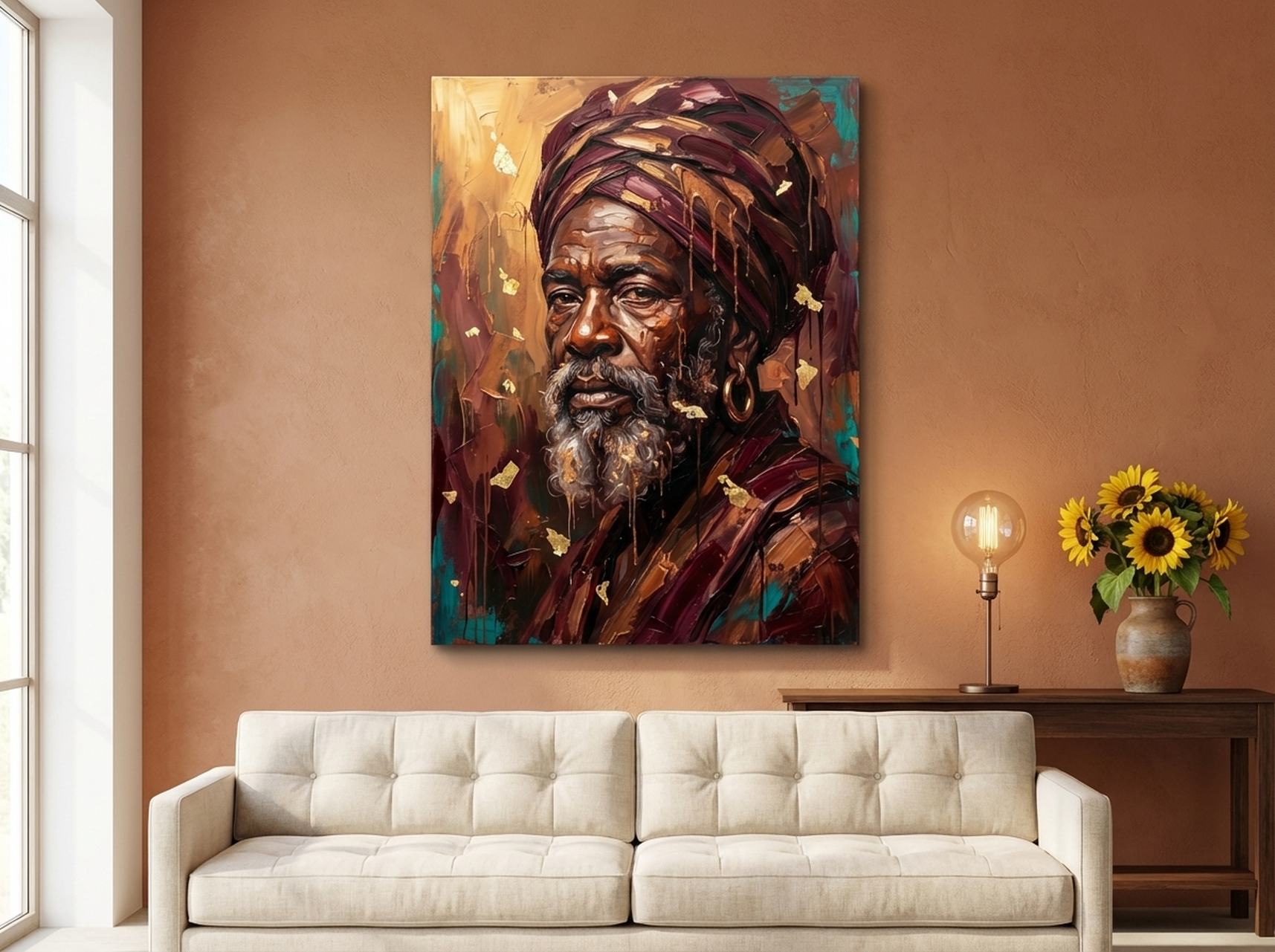
This expressionist oil painting-style portrait captures the gravitas and warmth of African elder wisdom. The rich burgundy, gold, and teal palette makes it a natural anchor piece for any Afrohemian room. The bold, textured brushwork adds an organic, handcrafted quality that echoes the artisan traditions central to this style. Hang it above the sofa as the centrepiece of a gallery wall, or let it stand alone on the main wall of a living room or study. The 60 x 80 cm (24 x 32 inch) size fills a wall without overwhelming a standard living room. Pair it with mudcloth throw pillows in matching earth tones and a woven jute rug to complete the look.
View the African Elder Portrait
2. Black Woman Worship Canvas Wall Art
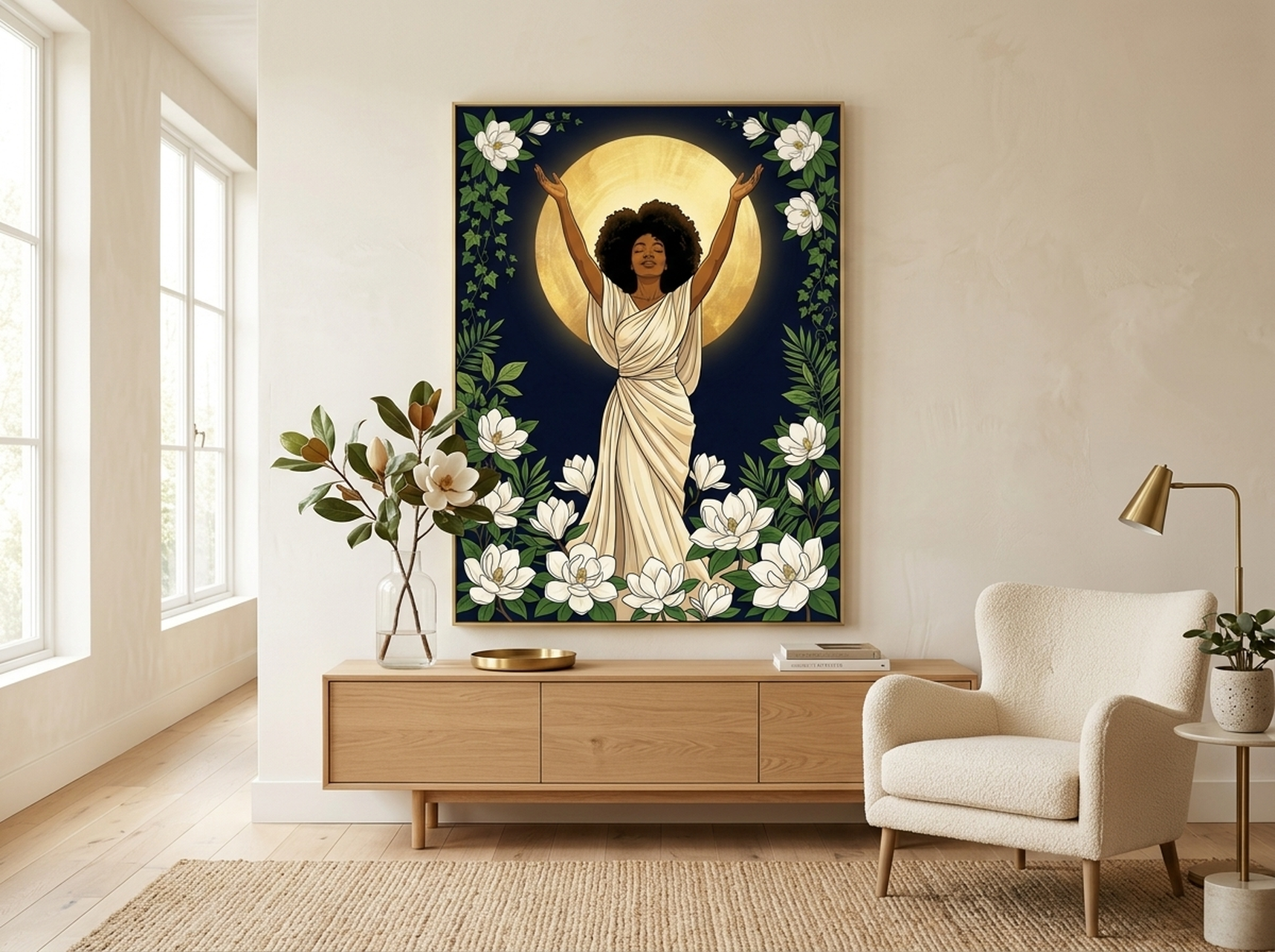
This piece blends African American portraiture with botanical elements and a spiritual reverence that speaks to both the cultural and spiritual pillars of Afrohemian style. The navy-and-gold colour scheme is sophisticated enough for formal living rooms yet warm enough for bedrooms. The botanical framing around the figure connects nature and spirituality, two themes that run deep in both African and bohemian design traditions. At 60 x 80 cm (24 x 32 inches), it works beautifully above a bed flanked by woven rattan nightstands, or in an entryway where it sets the tone for the entire home.
View the Black Woman Worship Print
3. Gold King Portrait Canvas Wall Art
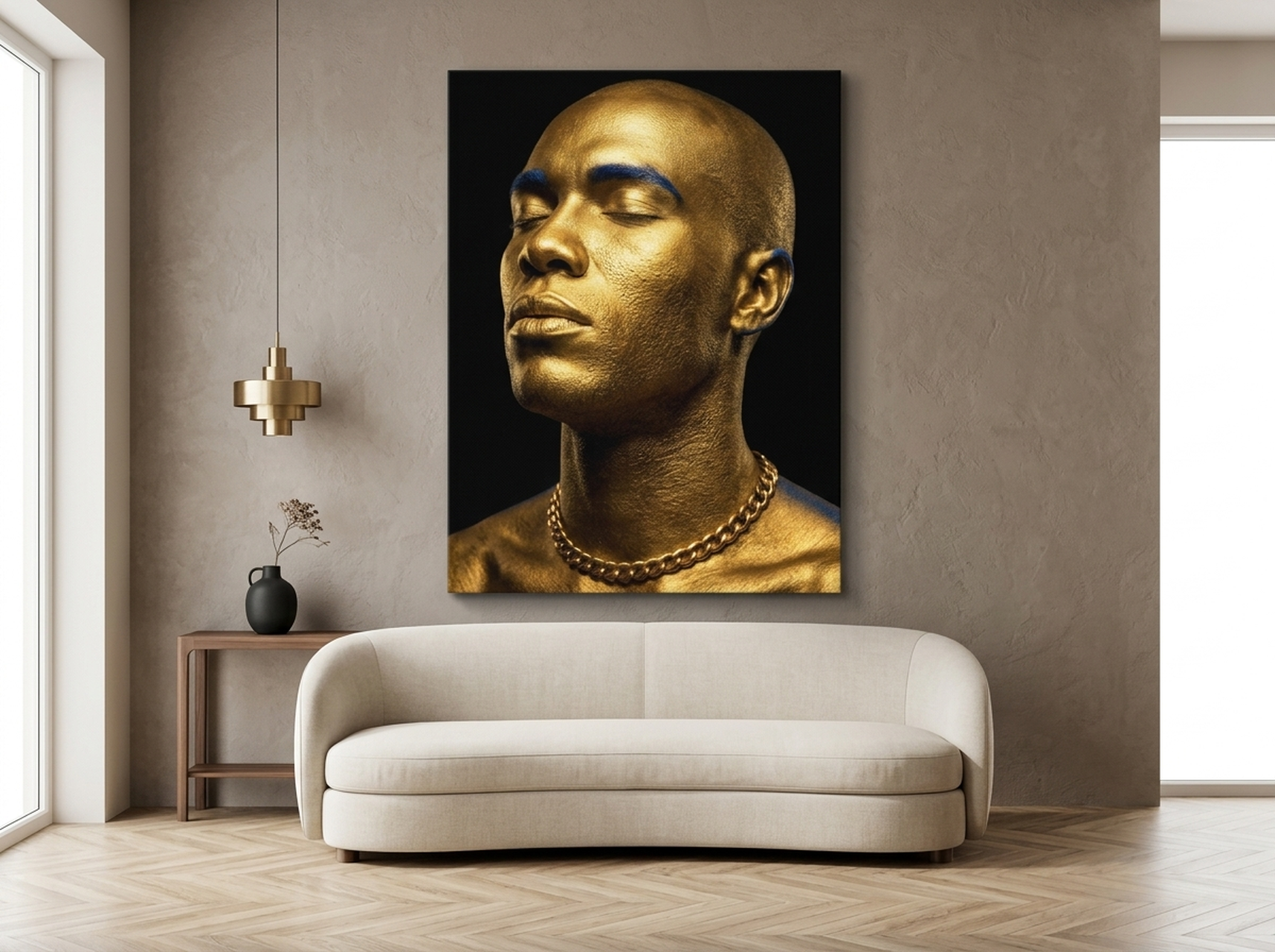
This editorial-style portrait in metallic gold and deep black brings a regal, contemporary edge to the Afrohemian palette. The gold tones echo the precious metals found in traditional African jewellery and royal regalia, while the bold, graphic composition gives it a modern art gallery feel. This is the piece for homeowners who want their Afrohemian space to lean luxurious rather than rustic. Position it on a dark accent wall (charcoal, navy, or deep forest green) and surround it with brass candleholders, a velvet throw in a warm tone, and perhaps a carved wooden sculpture. It pairs especially well with the opulent side of bohemian style: Moroccan poufs and brass lanterns.
4. Roaring Lion Canvas Wall Art
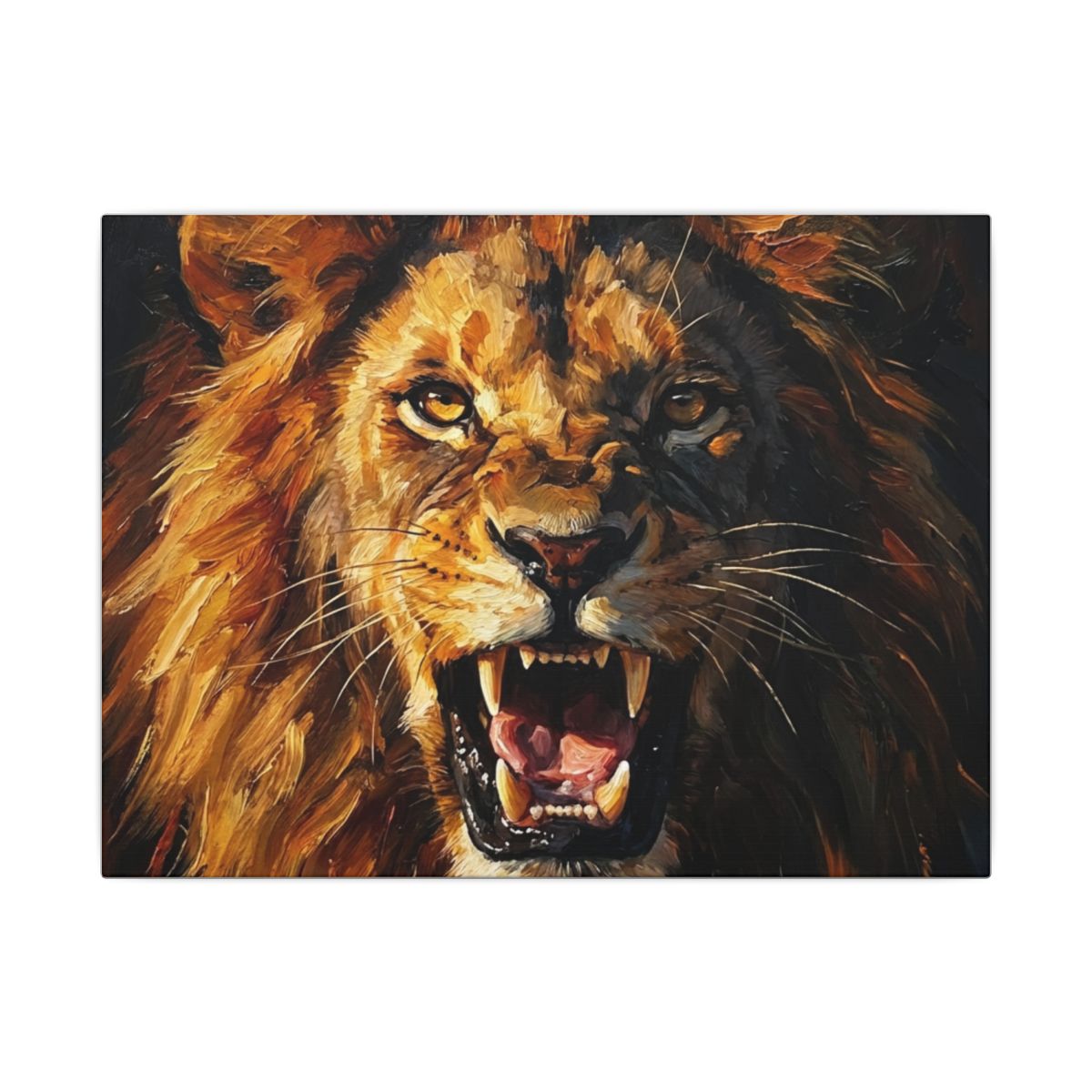
The lion is one of the most powerful symbols across African cultures, from the Lion of Judah in Ethiopian tradition to the Asante golden stool's guardian imagery. This bold wildlife print captures that primal energy with a palette of black, gold, orange, and brown that slots perfectly into the Afrohemian colour scheme. The painterly style gives it an expressive, artistic quality rather than a photographic one, which keeps it consistent with the handmade, artisan aesthetic. Hang it in a living room or home office where it can serve as a daily reminder of strength and courage. It is especially effective above a wooden console table styled with a few books on African art and a terracotta vase with dried grasses.
5. Leopard Print Canvas Wall Art
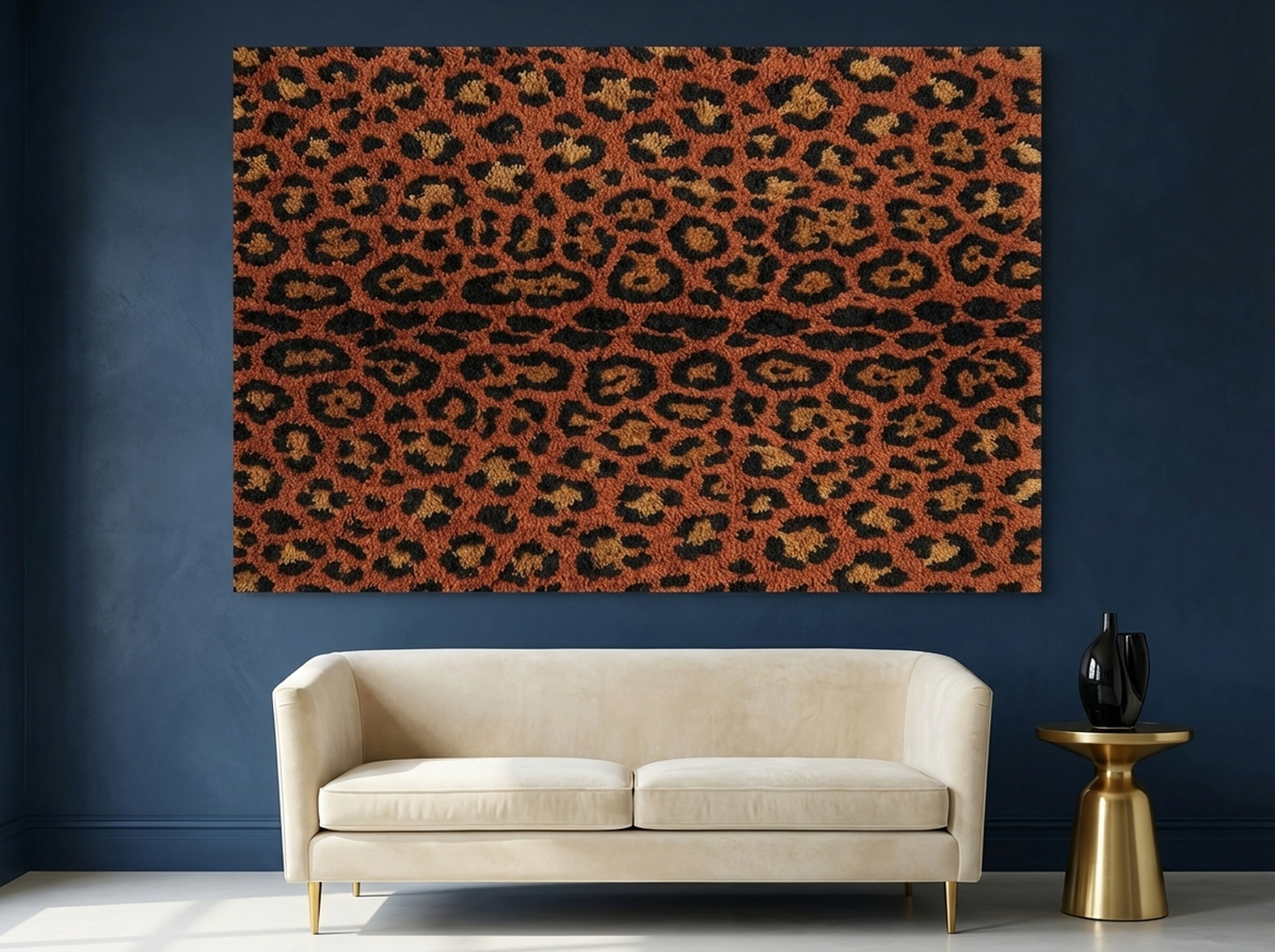
Animal prints have deep roots in African textile and decorative traditions, and this terracotta leopard print canvas brings that heritage into a contemporary, pattern-focused format. The warm terracotta, orange, black, and gold tones are pure Afrohemian, and the textured, almost tactile quality of the print mimics the feel of actual animal hide or woven fabric. This piece bridges the gap between the wildlife and textile traditions of Afrohemian style. Use it in a bedroom or dining room where its pattern energy can play off solid-coloured textiles. It is particularly striking when paired with a plain linen sofa and one or two smaller pieces of African portrait art nearby. The pattern-on-pattern mixing that defines bohemian style works beautifully when this canvas anchors the pattern story.
6. Fluid Abstract Landscape Canvas Wall Art
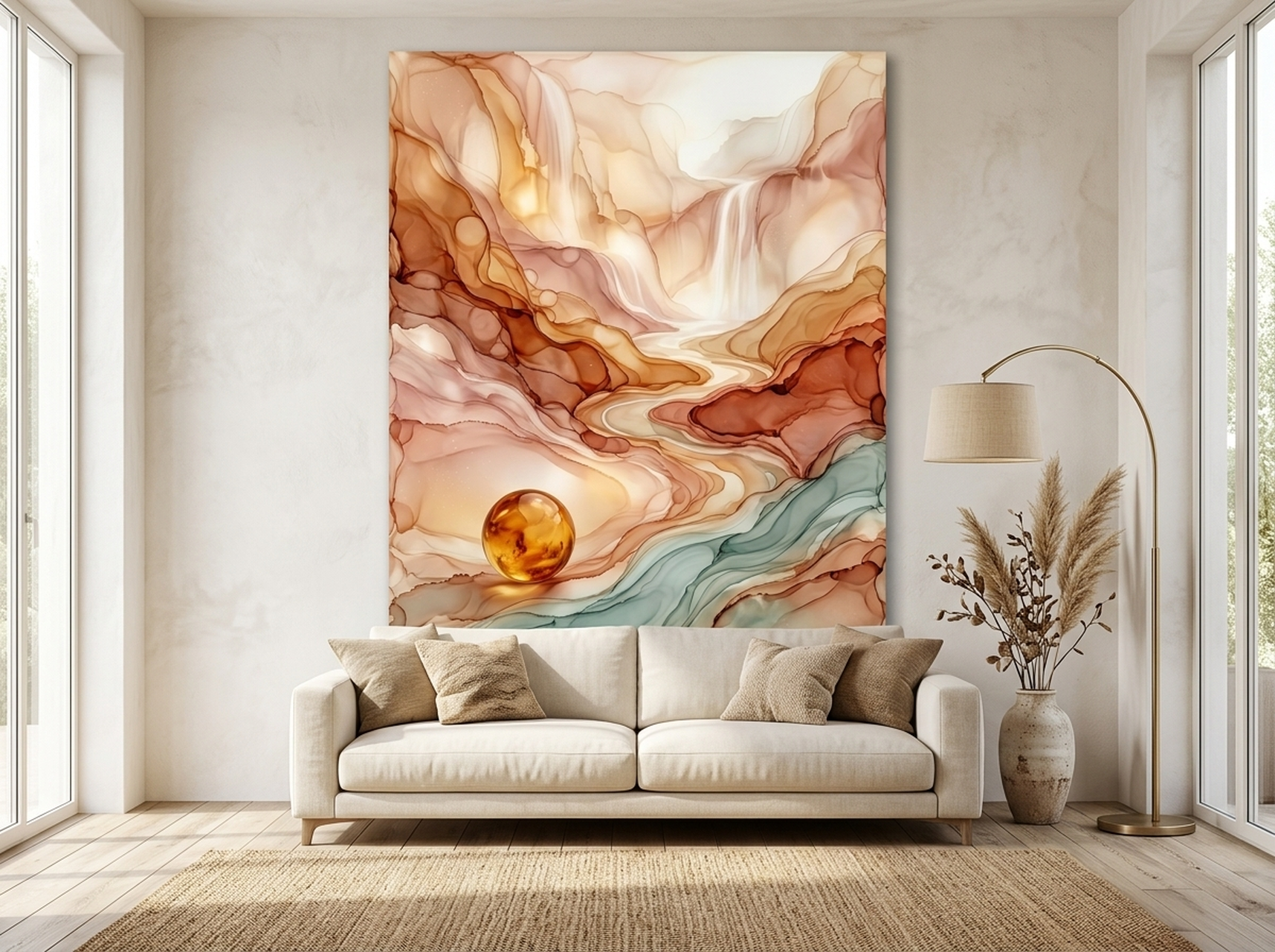
Not every piece in an Afrohemian room needs to be overtly African in subject matter. This fluid abstract landscape in gold, amber, cream, and terracotta provides the earth-tone warmth and organic movement that the style demands, while giving the eye a place to rest between more figurative pieces. The flowing, layered composition suggests natural landscapes, think Saharan dunes, savannahs at golden hour, or the layered rock formations of the Great Rift Valley, without being literal. It is the ideal companion piece in a gallery wall arrangement, positioned beside a bold portrait or cultural piece to create visual balance. In a bedroom, it brings calm, grounding energy that supports rest. For spaces that need an Afrohemian feel without explicit cultural imagery, this is the piece to start with.
View the Fluid Abstract Landscape
Room-by-Room Styling Guide With Real Measurements
The Afrohemian Living Room
Start with the anchor wall. Choose the wall most visible when entering the room, typically the one behind the sofa. Hang your primary canvas 145 to 150 cm (57 to 59 inches) from the floor to the centre of the artwork. If placing art above a sofa, leave 15 to 20 cm (6 to 8 inches) between the top of the sofa back and the bottom of the frame.
For the sofa wall, the canvas width should be roughly two-thirds (66 percent) of the sofa width. If your sofa is 200 cm (79 inches) wide, aim for a canvas or gallery wall arrangement that spans approximately 130 cm (51 inches). A single 80 x 60 cm (32 x 24 inch) canvas centred above the sofa works when flanked by smaller decor elements on either side.
Layer the sofa with three to five throw pillows in mixed patterns. A proven Afrohemian combination: one mudcloth-inspired geometric pillow, one solid in a warm tone (terracotta, mustard, or indigo), and one with a smaller-scale African-inspired print. Toss a woven throw blanket in a complementary earth tone over one arm. Anchor the seating area with a jute or sisal rug at least 20 cm (8 inches) larger than the sofa on all sides, with a smaller patterned rug layered on top for texture.
Plants are non-negotiable. Position a large monstera or fiddle leaf fig (at least 90 cm or 35 inches tall) in a woven basket on one side of the sofa. Add a trailing pothos on a high shelf and a snake plant in a terracotta pot on the coffee table. These connect to the lush vegetation found across the African continent and bring the organic life energy that prevents Afrohemian spaces from feeling stiff. For more ideas on how to pair art with furniture, see our guide on how to choose wall art that matches your furniture.
The Afrohemian Bedroom
Above the bed, centre your art piece so it aligns with the middle of the bed, not the wall. Leave 10 to 15 cm (4 to 6 inches) between the headboard top and the frame bottom. For a queen bed (152 cm or 60 inches wide), a single canvas of 60 to 80 cm (24 to 32 inches) width is ideal, or a pair of 40 x 50 cm (16 x 20 inch) canvases with 5 cm (2 inches) between them.
Choose bedroom art that evokes calm: abstract earth-tone landscapes, gentle botanical prints, or serene portraits. The Roaring Lion, while powerful, belongs in the living room or office. The Fluid Abstract Landscape or the Black Woman Worship piece both bring peaceful energy suitable for sleep spaces.
Layer the bed with at least four textile elements: a linen duvet in warm white or sand, two to three pattern-mixed throw pillows (mudcloth, Kente-inspired, and a solid earth tone), a woven bed runner across the foot, and a chunky knit throw for the corner. Use warm lighting exclusively: 2700K bulbs in bedside lamps with woven or ceramic bases.
The Afrohemian Entryway
First impressions matter. A single, bold canvas print in the entryway tells guests they are entering a space with cultural intention. The African Warrior King or the Gold King Portrait both command attention in a narrow hallway. Hang the art 150 cm (59 inches) from the floor to centre, and position a narrow wooden console table below it styled with a carved bowl for keys, a small plant, and perhaps a woven basket for scarves and bags.
Common Mistakes to Avoid
1. Treating African elements as accessories rather than anchors. The most common Afrohemian mistake is starting with standard boho furniture and adding African "touches" at the end. Instead, choose your African wall art first and build the room's colour palette, texture choices, and furniture selections around it. The cultural element should drive the design, not decorate it.
2. Mixing too many cultural references at once. Afrohemian blends African and bohemian, but adding Moroccan tiles, Japanese screens, Indian tapestries, and Mexican pottery all at once creates visual confusion. Limit yourself to one or two African cultural references per room and let the bohemian element come through in the natural materials and layered textures rather than in competing cultural motifs.
3. Ignoring scale and proportion. A tiny 20 x 25 cm (8 x 10 inch) canvas above a large sofa looks like an afterthought. Afrohemian style demands visual weight. Your anchor piece should cover at least 50 percent of the wall width above the furniture it accompanies. If budget is tight, one large canvas always outperforms three small ones in establishing the cultural presence the style requires.
4. Using cool whites and greys as base colours. Afrohemian is fundamentally a warm style. Cool grey walls, bright white trim, and silver-toned metals fight against the palette. Stick to warm whites, cream, sand, and warm-toned metals (brass, copper, gold) throughout. If you love grey, opt for a warm greige (grey-beige blend) and pair it with plenty of warm-toned accents.
5. Forgetting the bohemian half of the equation. Afrohemian is not just African decor. The bohemian element, with its emphasis on natural materials, pattern mixing, plants, and a lived-in, collected-over-time feel, is equally important. A room with African art hung on bare walls with minimal furniture reads as a gallery, not a home. Layer, layer, layer.
Afrohemian Decor FAQ
What is the difference between Afrohemian and regular bohemian decor?
Bohemian decor is a broad, eclectic style that draws from many global influences and emphasises natural materials, pattern mixing, and a relaxed vibe. Afrohemian is a specific subset that intentionally centres African cultural traditions, colour palettes, and artistic heritage within the bohemian framework. Where standard boho might pull from any world culture, Afrohemian specifically celebrates African textile patterns (mudcloth, Kente, Ankara), African portrait and spiritual art, and the earth-tone palette drawn from the African landscape.
Can I create an Afrohemian space if I am not of African descent?
Yes, with respectful intentionality. The key is appreciation rather than appropriation. Source from Black-owned and African artisan businesses when possible. Learn about the cultural significance of the patterns and art you display. Avoid sacred or ceremonial items used purely for decoration. Focus on art that celebrates rather than exoticises, and invest in quality pieces from artists and sellers who provide cultural context with their work.
What are the best materials for Afrohemian furniture and textiles?
Prioritise natural materials: rattan, cane, bamboo, jute, sisal, raw wood with visible grain, terracotta, hand-thrown ceramics, and natural-fibre textiles (linen, cotton, wool). For metals, choose warm tones like brass, copper, and gold. Avoid plastic, chrome, and high-gloss finishes. Leather (or quality faux leather) in warm brown tones also works well for seating and accessories.
How many patterns can I mix in one Afrohemian room?
Three to five patterns is the sweet spot. The trick is varying the scale: one large-scale pattern (like a bold mudcloth on a throw pillow), one medium-scale pattern (like a Kente-inspired stripe), and one to three small-scale patterns (geometric prints, subtle textures). Keep all patterns within the same colour family and you can mix more aggressively than you think.
What size canvas print works best for an Afrohemian living room?
For the primary anchor piece above a standard sofa, 60 x 80 cm (24 x 32 inches) is the most popular and versatile size. If your wall and furniture allow it, going larger to 80 x 100 cm (32 x 40 inches) creates even more visual impact. The canvas should span approximately two-thirds of the furniture width below it. Measure your wall space first, then multiply the width by 0.57 to 0.75 to find your ideal canvas width.
How do I start an Afrohemian room on a tight budget?
Invest in one statement piece of wall art first, as it anchors the entire room and sets the cultural tone. Then thrift for natural-material furniture (woven baskets, wooden side tables, rattan chairs appear frequently at secondhand shops). Add plants in terracotta pots or woven baskets for under twenty dollars. DIY mudcloth-inspired pillow covers using fabric paint on plain muslin. Build the room layer by layer over months rather than trying to furnish it all at once, which actually aligns with the bohemian philosophy of collected-over-time authenticity.
Quick Reference Table
| Product | Best For | Dominant Colours | Link |
|---|---|---|---|
| African Elder Portrait | Living room anchor, gallery wall centrepiece | Burgundy, gold, teal | View |
| Black Woman Worship | Bedroom, entryway, spiritual spaces | Navy, gold, cream | View |
| Gold King Portrait | Luxury Afrohemian rooms, dark accent walls | Gold, black, navy | View |
| Roaring Lion | Living room, home office, statement piece | Black, gold, orange | View |
| Leopard Print | Bedroom, dining room, pattern mixing | Terracotta, orange, gold | View |
| Fluid Abstract Landscape | Bedroom, gallery wall companion, subtle Afrohemian | Gold, amber, terracotta | View |
Ready to Build Your Afrohemian Space?
Every piece in our collection is a gallery-quality framed canvas print that ships with pre-installed hanging hardware and arrives ready to transform your walls. Free US shipping on all orders, and if you are not completely satisfied, we offer hassle-free returns within 30 days.