Trending Modern Wall Art Styles for 2026
The Heva Team
Art Curators & Interior Design Enthusiasts · March 12, 2026 · 15 min read
Stay ahead of the curve with the wall art styles dominating 2026 interiors.
Interior design in 2026 has taken a decisive turn toward art that feels personal, textured, and emotionally resonant. Designers are no longer reaching for safe, mass-produced prints. Instead, they are choosing wall art that tells a story, anchors a room with colour psychology, and reflects genuine craftsmanship. This guide breaks down the six biggest wall art trends shaping homes right now, with real product picks and practical styling advice you can act on today.
Ready to browse? Explore our full collection, or keep reading for our top picks and expert tips.
What You Will Find in This Guide
- Trend 1 -- Textured Impasto Finishes
- Trend 2 -- Maximalist Layering and Jewel Tones
- Trend 3 -- Cultural Heritage Portraits
- Trend 4 -- Warm Neutrals and Sculptural Botanicals
- Trend 5 -- Organic Forms and Nature-Inspired Art
- Trend 6 -- Bold, Oversized Statement Pieces
- Our 6 Trending Picks for 2026
- How to Style Trending Art in Your Home
- 5 Common Mistakes When Choosing Trendy Wall Art
- Frequently Asked Questions
- Quick Reference Table
Trend 1: Textured Impasto Finishes
Flat, photographic prints are giving way to art that looks and feels three-dimensional. Impasto-style paintings, where thick layers of paint create visible ridges and depth, are dominating designer mood boards this year. The appeal is tactile: even on a printed canvas, the illusion of brushstrokes draws the eye and adds warmth that a smooth poster never achieves. According to Decorilla's 2026 interior design trends report, sculpted textures are appearing across every surface in the home, from plaster walls to three-dimensional wallpapers, and wall art is no exception.
To make an impasto print feel authentic, pair it with textured soft furnishings. A linen sofa, a chunky wool throw, or a jute rug within 60 to 90 cm (24 to 36 inches) of the frame creates visual continuity. Hang the piece at eye level, with the centre of the canvas sitting roughly 145 cm (57 inches) from the floor, and let it breathe with at least 15 to 20 cm (6 to 8 inches) of clear wall space on each side. For a deeper look at how colour affects mood, read our guide to the psychology of colours in wall art.
Trend 2: Maximalist Layering and Jewel Tones
Minimalism has officially lost its monopoly. In 2026, designers are embracing maximalist compositions that layer rich jewel tones, ornamental patterns, and metallic accents. Think emerald, burgundy, sapphire, and gold crashing together on a single canvas. This trend is particularly strong in dining rooms and entryways, where the art becomes a conversation piece rather than quiet background filler.
The key to pulling off maximalism without visual chaos is to limit your palette to three dominant hues and let the art set the tone for the room. Position a maximalist canvas on the wall that guests see first when entering. A piece measuring 60 x 90 cm (24 x 36 inches) or larger works best, and the frame should sit 15 to 20 cm (6 to 8 inches) above a console table or buffet. Pair it with solid-coloured furniture so the eye rests between bursts of pattern. Homes and Gardens' 2026 trend forecast confirms that rich, layered colour stories are replacing the all-white interiors that dominated for the past decade.
Trend 3: Cultural Heritage Portraits
Wall art that celebrates cultural identity, ancestral traditions, and global craftsmanship is surging in 2026. Buyers want pieces that honour heritage, whether that means a bold African portrait, a Japanese ink painting, an Egyptian motif, or a Day of the Dead celebration. These works carry narrative weight and transform a room from decorated to deeply personal.
When displaying cultural art, context matters. Give the piece prominence by making it the single largest work in the room. Pair it with handcrafted accessories from the same cultural tradition, like woven textiles, carved wood, or ceramic vessels, and keep competing wall decor to a minimum. A 76 x 102 cm (30 x 40 inch) canvas above a reading chair or in a study creates a powerful focal point. For more ideas on cultural display, explore our cultural heritage wall art guide.
Trend 4: Warm Neutrals and Sculptural Botanicals
The cool greys that dominated the 2010s are officially retired. In 2026, warm neutrals, think creamy beiges, soft tans, terracotta, and muted gold, form the backbone of the most sought-after interiors. Wall art in this palette feels grounding without being boring, especially when the subject matter has sculptural depth, like dried botanicals, ceramic vases, or architectural still lifes.
To keep a neutral palette from falling flat, vary the tonal range within the frame. A canvas that spans from deep espresso brown to pale cream creates as much visual contrast as a brightly coloured piece, but with a calmer energy. Hang warm-neutral art in bedrooms and living rooms where relaxation is the goal. Leave 10 to 15 cm (4 to 6 inches) between the top of the sofa back and the bottom edge of the frame for proper visual connection.
Trend 5: Organic Forms and Nature-Inspired Art
Curved lines, irregular silhouettes, and botanical subjects dominate 2026. Designers are moving away from rigid geometric compositions in favour of art that echoes the natural world: flowing petals, loose brushwork, and asymmetric compositions that feel handmade rather than machine-cut. This trend connects directly to the broader wellness movement in interiors, where biophilic design, bringing nature indoors, has become a priority.
For the strongest biophilic effect, hang nature-inspired art where you spend the most time: above a desk, beside a bed, or facing a dining table. Research published by the International WELL Building Institute supports the idea that exposure to natural imagery and organic forms reduces perceived stress and improves focus. Choose frames in natural materials like light oak or walnut, and avoid glossy or metallic frames that compete with the soft edges of the art.
Trend 6: Bold, Oversized Statement Pieces
Sometimes one large piece does more than a dozen small ones. The oversized statement trend in 2026 is about choosing a single canvas that commands the entire wall, usually 90 x 120 cm (36 x 48 inches) or larger, and building the room around it. Animal portraits, dramatic landscapes, and high-contrast abstracts are the most popular subjects for this treatment.
The rule of thumb for oversized art: the canvas should cover roughly two-thirds of the wall width it sits on. If your wall is 240 cm (94 inches) wide, aim for a piece at least 150 cm (59 inches) across. Centre it vertically with the midpoint at standing eye level, and remove any competing art from adjacent walls. The result is a gallery-worthy focal point that makes even a modest room feel curated and intentional. For practical hanging advice, check our gallery wall guide.
Our 6 Trending Picks for 2026
1. Canyon Strata Impasto Landscape
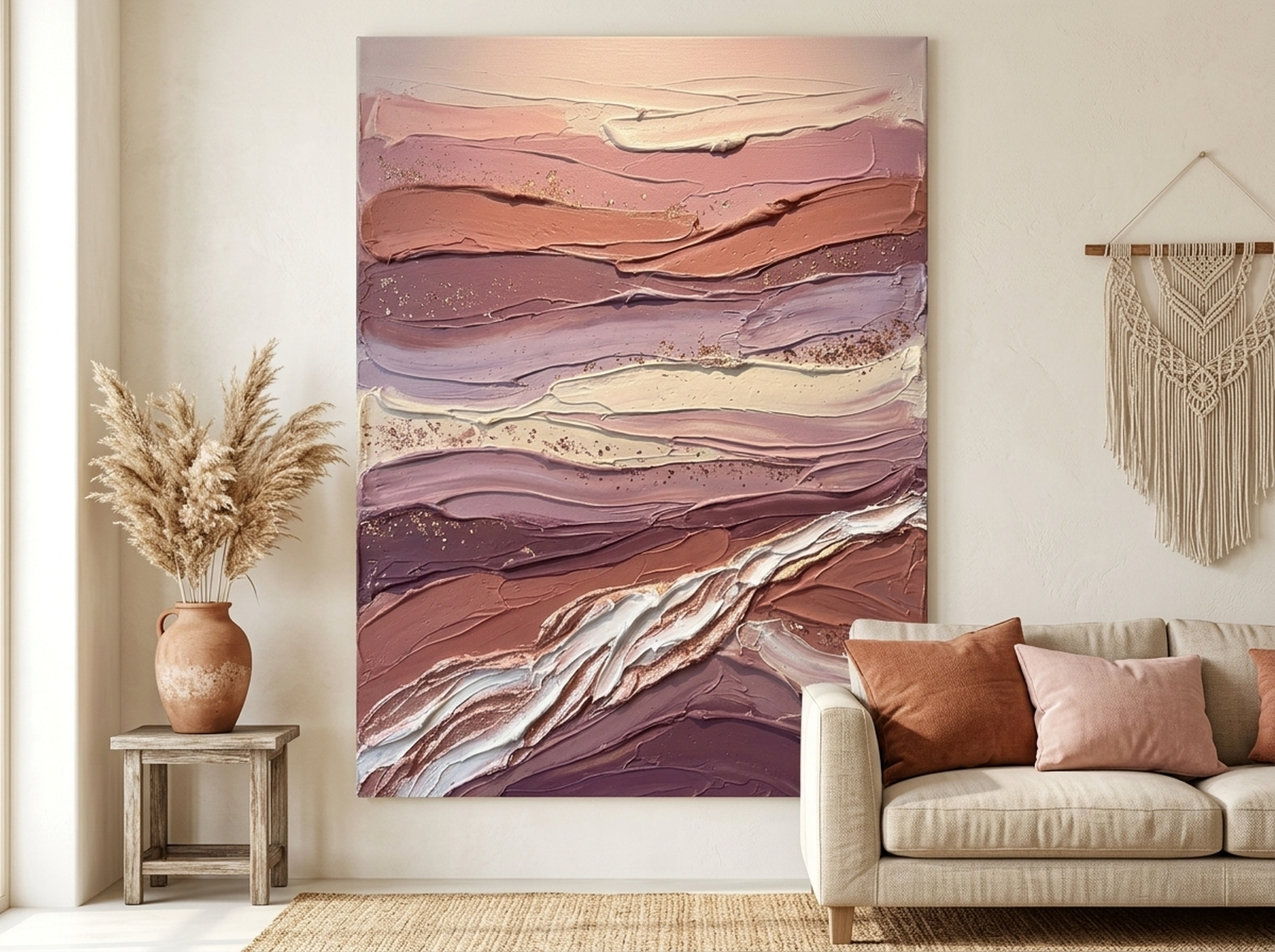
This impasto-style landscape captures the layered strata of a desert canyon in thick, visible brushstrokes of rose, terracotta, and burgundy. The colour palette reads as warm and grounding, perfect for a living room or hallway with natural wood furniture. The textured finish creates the illusion of real paint ridges, even on a flat canvas surface. Hang it above a console table with a terracotta vase and a stack of art books for a cohesive, designer-curated vignette. It pairs especially well with warm-toned wood floors and linen upholstery.
View the Canyon Strata Landscape
2. Klimt Urn Trio Gold Mosaic
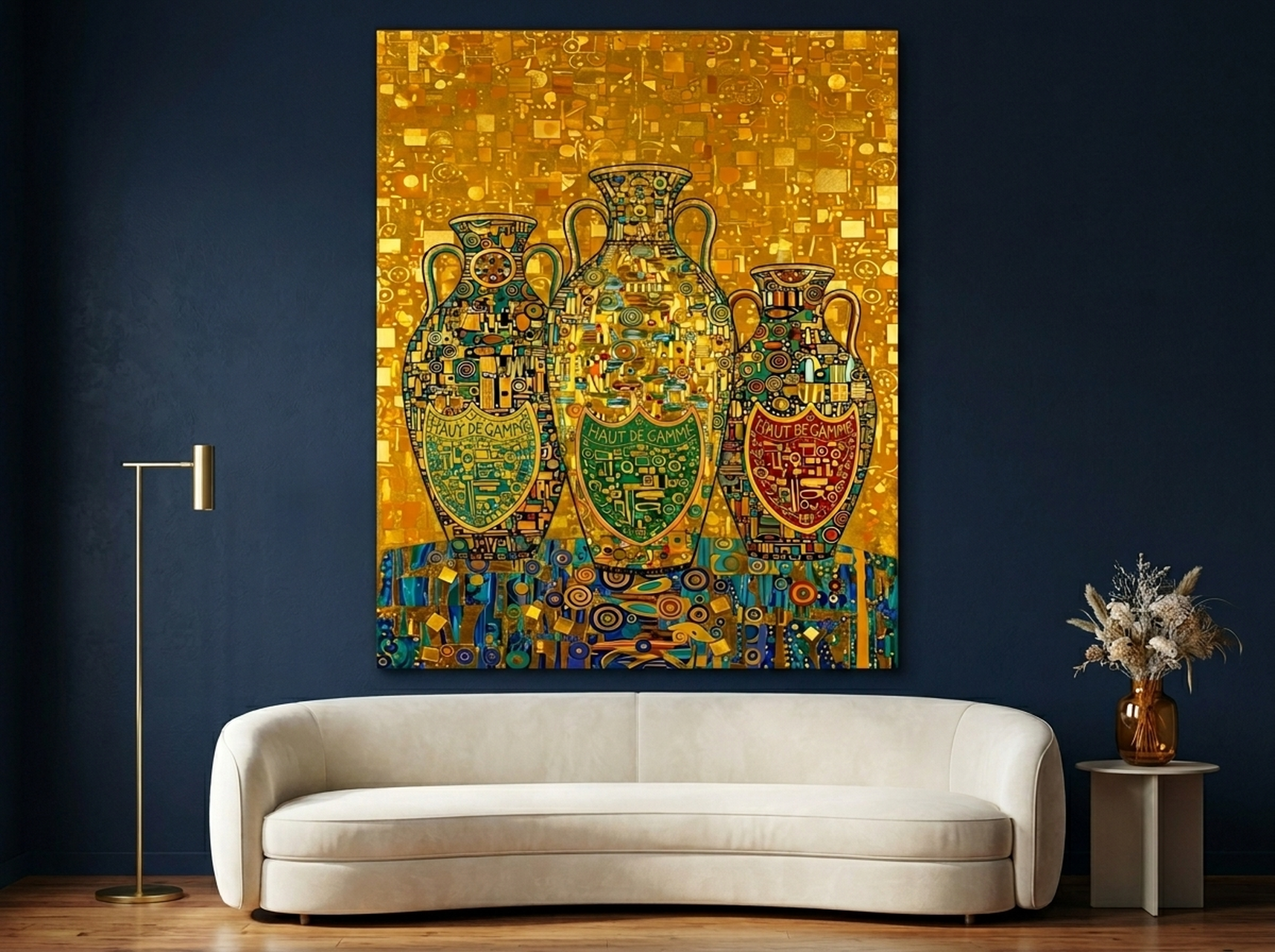
Inspired by the ornamental richness of Art Nouveau, this canvas layers gold, teal, emerald, and burgundy in a mosaic-like composition of three decorative urns. It is the definition of maximalist luxury and works best in dining rooms, entryways, or any space where you want guests to pause and admire. The gold tones catch ambient light beautifully, creating subtle shimmer throughout the day. Pair it with a dark wood sideboard and brass candle holders for full Art Nouveau drama. Keep surrounding decor simple to let the layered colour story shine.
3. African Elder Expressionist Portrait
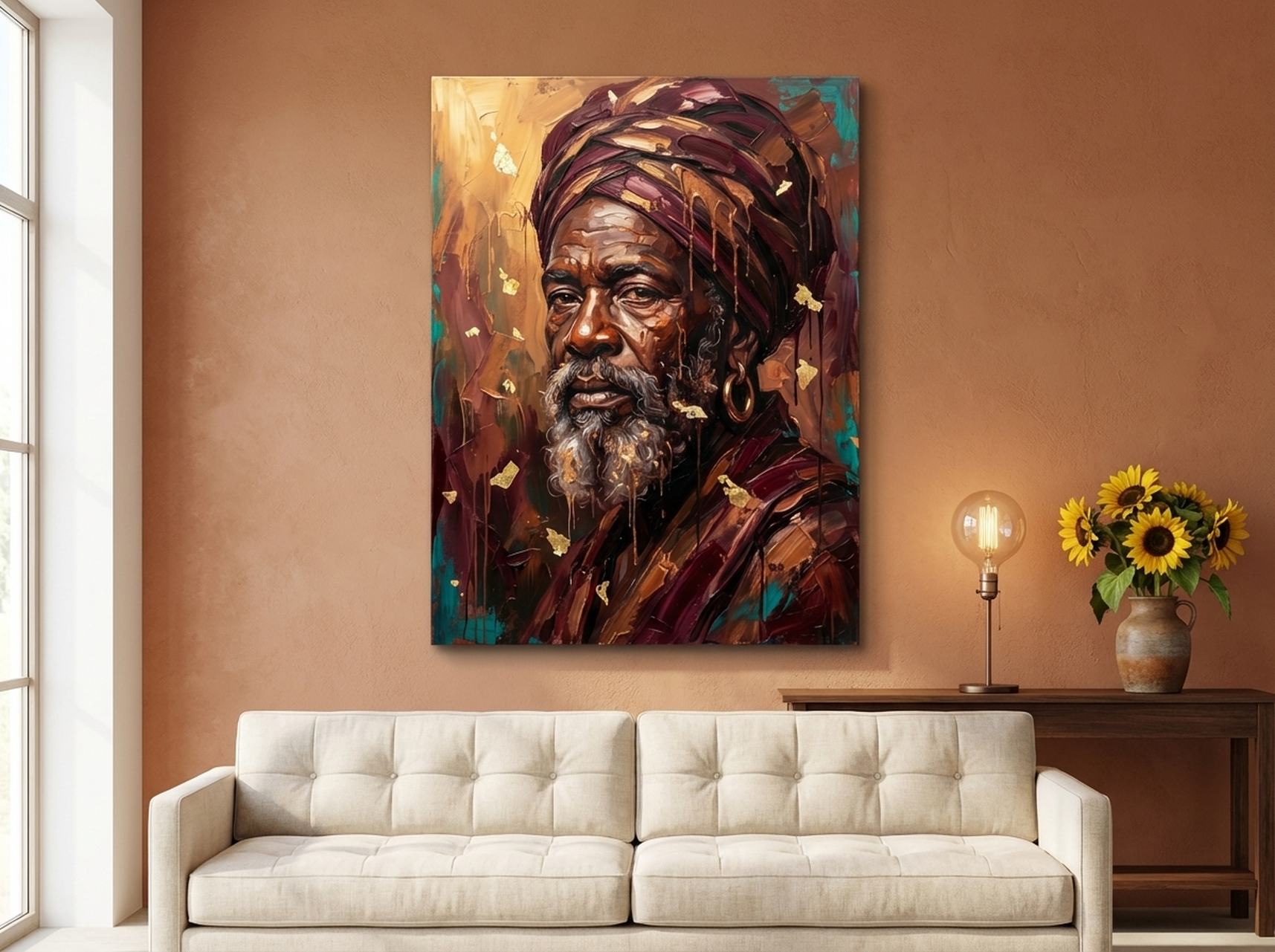
This expressionist portrait captures the wisdom and dignity of an African elder in sweeping brushstrokes of burgundy, gold, and teal. The paint handling is loose and confident, giving the piece a gallery-quality energy that commands attention. It belongs on a feature wall in a study, living room, or reading nook where cultural narrative takes centre stage. The burgundy and gold palette pairs naturally with leather furniture, dark wood shelving, and woven textiles. Display it alone, without flanking pieces, to let the portraiture speak for itself.
View the African Elder Portrait
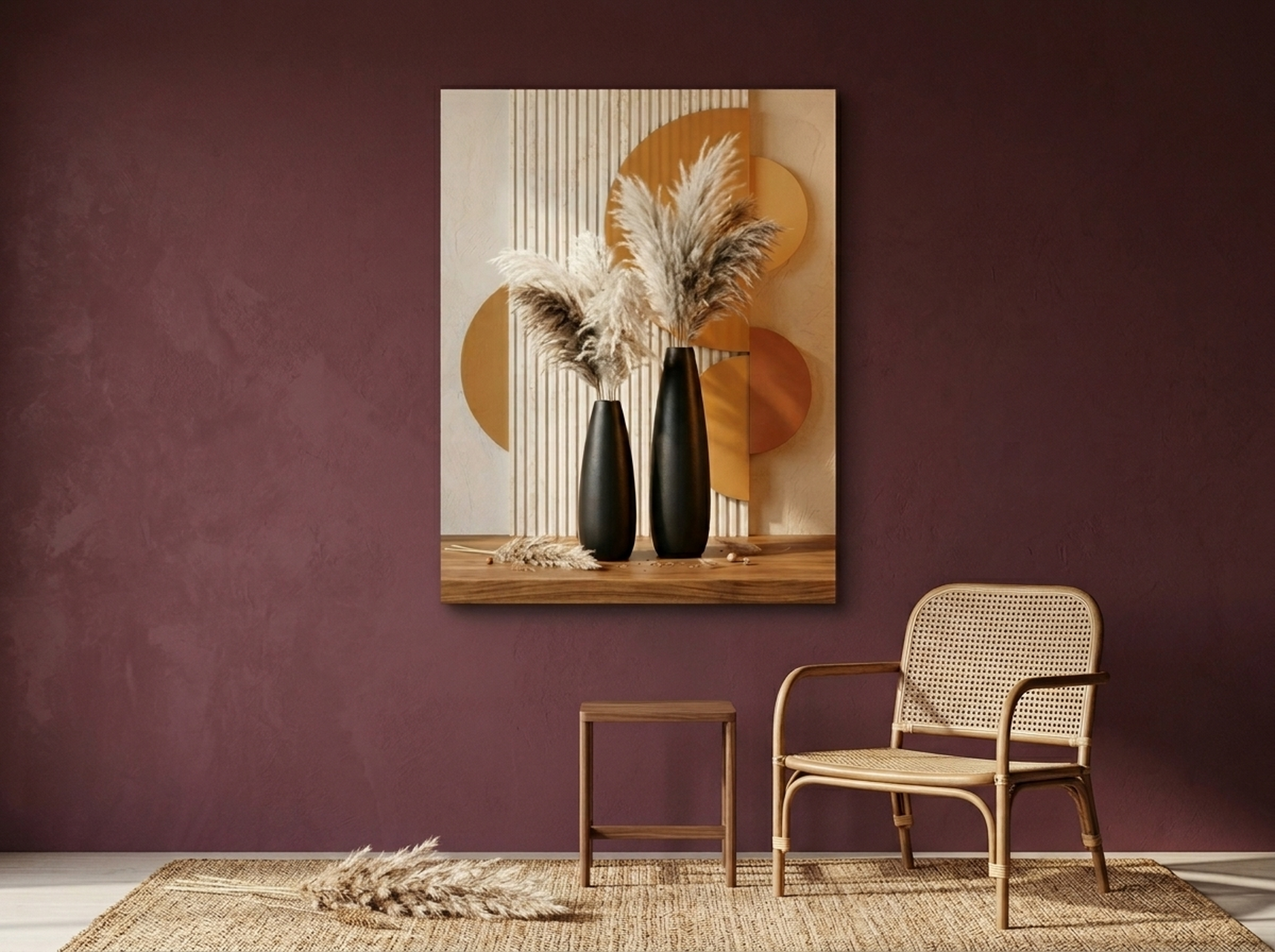
4. Pampas Vases Sculptural Print
A still life of sculptural vases and dried pampas grass rendered in rich blacks, golds, and creams, this piece embodies the warm neutral trend without feeling bland. The composition has real visual weight, each vase is distinct in shape and texture, creating a rhythm that pulls the eye across the canvas. Hang it in a bedroom or living room above a low credenza, leaving 10 to 15 cm (4 to 6 inches) between the furniture and the frame edge. It pairs beautifully with boucle chairs, brass table lamps, and natural stone surfaces.
5. Allium Floral Impasto Painting
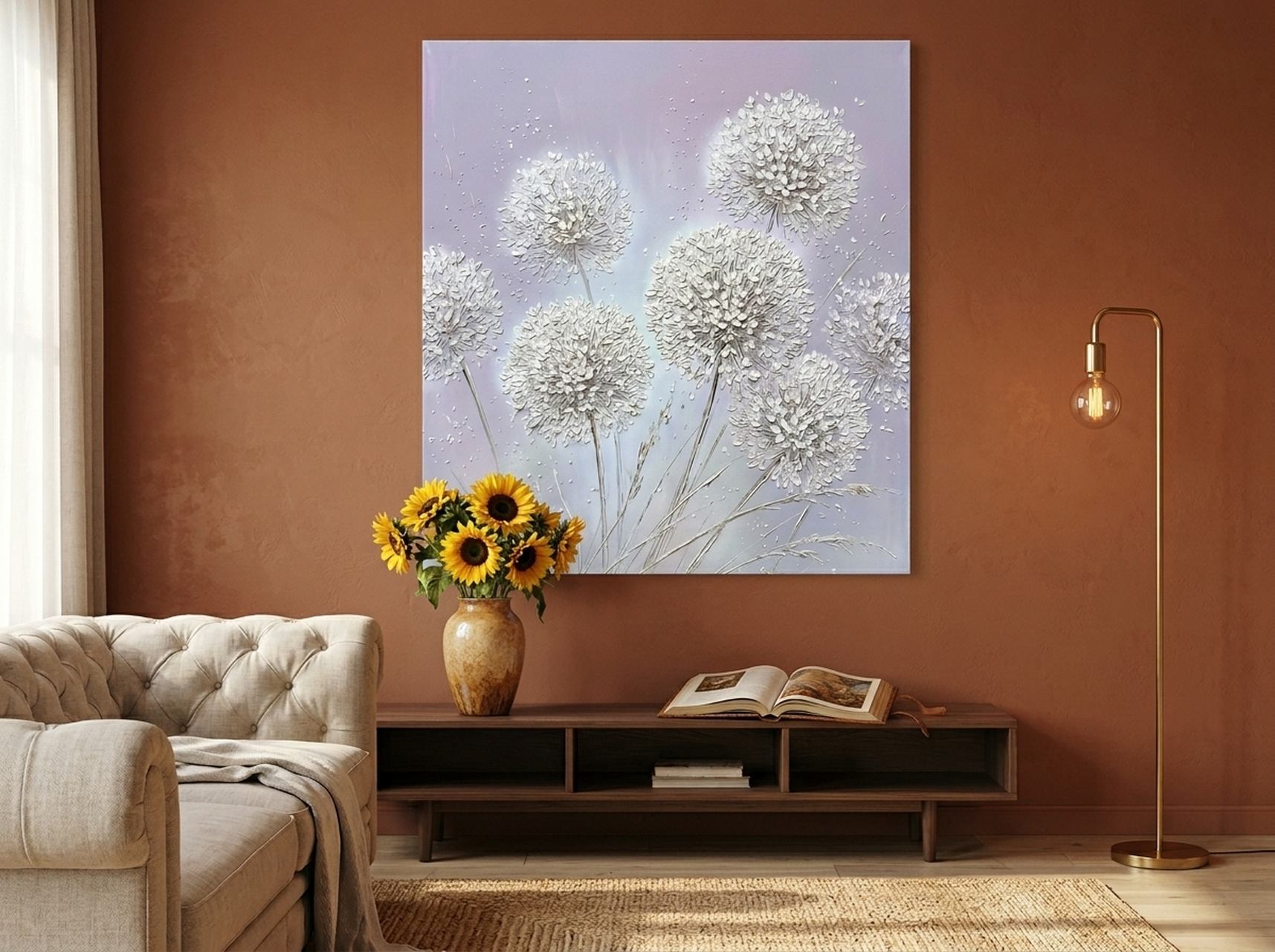
Soft lavender allium blooms float against a creamy, silver-toned background in this nature-inspired impasto painting. The organic subject matter and loose brushwork make it a perfect fit for bedrooms, spa-like bathrooms, or any room where calm is the goal. The colour palette sits in the cool-neutral zone, bridging the gap between the warm beige trend and the biophilic nature movement. Position it at eye level on a wall that receives indirect natural light to bring out the subtle tonal shifts. Pair with white linen bedding and a pale oak nightstand for a serene retreat.
View the Allium Floral Painting
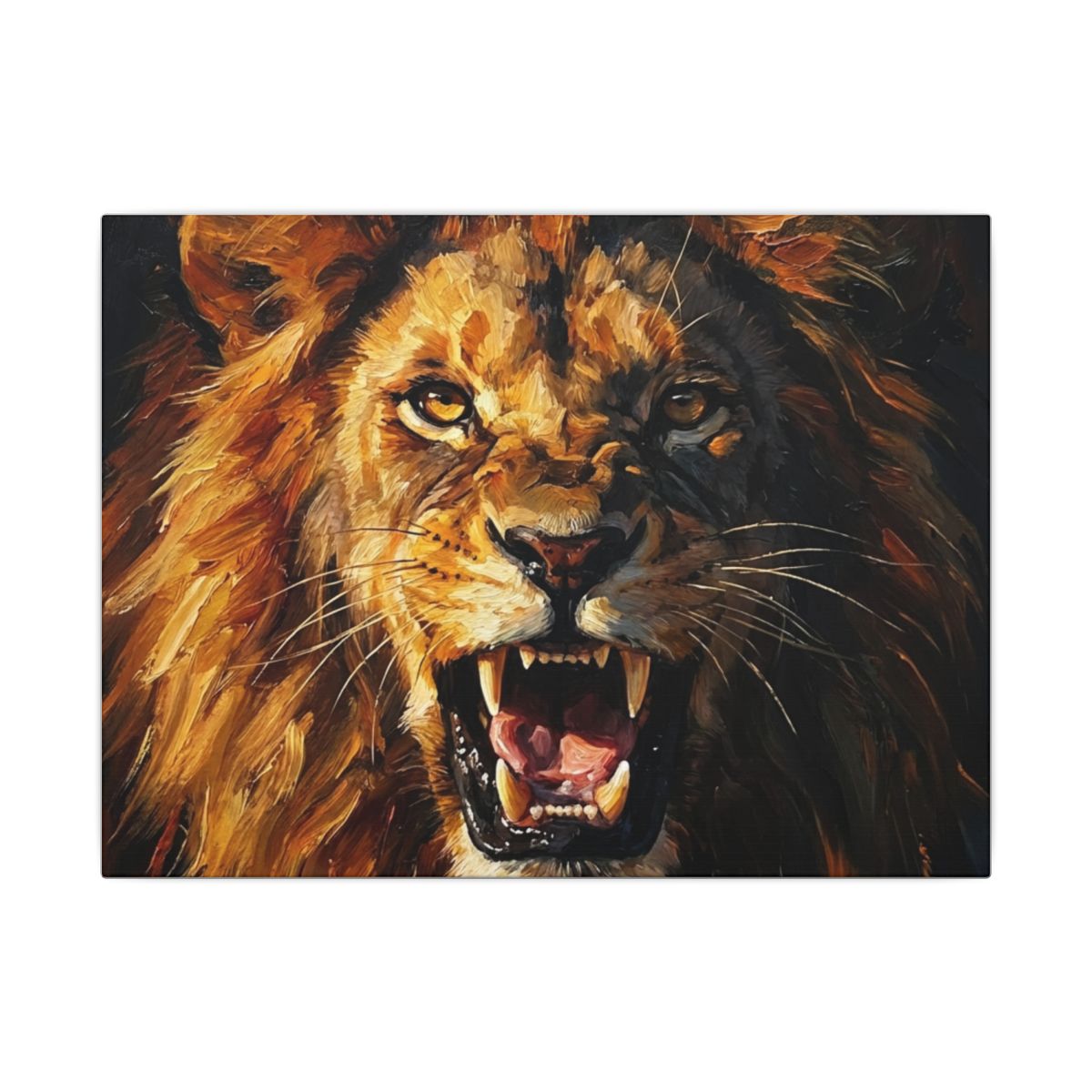
6. Roaring Lion Bold Statement Art
Nothing commands a room like a roaring lion. This oversized canvas delivers raw power through dramatic contrast, deep blacks against fiery golds and oranges, with enough detail to hold your gaze from across the room. It is the textbook bold statement piece for 2026: large, confident, and impossible to ignore. Place it on the widest wall in a living room or home office and remove competing artwork from adjacent walls. The dark palette grounds darker furniture, while the warm amber highlights create energy. Ideal for anyone who wants their wall art to make a first impression that lasts.
How to Style Trending Art in Your Home
Knowing the trends is only half the equation. Here is how to apply them room by room so your art choices look intentional, not random.
Living room: Choose one large statement piece for the wall above the sofa. The canvas width should be roughly 60 to 75 percent of the sofa width. Hang it so the centre sits 145 cm (57 inches) from the floor. If your sofa is 200 cm (79 inches) wide, your canvas should be at least 120 cm (47 inches) across.
Bedroom: Opt for warm neutrals or organic nature themes. Hang the art 15 to 25 cm (6 to 10 inches) above the headboard. Avoid high-contrast or intensely saturated palettes in sleep spaces, as colour psychology research suggests that cooler, muted tones promote better rest.
Dining room: Maximalist and cultural heritage pieces thrive here because dinner is a social event. Position the art so it is visible from the majority of seats at the table. A canvas hung 150 to 160 cm (59 to 63 inches) from the floor works well in rooms where guests are seated.
Home office: Bold statement art or impasto textures add energy to a workspace without distraction. Hang it on the wall you face while working, not behind your monitor where you cannot see it. For more on workspace art, see our home office wall art guide.
Hallway or entryway: Cultural heritage portraits and jewel-toned maximalist pieces make strong first impressions. Narrow hallways benefit from vertical or portrait-oriented canvases, aim for a piece that fills at least 50 percent of the wall width.
5 Common Mistakes When Choosing Trendy Wall Art
- Buying too small. A 30 x 40 cm (12 x 16 inch) canvas on a 300 cm (118 inch) wall looks like a postage stamp. Measure your wall first and choose art that fills at least half the available width. Oversized always beats undersized when it comes to impact.
- Ignoring the colour temperature of your room. A warm terracotta impasto print will clash in a room with cool grey furniture and blue-toned lighting. Match the dominant undertone of the art (warm vs cool) to the undertone of your existing surfaces. Our colour psychology guide breaks this down in detail.
- Chasing every trend at once. Picking one maximalist piece, one impasto, one cultural portrait, and one botanical for the same room creates visual noise. Commit to one or two trends per space and let them breathe.
- Hanging art too high. The most common hanging mistake is placing the centre of the canvas above eye level. The ideal centre height is 145 cm (57 inches) from the floor, not the top of the frame, but the midpoint.
- Forgetting lighting. Even the best canvas looks flat under harsh overhead fluorescents. Add a picture light, an adjustable wall sconce, or a track spotlight aimed at a 30-degree angle to bring texture and colour to life.
Frequently Asked Questions
Which wall art trend is best for small rooms?
Warm neutral art with organic forms works exceptionally well in compact spaces. The muted palette recedes visually, making walls feel further apart, while one medium-to-large canvas (60 x 80 cm or 24 x 32 inches) creates a focal point without overwhelming the room. Avoid busy maximalist patterns in rooms under 12 square metres (130 square feet).
How do I mix trendy art with pieces I already own?
Anchor each wall with a single trend direction. If your existing piece is a cool-toned abstract, add an impasto piece in a similar temperature nearby. Keep no more than two distinct art styles in one line of sight. A gallery wall can blend styles, but every piece should share at least one colour or tonal range. Our gallery wall guide has step-by-step layout templates.
Are maximalist art trends difficult to maintain over time?
Bold jewel-toned art has more longevity than you might expect. Gold, emerald, and burgundy are classic hues that have cycled in and out of fashion for centuries. The key is choosing quality art with genuine depth rather than trendy novelty prints. A well-chosen maximalist canvas will still look relevant in five to ten years.
What frame colour works best with 2026 trends?
Natural wood frames (oak, walnut, ash) suit organic and warm-neutral art. Black frames sharpen bold statement pieces and cultural portraits. Gold or brass frames complement maximalist jewel tones. Avoid ornate, heavily carved frames unless the art itself is classical in style.
Is impasto-style art only available as original paintings?
Not at all. Modern printing technology reproduces the visual depth of impasto brushstrokes on high-quality canvas with remarkable accuracy. While you cannot physically feel the ridges, the optical illusion of texture is strong enough to fool most viewers from normal viewing distance, around 150 to 200 cm (59 to 79 inches) away.
How often should I rotate wall art to stay current?
There is no need to replace art every season. The six trends covered in this guide all have staying power because they are rooted in enduring design principles: texture, colour harmony, cultural storytelling, and nature. Instead of frequent rotation, update one piece per year in a high-visibility area like a living room or entryway, and let bedrooms and studies stay consistent.
Quick Reference Table
| Product | Best For | Dominant Colours | Link |
|---|---|---|---|
| Canyon Strata Impasto Landscape | Living rooms, earth-tone palettes | Rose, terracotta, burgundy, cream | View |
| Klimt Urn Trio Gold Mosaic | Maximalist spaces, dining rooms | Gold, teal, emerald, burgundy | View |
| African Elder Expressionist Portrait | Cultural accent walls, studies | Burgundy, gold, teal, terracotta | View |
| Pampas Vases Sculptural Print | Bedrooms, warm neutral schemes | Black, cream, gold, terracotta | View |
| Allium Floral Impasto Painting | Bedrooms, organic-minimalist spaces | Lavender, white, silver, cream | View |
| Roaring Lion Bold Statement Art | Living rooms, offices, bold accents | Black, gold, orange, terracotta | View |
How to Future-Proof Your Art Choices
Trends come and go, but great art lasts. The six trends in this guide share a common thread: they prioritize craftsmanship, emotional resonance, and timeless colour palettes over novelty. When choosing wall art, ask yourself three questions. Does this piece still appeal to me when I imagine it on my wall three years from now? Does it connect to the room's purpose and the mood I want to create? Does it reflect something genuine about my taste, rather than simply following a trend checklist?
If the answer to all three is yes, you have found a piece worth investing in. The best wall art is not the one that matches a magazine spread from this quarter. It is the one that still makes you pause and look every time you walk past it.
Ready to find the piece that anchors your space? Browse the full HEVA collection and discover art that brings every trend in this guide to life, handpicked for quality, crafted for lasting impact.