Modern Wall Art for Renters: No Damage, Max Style
The Heva Team
Art Curators & Interior Design Enthusiasts · March 17, 2026 · 17 min read
The complete renter guide to hanging wall art without damaging walls or losing your deposit. Covers Command Strips, Velcro, picture rails, weight limits by wall type, and six versatile canvas prints perfect for rental apartments.
Renting a home means living with someone else's walls, and that reality stops millions of tenants from decorating at all. A 2023 survey by the National Apartment Association found that nearly 60 percent of renters avoid hanging anything heavier than a poster because they worry about losing their security deposit. The irony is that bare walls actually make a rental feel more temporary, not less. With the right wall art and the right hanging method, you can transform any apartment, studio, or leased house into a space that genuinely feels like yours, then remove every piece when you move out without leaving a single mark.
This guide walks you through damage-free hanging methods, weight limits for every technique, lease-friendly art choices, and six hand-picked canvas prints that work beautifully in rental spaces. Whether you are decorating your first apartment or your fifth, you will leave here knowing exactly how to fill your walls without risking your deposit.
Ready to Browse?
Every piece in our collection is a gallery-quality framed canvas print that arrives ready to hang. Free US shipping on all orders.
Or keep reading for our top picks and expert tips on damage-free hanging.
What You Will Find in This Guide
- Damage-Free Hanging Methods That Actually Work
- Weight Limits and Wall Types: Know Before You Hang
- Lease-Friendly Art Solutions Every Renter Should Know
- 6 Canvas Prints Perfect for Rental Spaces
- Step-by-Step Installation Guide with Measurements
- 5 Common Mistakes Renters Make with Wall Art
- Frequently Asked Questions
- Quick Reference Table
Damage-Free Hanging Methods That Actually Work
The most common fear renters have is punching holes in walls they do not own. The good news is that adhesive technology has improved dramatically over the past decade. Here are the four best methods, ranked by reliability.
1. Adhesive Strips (Command Strips)
Adhesive strips are the gold standard for renter-friendly hanging. A pair of medium Command Strips holds up to 5.4 kg (12 pounds), which covers most framed canvas prints up to 61 by 91 cm (24 by 36 inches). The key to success is surface preparation: wipe the wall with isopropyl alcohol, press each strip firmly for 30 seconds, and wait a full 60 minutes before hanging anything. When you move out, pull the tab straight down (not outward) at a slow, steady pace to release the adhesive without taking paint with it. For more detailed hanging instructions, see our complete guide to hanging wall art.
2. Velcro Hook-and-Loop Fasteners
Heavy-duty Velcro strips rated for 7.3 kg (16 pounds) per pair work well for larger canvas prints. Apply four strips in a rectangle pattern, one near each corner, keeping each strip at least 2.5 cm (1 inch) from the frame edge. Velcro has one advantage over Command Strips: you can remove and rehang the artwork repeatedly without replacing the adhesive. This is particularly useful if you like to rotate your art seasonally. According to Frame It Easy's renter decor guide, Velcro strips are among the most reliable damage-free options for medium-weight frames.
3. Picture Rails and Plate Rails
Many older apartments, especially pre-war buildings in cities like New York, Chicago, and San Francisco, have picture rails built into the wall near the ceiling. These narrow mouldings were designed specifically for hanging art using S-hooks and wire. If your rental has picture rails, use them. Each hook can typically support 9 to 14 kg (20 to 30 pounds), and you can adjust the hanging height simply by changing the wire length. If your apartment does not have built-in rails, adhesive-mounted picture rails from brands like STAS and Artiteq install without screws and hold up to 4.5 kg (10 pounds) per metre of rail.
4. Lean-and-Layer Display
Sometimes the simplest approach is the best. Leaning framed canvas prints against the wall on a console table, bookshelf, or directly on the floor creates a relaxed, gallery-like atmosphere with zero wall contact. This method works especially well for larger pieces, 76 cm (30 inches) and above, where adhesive solutions may struggle with the weight. As Mixtiles explains in their nail-free hanging guide, leaning art on shelves or ledges creates a layered, intentional look while keeping walls completely untouched. Tip: place a small piece of non-slip shelf liner under the bottom edge to prevent the frame from sliding.
Weight Limits and Wall Types: Know Before You Hang
Not all walls are equal, and understanding your wall type is the first step to hanging art safely in a rental. Here is a quick breakdown.
Painted Drywall (most common in modern apartments): Adhesive strips work well here, but only on smooth, clean surfaces. Avoid hanging anything on walls with glossy or semi-gloss paint if you are using adhesive, because the slick surface weakens the bond. If your walls are semi-gloss, lightly sand a small area behind the art with 220-grit sandpaper to give the adhesive more grip, then touch up the paint when you move out.
Plaster Walls (common in older buildings): Plaster is harder and heavier than drywall, which actually makes it more adhesive-friendly. Most Command Strips perform better on plaster than drywall because plaster does not flex under weight. However, if the plaster is crumbling or has hairline cracks, avoid adhesive entirely and use a lean-and-layer display instead.
Textured or Stucco Walls: These are the toughest for renters. Adhesive strips do not bond well to heavy texture. Your best options are tension rods with hooks (placed between two walls in an alcove) or freestanding easels. A tabletop easel 30 to 46 cm (12 to 18 inches) tall can display a medium canvas beautifully on a sideboard or dresser. If you have textured walls and still need something on the wall itself, ask your landlord about using removable wall hooks rated for textured surfaces, some 3M products carry this specific rating.
For a deeper exploration of sizing your art to your wall, our guide on choosing the perfect wall art size covers measurements for every room type.
Lease-Friendly Art Solutions Every Renter Should Know
Beyond hanging methods, renters face a unique set of practical questions that homeowners never think about. Here is how to handle each one.
Read Your Lease Before You Hang
Most leases allow small nail holes (one or two per room) as normal wear and tear. Some explicitly forbid any wall penetration. Read the hanging and decoration clause carefully. If the lease is silent on the topic, ask your landlord in writing and save the response. A quick email saying "Is it acceptable to hang lightweight framed art using adhesive strips?" protects you legally and costs nothing.
Document Your Walls at Move-In
Take high-resolution photographs of every wall in every room on the day you move in. Include close-ups of any existing marks, nail holes, or paint chips. Email these photos to yourself so they carry a timestamp. If your landlord disputes wall damage at move-out, these photos are your evidence that the marks were already there. This five-minute habit saves renters thousands of dollars in disputed deposits every year.
Invest in Versatile Art
Renters move more often than homeowners, so choose art that works in multiple rooms and colour schemes. Abstract prints, nature scenes, and minimalist botanical art tend to adapt well to different spaces. A canvas print with neutral tones, think cream, sage, navy, or gold, will look just as good above a sofa in your current apartment as it will in the bedroom of your next one. If you want ideas for compact spaces, check our guide to wall art for small spaces.
Getting Your Full Deposit Back
When it is time to move, remove adhesive strips slowly and at a downward angle. Fill any tiny marks with a dab of white toothpaste (for white walls) or a colour-matched spackle pen from your local hardware store. Wipe the area with a damp cloth and let it dry. For larger touch-ups, many hardware stores will colour-match paint from a small chip. Spend 15 minutes on wall touch-ups before your final walkthrough and you will almost certainly get your full deposit returned.
6 Canvas Prints Perfect for Rental Spaces
We selected these six pieces specifically for renters. Each one is lightweight enough for adhesive hanging, versatile enough to move between rooms and apartments, and visually striking enough to make bare walls feel like home. Every piece is a framed matte canvas print that arrives ready to hang.
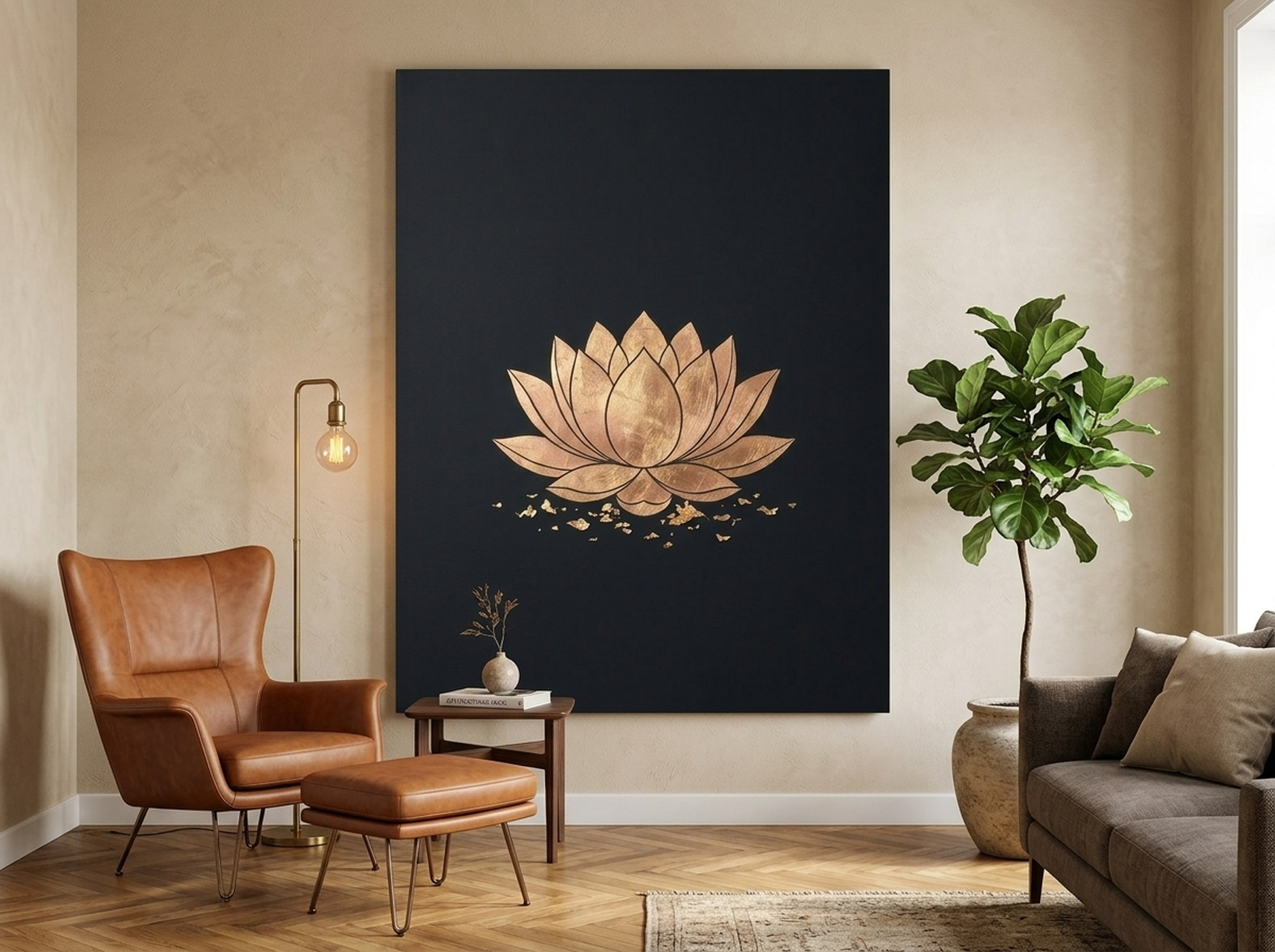
1. Lotus Flower Gold Leaf Canvas
The Lotus Flower canvas pairs gold leaf detailing against a deep black background for a look that is simultaneously bold and serene. At just 2.5 cm (1 inch) deep with a lightweight frame, it sits comfortably within the weight limit of two medium Command Strips. The black-and-gold palette works in virtually any room, from a minimalist bedroom to a modern bathroom. If you practise yoga or meditation, this piece turns a corner of your rental into a dedicated calm zone. The clean lines also make it easy to pair with other neutral pieces if you decide to build a gallery wall later.
2. Egret Minimalist Bird Print
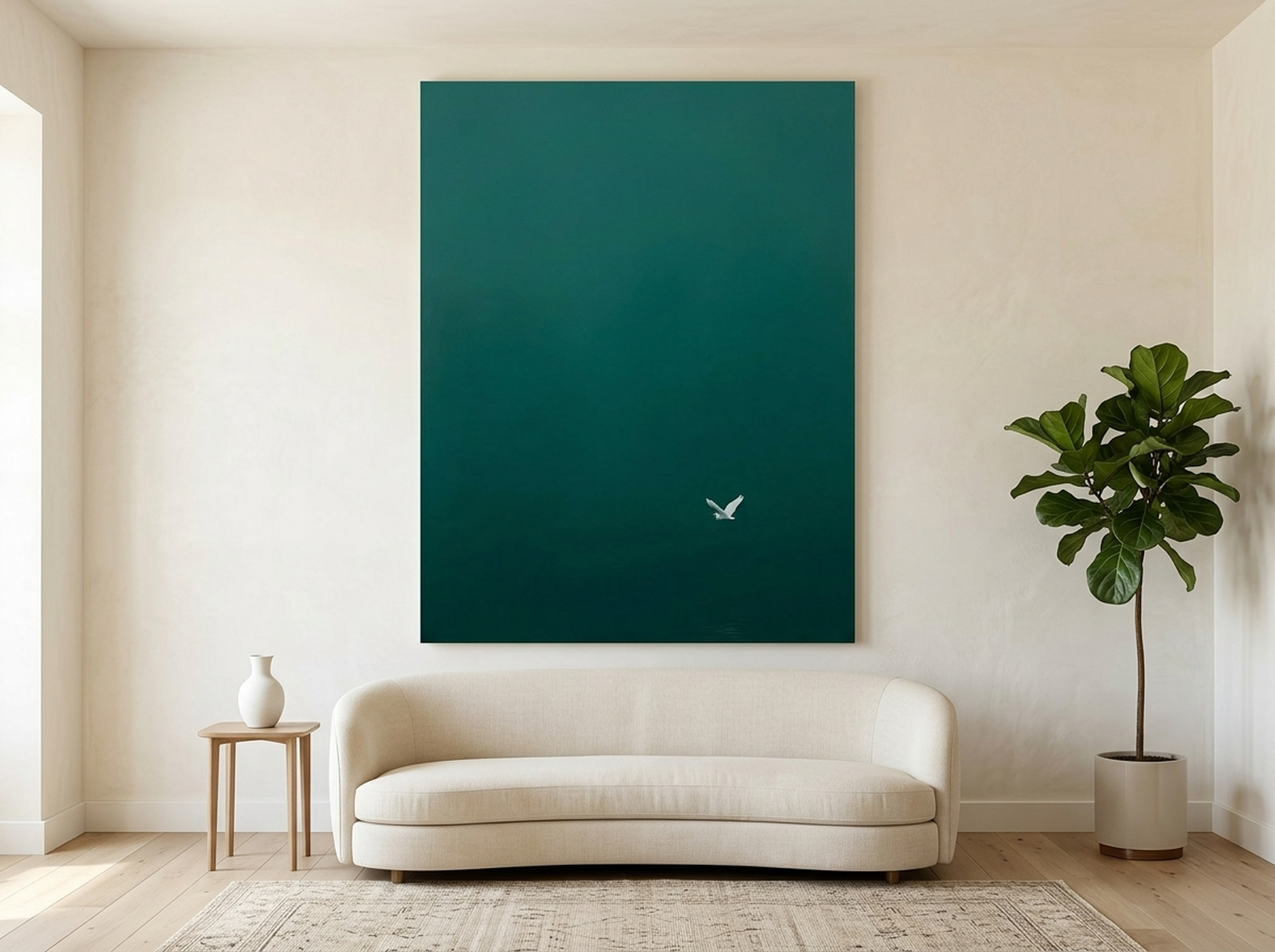
This minimalist egret print captures the stillness of a wading bird against a soft teal-green background. The muted colour palette, dominated by sage, white, and cream, makes it one of the most rental-versatile pieces in our collection. It reads as coastal in a beach-themed apartment, minimalist in a Scandinavian-style studio, or simply elegant in a traditional living room. The subtle colour scheme also means it pairs well with furniture you already own rather than demanding a complete room makeover. Hang it above a desk, over a bed, or on a narrow hallway wall where you need a single statement piece that does not overwhelm the space.
3. Rise and Grind Typography Print
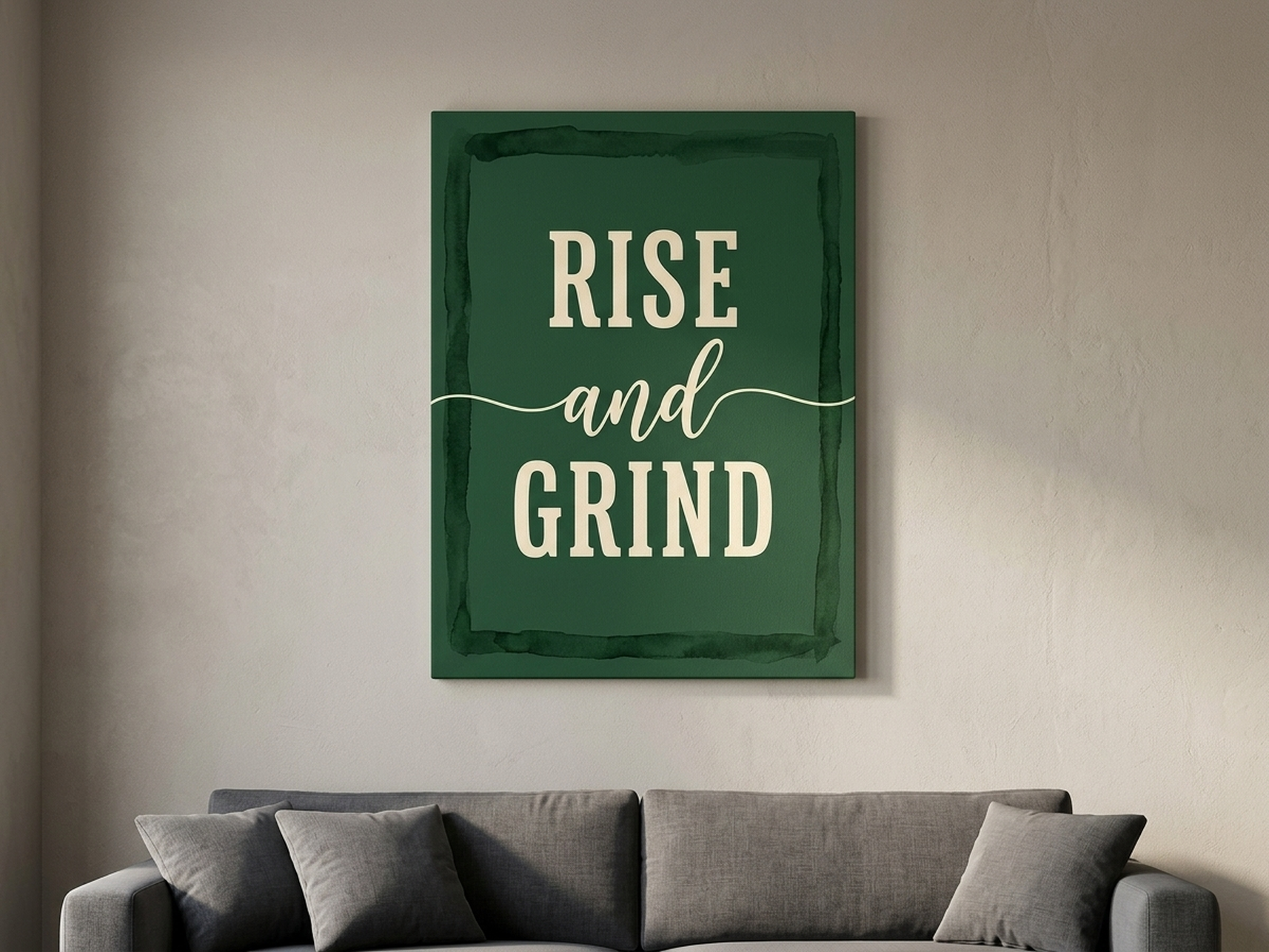
Motivational typography prints are a top choice for renters because they inject personality without committing to a specific decorating style. The Rise and Grind canvas uses a clean, modern font against a textured green-and-cream background that complements both cool and warm interiors. Hang it in your home office above the monitor, in the kitchen where you will see it during your morning coffee, or in the entryway as a daily reminder before you head out. Typography prints are also easy to group: pair this with one or two other text-based pieces at staggered heights to create a motivational gallery wall using only adhesive strips.
View the Rise and Grind Canvas
4. Fluid Abstract Landscape Canvas
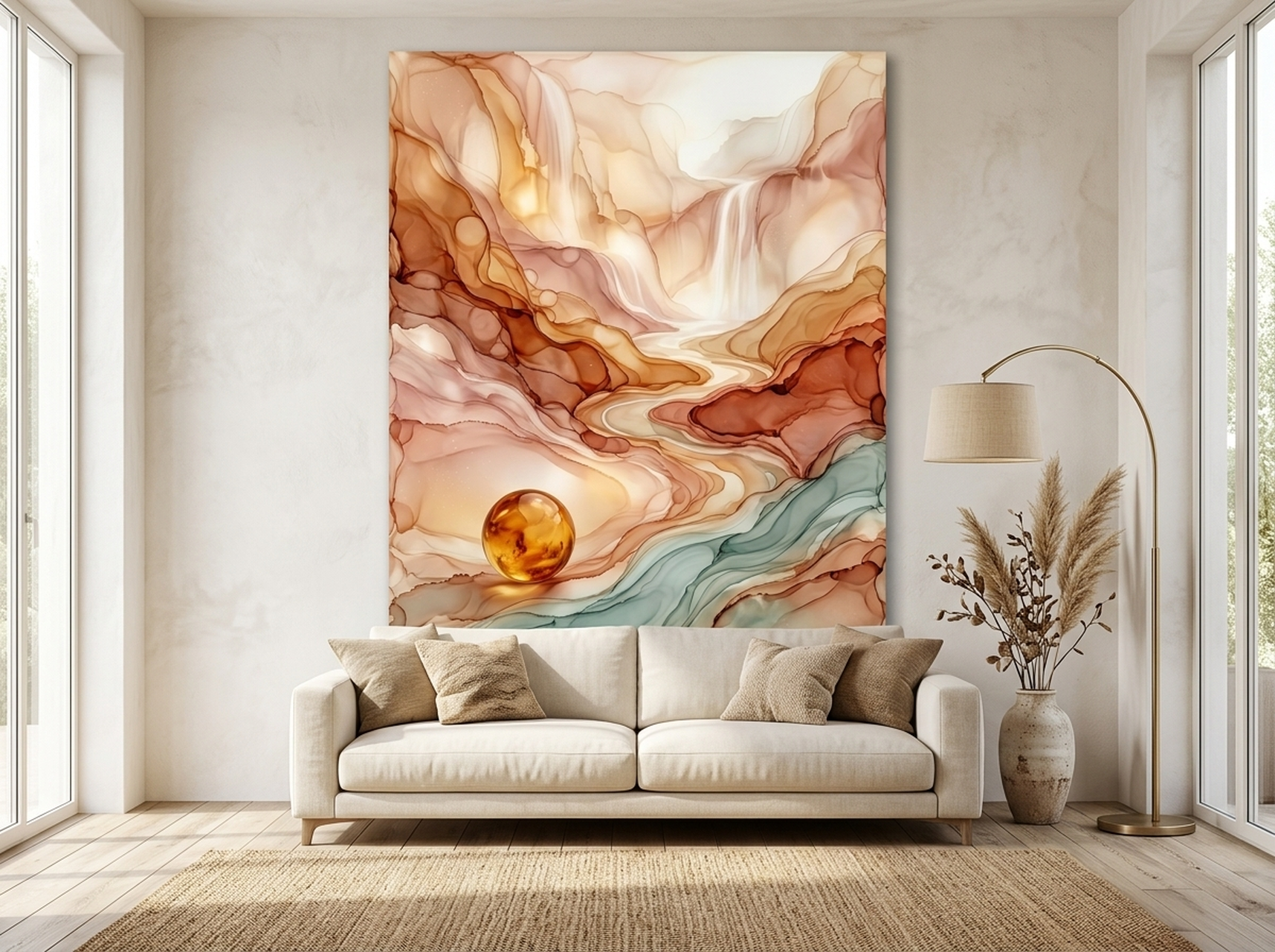
Abstract art is the ultimate renter's secret weapon. Because it does not depict a literal subject, it harmonises with virtually any furniture, colour scheme, or room layout. This fluid abstract landscape blends warm gold, amber, and soft teal into layered, organic forms that suggest rolling hills at sunset without being tied to a specific place. The earthy palette bridges modern and traditional styles, meaning it will look just as right in your next apartment as it does in this one. Lean it on a console table for a damage-free display, or hang it with four heavy-duty Velcro strips for a more permanent feel.
View the Fluid Abstract Canvas
5. Northern Lights Aurora Borealis Canvas
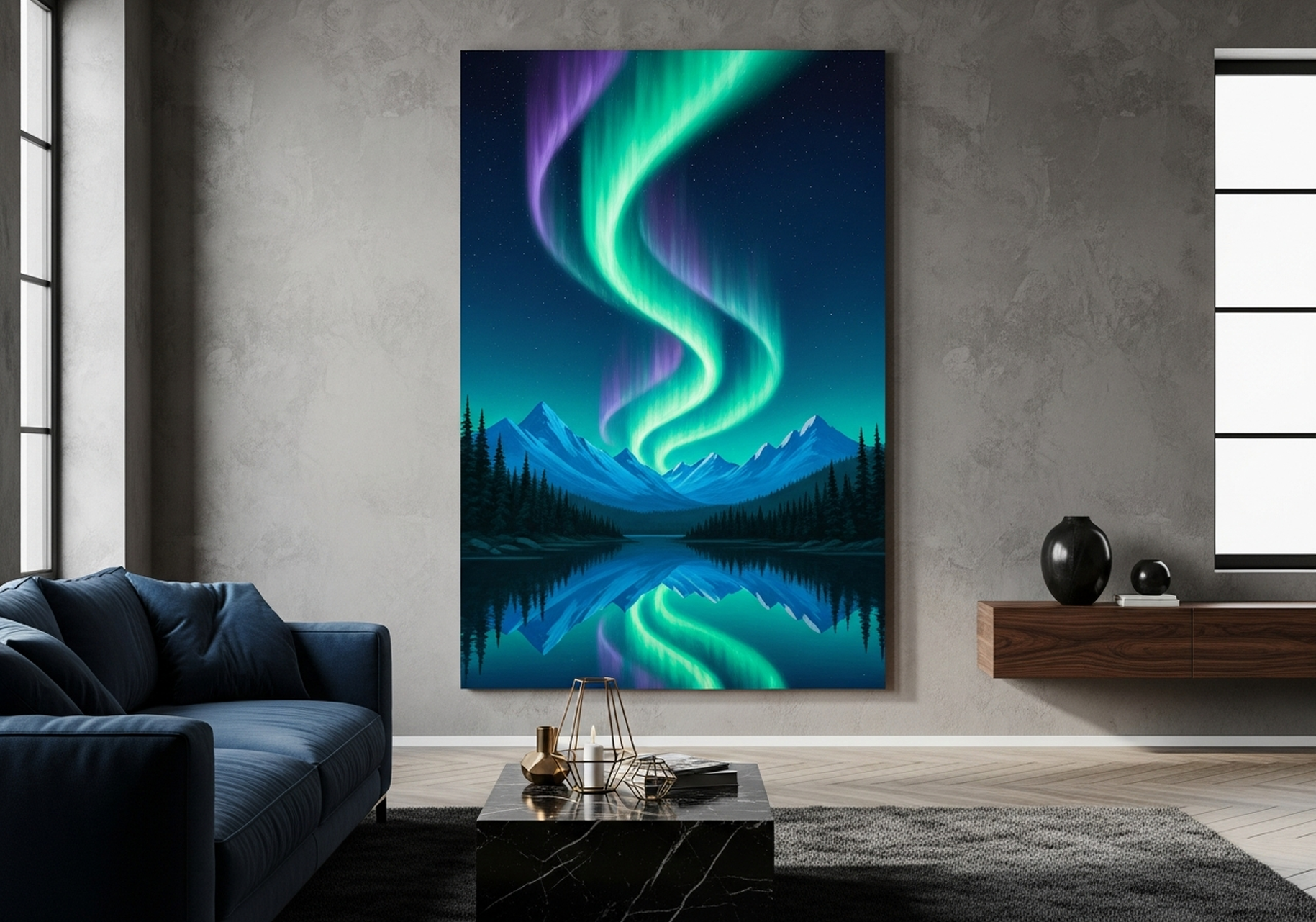
Nature photography and landscape prints are consistently among the most popular choices for rental apartments because they bring a sense of the outdoors into spaces that may not have great views. This Northern Lights canvas captures the aurora borealis reflecting in a mountain lake, with deep navy, turquoise, and green tones that create a calming focal point. Hang it in the bedroom for a serene backdrop or in the living room as a conversation starter. The dark colour palette also has a practical advantage: it does not show dust or minor scuffs as easily as lighter prints, which matters in a rental where touch-up resources are limited.
View the Northern Lights Canvas
6. Artichoke Botanical Canvas
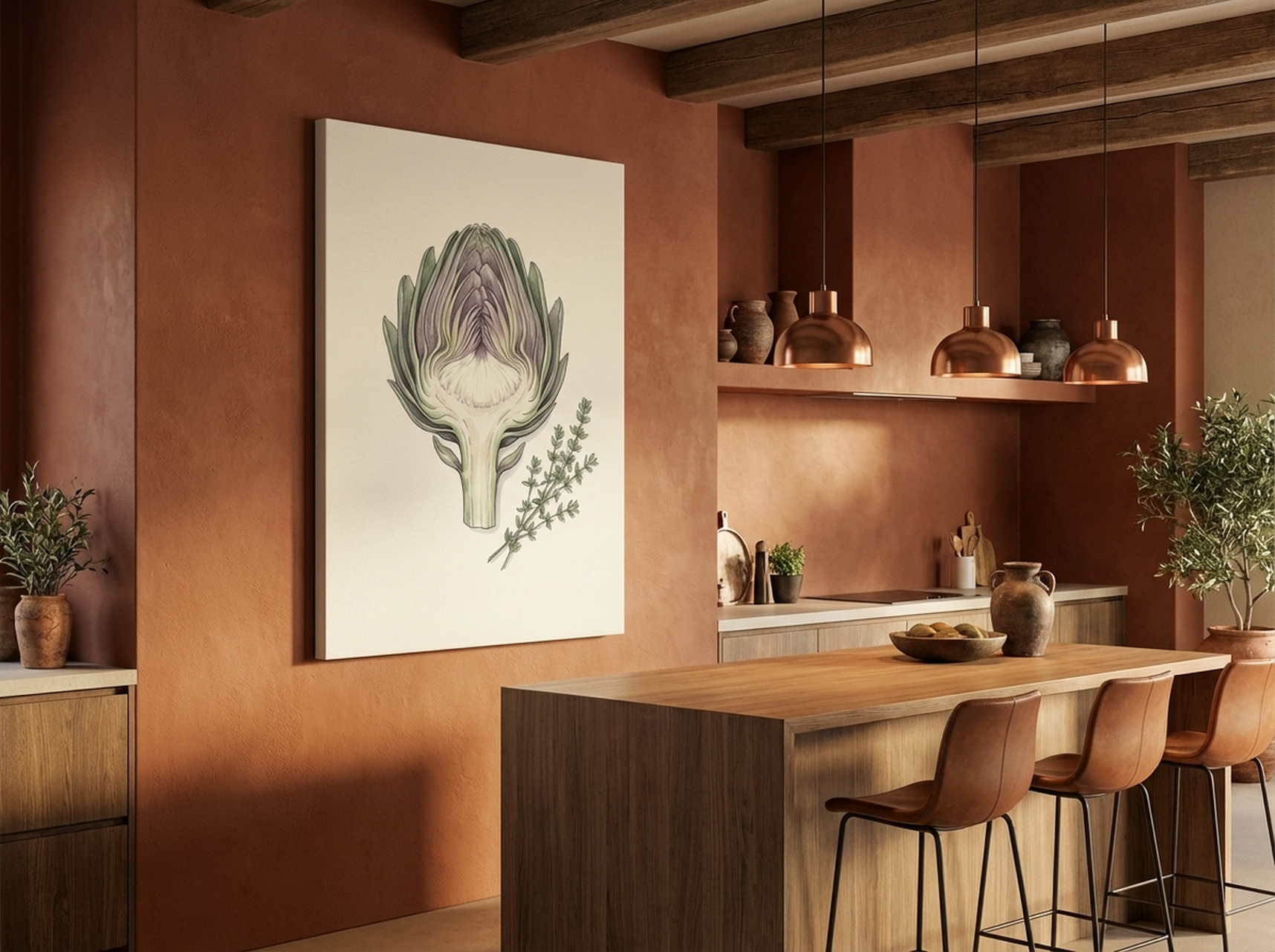
Botanical prints have surged in popularity among renters for good reason: they add warmth and life to a kitchen, dining room, or bathroom without requiring live plants (which many leases restrict or which can be hard to maintain in low-light apartments). This artichoke canvas combines botanical illustration with a minimalist aesthetic, using sage, cream, and charcoal tones that suit modern, farmhouse, and Scandinavian interiors equally well. The vertical orientation makes it ideal for narrow wall spaces between cabinets or beside a doorway, spots that often go undecorated in rentals but benefit enormously from a single, well-chosen piece.
View the Artichoke Botanical Canvas
Step-by-Step Installation Guide for Renters
Follow this process for every piece you hang in a rental, and you will never lose a deposit over wall art.
Step 1: Measure Your Space
Use a tape measure to find the width and height of the wall section where you want to hang art. For a single piece above a sofa, aim for a canvas that covers 50 to 75 percent of the sofa width. For example, if your sofa is 180 cm (71 inches) wide, your art should be 90 to 135 cm (35 to 53 inches) wide. The centre of the artwork should hang at approximately 145 cm (57 inches) from the floor, which is standard gallery height.
Step 2: Choose Your Hanging Method
Match the method to the art weight and wall type. For canvas prints under 4.5 kg (10 pounds), use two pairs of medium Command Strips. For prints between 4.5 and 9 kg (10 to 20 pounds), switch to large adhesive hooks or heavy-duty Velcro in a four-point rectangle pattern. For anything over 9 kg (20 pounds), consider leaning on a console table or using a floor easel.
Step 3: Prepare the Wall Surface
Clean the area with isopropyl alcohol or a mixture of equal parts white vinegar and water. Wipe in one direction to avoid spreading dust. Let the surface dry completely, at least 10 minutes. Avoid applying adhesive in rooms above 30 degrees Celsius (86 degrees Fahrenheit) or below 5 degrees Celsius (41 degrees Fahrenheit), because extreme temperatures weaken adhesive bonds.
Step 4: Mark and Apply
Use low-tack painter's tape to mark where the top edge of the frame will sit. Peel the backing off your adhesive strips, press them firmly to the wall for 30 full seconds each, then wait 60 minutes before hanging. This waiting period is not optional: it lets the adhesive cure to full strength.
Step 5: Level Check
Once the art is on the wall, use a spirit level (or the level app on your phone) to confirm it is straight. Even 2 degrees of tilt is visible from across a room. Adjust by gently shifting the frame before the adhesive fully sets.
5 Common Mistakes Renters Make with Wall Art
1. Hanging Art Too High
The most common decorating mistake in any home, rental or owned, is hanging art too high. When the centre of the artwork sits above 155 cm (61 inches) from the floor, it feels disconnected from the furniture below it. Stick to the 145 cm (57 inch) centre line and your rooms will look intentionally designed rather than randomly decorated.
2. Using the Wrong Adhesive for the Wall Type
Standard Command Strips work beautifully on smooth painted drywall but fail on textured, stucco, or wallpapered surfaces. Always check the product packaging for surface compatibility. Using the wrong adhesive leads to fallen art, potential frame damage, and sometimes paint pulled from the wall, exactly the kind of damage renters are trying to avoid.
3. Skipping the Wait Time
Hanging art immediately after applying adhesive strips is a recipe for disaster. The adhesive needs at least 60 minutes to bond properly. Rushing this step is the number one reason renters report adhesive strip failures. Set a timer, walk away, and come back when it is ready.
4. Choosing Art That Only Works in One Room
Renters move frequently, sometimes every 12 to 18 months. Buying a piece that only works above your current teal sofa means it may not survive the next move aesthetically. Choose art with neutral or broadly appealing colour palettes, like the gold-and-cream Fluid Abstract or the soft sage Artichoke Botanical, that transition between spaces effortlessly.
5. Leaving Walls Completely Bare
The biggest mistake is not decorating at all. Bare walls make a rental feel impersonal and temporary. Even a single well-placed canvas print changes the entire energy of a room. Start with one piece, use damage-free methods, and build from there.
Frequently Asked Questions
Can Command Strips hold a framed canvas print?
Yes. A pair of large Command Strips holds up to 7.3 kg (16 pounds), which covers most standard-sized framed canvas prints up to 61 by 91 cm (24 by 36 inches). For extra security on larger pieces, use two pairs placed at the top and bottom of the frame. Always verify the weight of your specific print before selecting strip size.
Will adhesive strips damage my rental walls?
When used correctly on clean, smooth, painted surfaces, adhesive strips remove cleanly without damaging paint or drywall. The key is removal technique: pull the tab straight down, not outward, at a slow and steady pace. Avoid using adhesive strips on wallpaper, freshly painted surfaces (wait at least 7 days after painting), or textured finishes.
How many pieces of wall art should a renter hang per room?
A single large canvas, around 61 by 91 cm (24 by 36 inches), works well as a standalone statement in a bedroom or living room. For a gallery wall, group three to five pieces of varying sizes in a cluster, keeping 5 to 8 cm (2 to 3 inches) between frames. In a small studio apartment, one to two pieces per distinct area (sleeping zone, living zone, kitchen) prevents the space from feeling cluttered.
What is the best wall art style for a rental apartment?
Abstract, botanical, nature landscape, and typography prints are the most versatile for renters because they work across different room styles and colour schemes. Avoid highly specific themes (like sports team art or very bold pop art) unless you plan to keep the same decor across multiple moves. Neutral-tone pieces with subtle colour accents offer the best balance of personality and flexibility.
Can I create a gallery wall in a rental?
Absolutely. Plan the layout on the floor first, arranging prints until you find a configuration you like. Transfer the layout to the wall using painter's tape outlines before committing any adhesive. Use Command Strips for each piece, and keep the spacing uniform at 5 to 8 cm (2 to 3 inches) between frames. A three-piece gallery wall using medium canvas prints and adhesive strips can go up in under an hour and come down in minutes with zero wall damage.
How do I hang art on concrete or brick apartment walls?
Concrete and exposed brick are common in loft-style rentals. Standard adhesive strips will not bond to these surfaces. Instead, use brick clips (also called brick hangers), which grip the top edge of a brick without drilling or adhesive. For concrete, consider a freestanding display: lean the canvas on a shelf, bookcase, or floor-standing easel. If your lease permits, adhesive hooks designed specifically for masonry surfaces hold up to 2.3 kg (5 pounds) each.
Quick Reference Table
| Product | Best For | Dominant Colours | Link |
|---|---|---|---|
| Lotus Flower Gold Leaf Canvas | Bedroom, bathroom, meditation corner | Black, gold, cream | View |
| Egret Minimalist Bird Print | Living room, hallway, bedroom | Teal, sage, white, cream | View |
| Rise and Grind Typography Print | Home office, entryway, kitchen | Green, cream, charcoal | View |
| Fluid Abstract Landscape Canvas | Living room, above sofa, console table | Gold, amber, teal, cream | View |
| Northern Lights Aurora Canvas | Bedroom, living room, den | Navy, turquoise, green, purple | View |
| Artichoke Botanical Canvas | Kitchen, dining room, bathroom | Sage, cream, charcoal | View |
Make Your Rental Feel Like Home
Every canvas in our collection arrives framed, ready to hang, and lightweight enough for damage-free adhesive strips. Free US shipping on all orders.